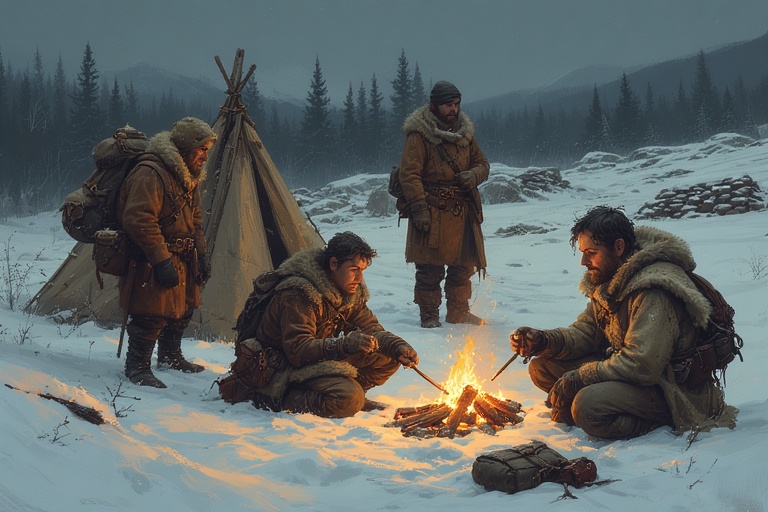
1. Notes

Baseline Survival Competence

Basic Survival in Reisa

Reisa assumes a harsh world where survival is not guaranteed and expertise matters.

All characters possess a basic, untrained level of wilderness competence simply by being adults in a cold, marginal land. This is called Baseline Survival Competence. It represents common sense, desperation, and luck, not training.

True reliability in the wild belongs only to specialists.

Design Principles

  • Survival competence does not replace wilderness procedures

  • Specialists improve odds, they do not remove risk

  • Every advantage given to one role sharpens the absence in others

  • Being lost is dangerous, persistent, and costly to resolve


Baseline Survival Competence (Everyone)

All characters may attempt basic wilderness survival tasks, even without training.

Baseline competence allows:

  • Attempting to forage or hunt out of necessity

  • Building crude shelter with time and materials

  • Following obvious paths, rivers, or landmarks

  • Enduring short-term exposure before consequences escalate

Baseline competence does not allow:

  • Reliable provisioning of a party

  • Efficient hunting

  • Recovering from being lost

  • Safe long-term wilderness travel

Baseline survival reflects luck and effort, not skill.


Trained Outdoor Specialists

Some classes are trained to survive where others fail. Their abilities are explicit, mechanical, and limited.

  • Barbarians and Rangers reliably provision parties in the wild

  • Hunters specialize in recovering orientation after mistakes

  • Druids prevent disorientation through attunement to nature

No class has total mastery.


Wilderness Survival Table

SituationNo Specialist (Baseline)BarbarianHunterRangerDruid
Foraging (party succeeds)1-in-62-in-62-in-6
Hunting (party finds prey)2-in-65-in-65-in-6
Chance to Become Lost (woodlands)Normal wilderness rulesNormal rulesNormal rulesNormal rulesOnly 1-in-6 chance to become lost
Recover After Being LostNo special abilityNo special ability3-in-63-in-6* No special ability

* House rule


Clarifications

  • “Normal wilderness rules” means the standard referee procedure for navigation, terrain, weather, and visibility.

  • If a party becomes lost without a Hunter or Ranger, they remain lost until:

    • They encounter a landmark

    • They backtrack successfully

    • The referee introduces a narrative change

  • Druids reduce the chance of becoming lost in woodlands, but once lost must rely on time, spells, or external help.

  • Recovery does not guarantee safety. It only restores orientation.


Tone and Intent

This system ensures:

  • Wilderness remains a threat, not a solved problem

  • Specialists matter without trivializing danger

  • Lodges, guides, roads, and local knowledge remain valuable

  • Getting lost is a campaign-level complication, not a failed roll


Foraging and Hunting

Finding Food in the Wild (Reisa Rules)

In Reisa, food is found through effort, time, and risk, not skill rolls. The wilderness is not a puzzle to solve but a condition to endure.

Foraging and hunting are procedural choices, not tests of competence.


Hunting in Reisa

Hunting is not safer than foraging.
It is louder, slower, and bloodier.

Predators hunt where hunters hunt.


1. Declare Intent to Hunt

The party declares they are hunting while traveling or halting for the day.

This means:

  • Moving cautiously

  • Following game trails

  • Watching wind and scent

  • Spending time in animal territory


2. Normal Encounter Roll

Roll for normal wilderness encounters as usual for the day.

  • This represents:

    • Rival predators

    • Territorial monsters

    • Other travelers

    • Environmental threats

If an encounter occurs, it may interrupt or override the hunt.


3. Hunting Check

If the hunt is not interrupted:

Use the best hunting capability in the party:

  • Ranger or Barbarian: 5-in-6

  • Other characters: 1-in-6 (baseline competence)

  • Whole day spent hunting: +1 pip (max 5-in-6)

Success: The party has stalked prey.
Failure: No prey found; the party still risked the day.


4. Quarry Appears

On success, roll or choose an appropriate game animal for the biome.

This creates a specific encounter:

  • The party has surprise

  • Distance is 1d4 × 30 ft

  • The animal reacts normally

This is not automatic food.
It is an encounter the party controls first.


5. Predator Attraction Roll 

After a successful hunt, roll 1 additional encounter check.

This represents:

  • Blood scent

  • Noise

  • Prolonged presence

  • Carrion draw

If an encounter occurs:

  • It arrives during or immediately after the kill

  • The party may be:

    • Encumbered

    • Split up

    • Skinning or butchering

    • Low on missiles or spells

Predators get hungry where prey dies.


6. Yield

If the party survives and processes the kill:

  • Small game: 1 ration per HP

  • Medium game: 2 rations per HP

  • Large game: 4 rations per HP

  • Extra time spent butchering may trigger another encounter roll at referee discretion


Why This Works

Foraging

  • One encounter roll

  • Low yield

  • Low commitment

  • Quiet

Hunting

  • One encounter roll for the day

  • One roll to hunt

  • One extra encounter risk on success

  • High yield

  • High exposure

Hunting is profitable.
Foraging is safe-ish.


Player-Facing Clarity

Why Hunting Is Dangerous

When you hunt, you are not the only predator.
Blood carries far in cold air.
What hears your kill may arrive before you leave.


Design Outcome

  • Rangers still feel valuable

  • Hunters feel dangerous

  • Survival is not trivialized

  • Wilderness stays hostile

  • Players must decide:

    • “Do we risk a hunt?”

    • “Or do we move quietly and eat lean?”

Hunting Results

TUNDRA HUNTING TABLE (Successful Hunt, 1d20)

d20Quarry
1Snow hare (1d6)
2Ptarmigan (2d6)
3Lemming run (4d6)
4Arctic fox (1d4)
5Geese (1d6)
6Ducks (1d6)
7Snowshoe hare (1d4)
8Caribou (1d4)
9Caribou (2d6 × 10, herd-edge stragglers)
10Muskox (1d3)
11Muskox (1d6, defensive circle nearby)
12Wild horses (1d4)
13Moose (1)
14Seals at a breathing hole (1d4)
15Great northern owl (1)
16Wolves (2d6) shadowing a herd (edible, risky)
17Dire wolf (1) ranging alone (very risky)
18Arctic fox den (1d6 adults, 1d6 young)
19Caribou cow with calf (1 adult)
20Abundant small game (choose any result 1–7)

TAIGA HUNTING TABLE (Successful Hunt, 1d20)

d20Quarry
1Rabbit (1d6)
2Snow hare (1d6)
3Squirrel (2d6)
4Grouse (2d6)
5Ptarmigan (2d6)
6Ducks (1d6)
7Wild boar (1d4)
8Deer (1d4)
9Moose (1)
10Caribou (1d6)
11Beaver (1d4)
12Giant beaver (1)
13Great northern owl (1)
14Wolves (2d6) (edible, risky)
15Dire wolf (1) (very risky)
16Giant lynx (1) (predatory, tense)
17Owlbear (1) (technically edible, deeply unwise)
18Boar sow with young (1 adult)
19Deer stag in rut (1, aggressive)
20Mixed small game (double result 1–5)

HILLS HUNTING TABLE (Successful Hunt, 1d20)

d20Quarry
1Rabbit (1d6)
2Hare (1d6)
3Grouse (2d6)
4Ptarmigan (2d6)
5Ducks (1d6) at a stream
6Wild boar (1d4)
7Deer (1d4)
8Mountain goats (1d4)
9Mountain goats (3d6, cliff terrain)
10Sheep (2d6) feral stock
11Caribou (1d6)
12Moose (1)
13Great northern owl (1)
14Wolves (2d6)
15Dire wolf (1)
16Boar sow with young (1 adult)
17Large goat ram (1, aggressive)
18Deer herd edge (1d6)
19Cliff-side quarry (any goat result, hazardous access)
20Lucky find (double any Small-game result)

MOUNTAINS / ALPINE HUNTING TABLE (Successful Hunt, 1d20)

d20Quarry
1Snow hare (1d6)
2Marmot (2d6)
3Ptarmigan (2d6)
4Mountain goats (1d4)
5Mountain goats (3d6, cliff faces)
6Sheep (1d6) feral
7Deer (1d3) in sheltered basin
8Moose (1) in lower cut (rare)
9Great northern owl (1)
10Wolves (2d6) on ridgeline
11Dire wolf (1)
12Giant eagle (1, nest nearby)* Eggs?
13Ibex-like ram (1, dangerous horns)
14Goat matriarch (1, extremely aggressive)
15Goat herd pinned by snow (1d6)
16Lone stag driven upslope
17Predatory cat (1 lynx or titherion)
18Cliff kill (any goat result, forced climb)
19Wind-scoured basin (reduced yield)
20Perfect shot (automatic surprise)

* Giant eagles are edible but culturally, politically, and magically consequential.