Physical Description
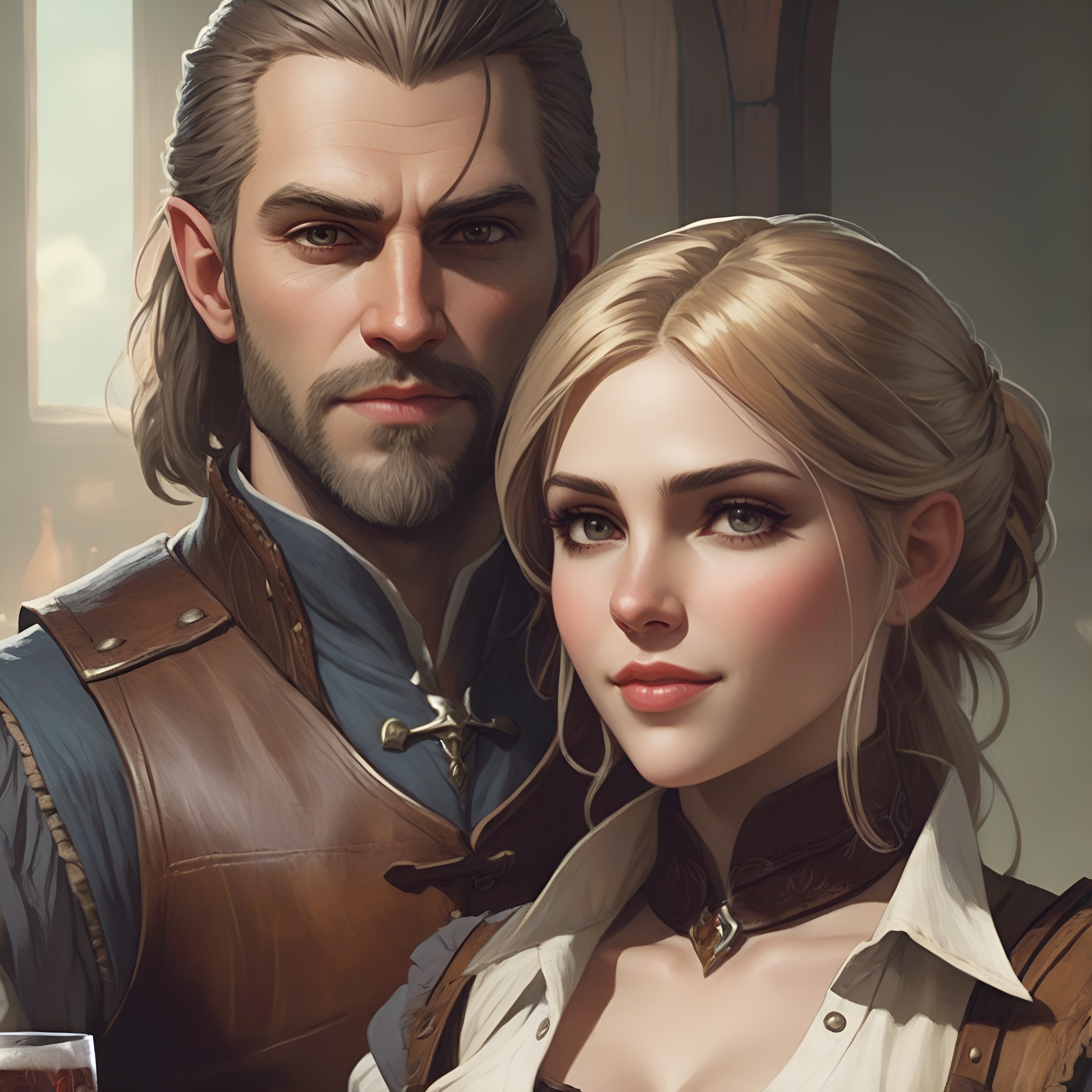
Humans are a diverse and adaptable race, exhibiting a vast array of physical traits influenced by their environments and regional heritage. Their skin tones range from pale ivory to deep ebony, with hair colors spanning shades of blonde, brown, black, red, and even streaks of silver in old age. Eyes can be any shade from bright blue and emerald green to dark brown and hazel. Their average height varies between 5 to 6 feet, with builds ranging from lithe and agile to broad and robust. This inherent versatility has allowed humans to thrive in nearly every known region of Midora, from the icy plains of Vikholm to the sun-scorched deserts of the Khein Dynasty.
History
The origins of humanity remain shrouded in mystery and speculation. Ancient elven records, the oldest known historical documents, speak of humanity’s arrival upon Midora as if they were a spreading weed—unwelcome and wild. Unlike the elves, whose genesis is tied to Lunora and the influence of the Titans, humans appeared seemingly without origin, emerging across all corners of Agera with no singular point of origin.
Some legends claim humanity was forged by divine hands, a creation of Diion or other Gods, while others suggest they are simply a product of natural evolution. Despite their obscure beginnings, humans quickly adapted, proliferating across the continent with remarkable speed. They built cities, established kingdoms, and waged wars, all while rapidly mastering the arts of magic, craftsmanship, and warfare.
Humans were integral in shaping the world’s political and cultural landscape. From the rise of the Silver Dominion and its zealous expansion to the establishment of Rivermond, Kalamar, and the influential Vache Kingdom, human ambition left indelible marks upon Midora’s history. Even within the mighty Khein Dynasty, where cultural diversity flourishes, humans are becoming the dominant force, steadily growing in number and influence.
Their adaptability has also seen them integrate into lands like the Nagan Empire and the Kami Concord, where their burgeoning populations now rival those of the elves who once ruled uncontested. In these regions, humans have become prominent leaders, merchants, and warriors, carving out legacies amidst ancient traditions.
Society and Cultures
Human society is a patchwork of cultures, beliefs, and customs shaped by geography and historical events. They are known for their ingenuity and relentless drive for progress, often leading in fields of invention, exploration, and governance. Unlike the longer-lived races, humans are keenly aware of their mortality, which spurs a sense of urgency to achieve greatness within their lifetimes.
The Silver Dominion, Rivermond, and Kalamar: These regions are bastions of human civilization, where towering cities and sprawling farmlands flourish under human rule. The Church of the Silver Dominion wields considerable influence, with many viewing it as the guiding light of faith and order. Nobility and monarchs lead with divine right, blending faith with governance. Humans in these lands often pursue lives of trade, knighthood, scholarship, and religious devotion.
The Khein Dynasty: A melting pot of races where humans are steadily becoming the majority. Despite the dynasty's rich diversity, the ruling class remains predominantly human, with each of the nation's Princes and Princesses hailing from human lineage. Humans have integrated deeply into the fabric of Khein society, contributing to its mystical arts, economic growth, and political intrigue.
Vikholm: In this rugged northern land, humans are less common, primarily inhabiting forested cities and trade towns. Surrounded by Bearkin tribes and harsh wilderness, they have grown resilient and self-reliant. Humans in Vikholm often live as merchants, hunters, and occasionally warriors who brave the frozen wilds.
Nagan Empire and Kami Concord: Humans are swiftly rising to prominence in these once predominantly elven territories. With elven populations dwindling due to mysterious declines in birth rates, humans have taken advantage of the shifting power dynamics. Many have established noble houses, assumed political roles, and are beginning to shape the future of these empires with their characteristic ambition.
Vache Kingdom: Here, humanity is part of a diverse tapestry that includes Dark Elves, Dwarves, and others. Humans in the Vache Kingdom are known for their adaptability, seamlessly integrating with other races in trade, governance, and exploration. They are neither dominant nor a minority, reflecting the kingdom’s unique ethos of unity amidst diversity.
Racial Names and Language
Human names are as varied as their cultures, influenced by regional traditions, ancestral lineage, and personal significance. In ancient times, human dialects were many and fragmented, with entire regions speaking their own tongues. Over time, as trade and travel expanded, a unified language known simply as Common emerged, becoming the most used language across Midora.
Many human regions still maintain local dialects that are distinct but close enough to Common that most can understand one another. In more isolated areas, ancient tongues sometimes persist, holding remnants of old magic and forgotten traditions.
Religions of Humanity
The Word of the Silver Prince
Dominant Regions: The Silver Dominion, Kalamar, Parts of Rivermond
The Word, as it is known throughout the Silver Dominion, is the sole accepted faith within its borders and is centered around the worship of the Silver Prince—a godlike figure who is believed to rule directly from the capital city of Enghilm. Legend speaks of a time during the early founding of the Dominion when the Silver Prince walked among men, guiding them to prosperity and aiding in the establishment of their grand cities alongside his Archangels. His divine presence was the foundation of the Dominion's faith, bolstered by the angelic host that once served as his emissaries and guardians of the land.
However, during the turn of the Fourth Age, the Silver Prince mysteriously vanished from public eye. His Archangels were declared heretical and hunted into extinction or forced into exile by the Dominion Church for reasons only known to its inner circle. Despite the Prince's absence for nearly nine centuries, faith in him remains unwavering, perpetuated by the Church's grip on doctrine and governance. The Dominion enforces its faith with an iron hand, purging heresy and dissent to maintain absolute loyalty to the Silver Prince.
Church Structure:
- The Enlightened Silver Lord: The highest authority within the Church, believed to communicate directly with the Silver Prince.
- The Ecclesiarchy: A governing body headed by two Arch-Confessors and their bishops and cardinals who enforce doctrine and oversee the Dominion's spiritual matters.
- The Dominus Chain: The militant arm responsible for rooting out heresy, silencing dissent, and maintaining the purity of the faith.
- Agents of the Silver Light: Holy warriors tasked with protecting church holdings and purging corruption from within.
The Word is strict and unforgiving; worship of any other deity is considered blasphemy, and temples of other faiths are either destroyed or repurposed. The Dominion's influence extends even into Rivermond and Kalamar, though with less total control.
The Faiths of Rivermond
Dominant Regions: Rivermond
Unlike its northern neighbor, Rivermond embraces a unique multicultural stance on religion. While the Dominion Church attempts to push out other faiths, the lords and barons of Rivermond fiercely defend their right to religious freedom. This split has led to two distinct noble factions:
- Lion Lords: Those who swear fealty to the God King Horus Khein of the Khein Dynasty, revering him as the true path to enlightenment.
- Stalion Lords: Loyalists to the Silver Prince and his teachings, reflecting the Dominion's influence.
Despite these differences, Rivermond’s people coexist peacefully, respecting each other’s beliefs. Temples and shrines dedicated to both Horus and the Silver Prince are scattered across the land, and smaller shrines to other gods can sometimes be found, hidden from the eyes of Dominion officials. This freedom has made Rivermond a haven for those fleeing the harsh religious oppression of the Dominion.
The Path of Horus, the One True King
Dominant Regions: The Khein Dynasty, Parts of Rivermond
In the scorching deserts of the Khein Dynasty, the faith of Horus, also known as "The One," permeates every aspect of life. To the Kheinians, Horus is not just a god—he is the King of All Gods, ruler of the sun and bringer of life to the barren sands. He resides in the capital city of Kheinopolis, where it is said his divine light can be felt by those who are truly devoted.
The faith is upheld by two powerful orders:
- Executioners of Light: A military order of paladins and clerics who serve as the hand of Horus, enacting his will with unwavering zeal. They are known for their uncompromising sense of justice and sacrifice.
- The Obsidian Sons: A clandestine order of priests and assassins who operate from the shadows, enforcing Horus' divine law through fear and intimidation.
Horus' followers believe in reincarnation and divine rebirth. To die in his name is considered the highest honor, a promise of renewal in the next life. Worship of other deities is permitted, but those who do not revere Horus are seen as misguided and often treated with suspicion.
The Five Seasons (The Five)
Dominant Regions: Nagan Empire, Kami Concord
In the eastern lands of the Nagan Empire and Kami Concord, the dominant faith revolves around The Five Seasons, a pantheon of five deities representing each season:
- Laaos (Spring) – Keeper of Order, representing growth and renewal.
- Nori (Summer) – Watcher of Rivers, symbolizing love and bounty.
- Gao (Harvest) – Warden of Time, representing abundance and change.
- Liao (Autumn) – Judge of Fire, symbolizing death and transition.
- Takata (Winter) – Paragon of War, embodying survival and fortitude.
This faith is deeply tied to the cycle of life and the changing of seasons, and its worshippers practice ritualistic celebrations for each season's arrival. Samurai and warlords often pledge themselves to all of the Five, while imperial houses may dedicate their banners to a specific god, seeking their favor. Worship of other deities is rare and often viewed as foreign or incomprehensible.
The Cogspirit
Dominant Regions: Vache Kingdom
In the Vache Kingdom, faith is eschewed for innovation. The people there do not worship gods but instead place their beliefs in the power of Cogspirits—the idea that life and soul can be preserved through arcane machinery and technology.
Soul Preservation is a sacred art in Vache, where artificers and wizards bind the essence of a person into mechanical constructs or enchanted objects, believing this to be the true path to immortality. This practice, while culturally significant, treads a thin line between innovation and ethical controversy. Soul harvesting or unauthorized binding is considered criminal, and noble houses actively seek to regulate the practice to prevent misuse.
The Vache Kingdom remains godless by principle, with its citizens placing their faith in arcane mastery and scientific ingenuity rather than divine providence.