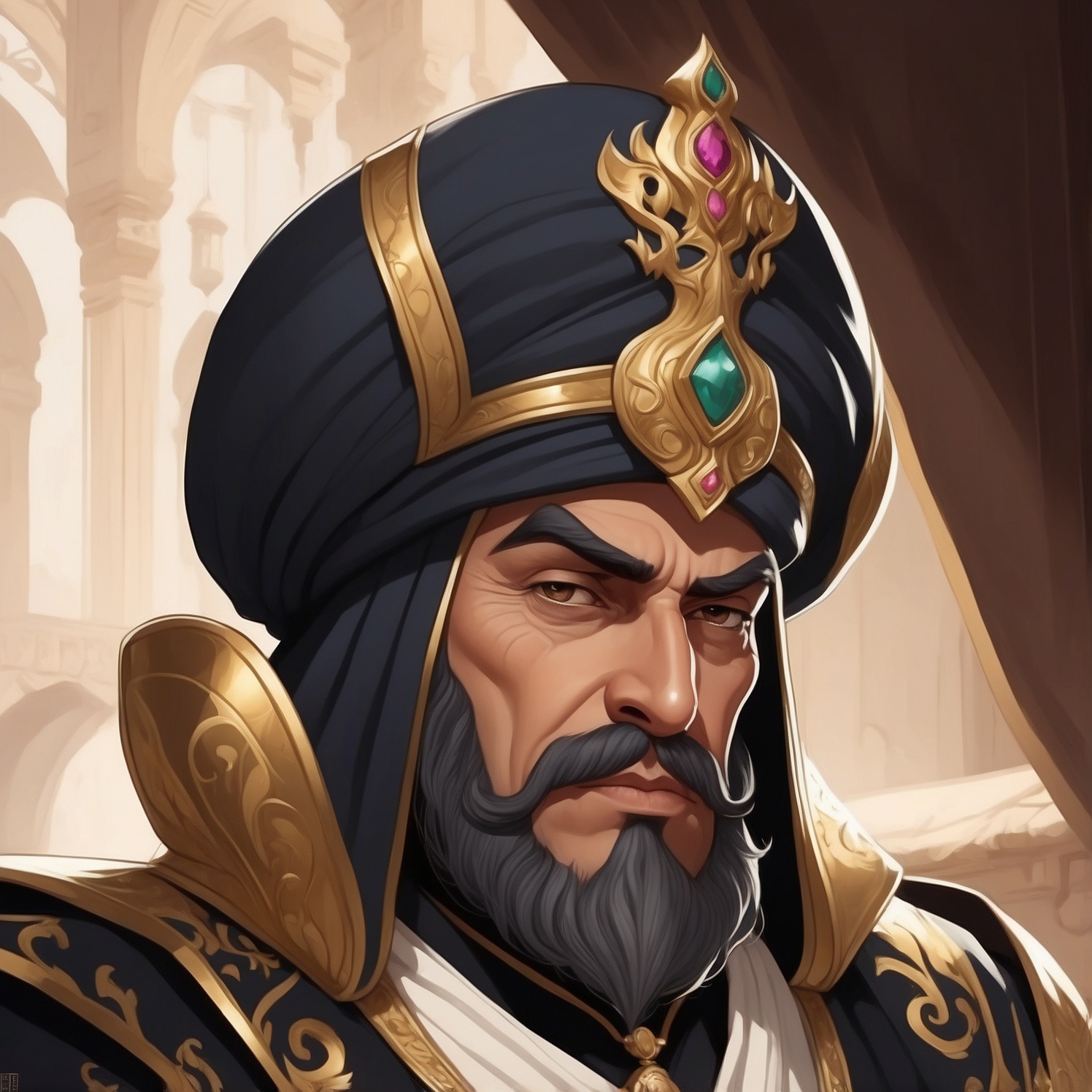
The founding of the Khein Dynasty in the early days of the Second Age was marked by the rise of many legendary figures — none more enduring than Anubis Khein. In the year 38, Anubis became the first to be adopted by the God King Horus Khein, elevated from humble origins to the eternal ranks of royalty. In recognition of his wisdom and mercy, the commonfolk bestowed upon him the title "the Fair," a name that would echo across history.
Born into poverty in the eastern heartlands — lands that would soon form the backbone of the Khein Dynasty — Anubis displayed keen intelligence and a natural sense of justice from a young age. As a youth, he rose quickly among his people, mediating disputes, forging fragile alliances, and championing fairness wherever strife threatened order. His reputation as a peacemaker and wise counselor spread across the fledgling settlements.
When Horus Khein descended upon the east with his blinding radiance, seeking to unify the squabbling city-states and tribes under a single divine rule, Anubis was among the first to pledge his loyalty. Recognizing the young man’s unparalleled influence and innate sense of right, Horus named him the first of his adopted children — Prince of Justice and Balance — and granted him immortality through the God King's divine touch.
As Prince, Anubis shaped the very soul of the Khein Dynasty. It was he who helped establish the first laws, who mediated between lords and peasants, and who crafted the code of governance that balanced might with mercy. His chambers were always open to petitioners, from the highest noble to the poorest laborer. In times of unrest, it was Anubis who restored harmony without bloodshed. And when words failed, Anubis did not shrink from battle; he strode to war wielding a mighty staff infused with celestial magic, striking down those who would threaten the innocent.
In battle, Anubis fought not for conquest or personal glory, but to preserve the fragile order he so cherished. His combination of martial prowess, diplomatic mastery, and moral clarity became legendary. Many times, his strategies saved Horus's campaigns from ruin, turning rivals into allies with words — or foes into broken armies with warstaff in hand.
Despite his towering achievements and immortality, Anubis remained a figure of humility. He dressed plainly compared to his fellow Princes, choosing to walk among his people rather than above them. His kindness, generosity, and tireless listening endeared him to the commonfolk, who sang his praises in songs that survived even into later, harsher ages.
Under Anubis’s stewardship, the early Khein Dynasty flourished. Cities grew strong under just rule, trade routes were secured through wise treaties rather than endless war, and the Dynasty's foundations were set firm against the chaos of the world.
Today, Prince Anubis Khein stands as both shield and conscience to the Khein Dynasty, ensuring that the Empire does not forget the principles it was founded upon. Statues of him — staff in hand, a patient smile upon his face — adorn courtrooms, city halls, and temples throughout the Dynasty. His legacy is one of balance, of law over tyranny, and of mercy tempered by strength — a beacon in a world all too eager to abandon fairness for power.