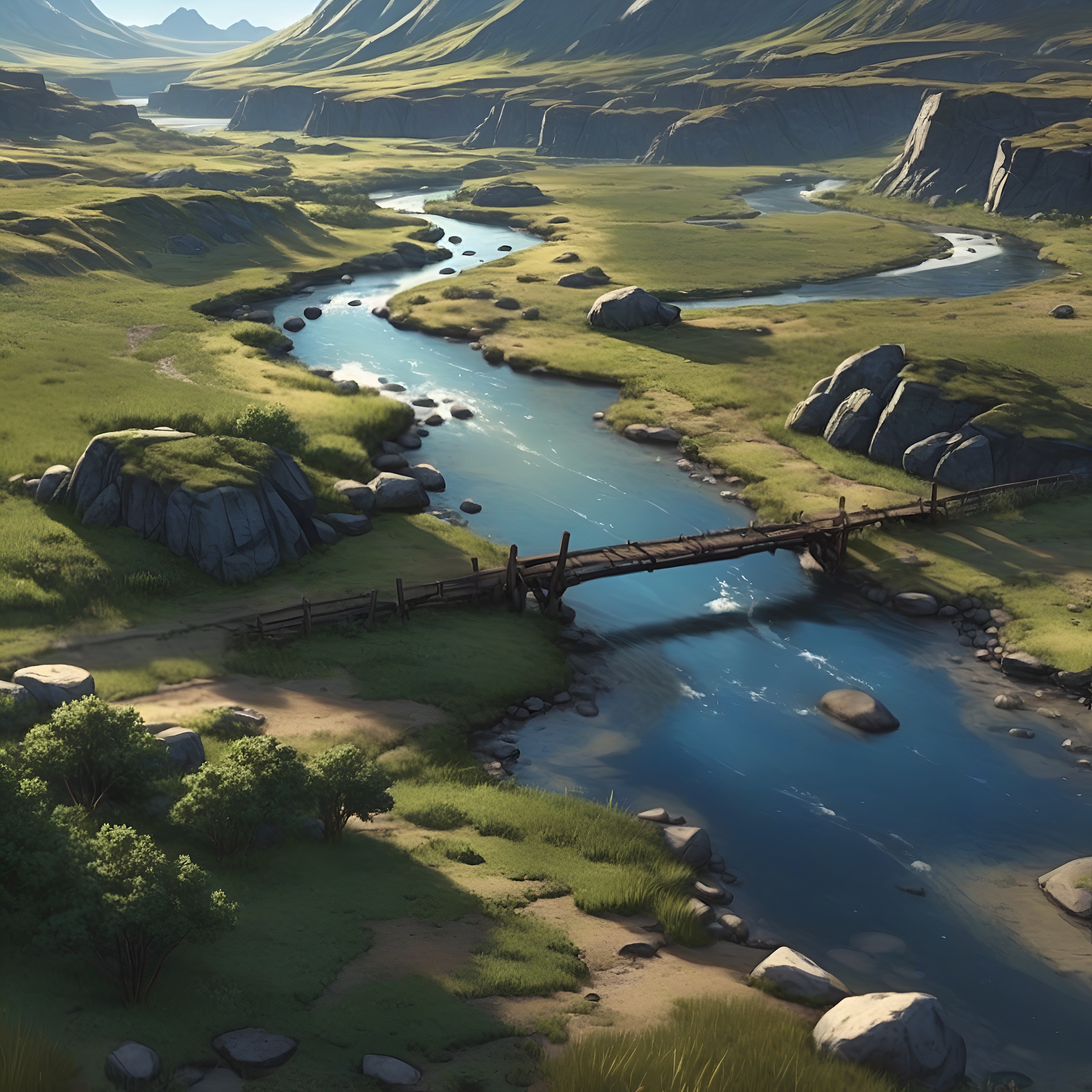
Árnstraum is a slender, meandering river that weaves its way from the highlands near Malmborg to the heart of the Kalamaric capital, Axeholm. Though modest in width and often overlooked in comparison to the grander Vættrfald, the Árnstraum is a river of memory, trade, and subtle lifeblood — a thread of silver stitching the frost-bitten land together.
Its name, old Kalamaric for “Eagle’s Current”, derived from the Kalamaric word for eagle (“Árn”), speaks to the river’s highland origin and the predatory birds that often hunt along its icy banks. For centuries, the Árnstraum has carried fish, goods, whispers, and secrets from the culturally rich city of Malmborg to the political heart of Kalamar.
Geography & Route
The river begins near the bustling settlement of Malmborg, situated at the foot of the western foothills. Here it is born from mineral-rich springs and runoff, collecting in low, forest-lined basins before forming a defined stream that pushes eastward.
From there, Árnstraum snakes through the wilds, past wind-swept pine groves and patches of snow even in early spring, until it reaches the cold, stony docks of Axeholm, Kalamar’s northern capital and principal port. Within the city walls, the river cuts through the industrial outer districts, glides beneath stone bridges, and touches the wealthier quarters before spilling into the ocean.
Seasonal Significance
Summer:
In the brief but exuberant Kalamaric summer, Árnstraum bursts into relevance. Its narrow body swells slightly with the thaw, becoming a bustling canalway of fishing skiffs, merchant rafts, and personal rivercraft. Boats travel between Malmborg and Axeholm, transporting dried meats, artisan goods, textiles, and fermented spirits known as brunmjød.
The riverbanks come alive with festivals, flower garlands, and colorful market stalls — especially near the Axeholm docks, where folk traditions meet foreign traders in a chaotic harmony. It is said that when the sun sets and music drifts over the water, the river “sings” with life.
Winter:
By early Reikend, the river stills and freezes solid. Árnstraum becomes a silent path of ice — a brittle road of white that reflects moonlight and memory. While impassable to boats, it serves as a shortcut for sleds and skates, a crystalline road from city to city. Ice markets sometimes emerge atop the thickest sections, particularly near Rygard and Malmborg.
Cultural Role
Though it lacks the imposing breadth of Vættrfald, Árnstraum is held in quiet reverence by locals. Many believe the river is watched over by a lesser landvættir, or river spirit, called Stræfna, depicted as a winged woman with an eagle's helm who guides those who respect the flow and punishes those who pollute it.
In Malmborg, the river is central to clan life, with its banks used for both trade and storytelling. Each summer solstice, the clans float woven boats of fire downriver in tribute to their ancestors, a tradition known as the Lightsend. In Axeholm, the river is more utilitarian — yet even here, nobles prefer to live near its cleaner, inner bends, claiming the flow carries fortune from the west.
Notable Locations Along the River
- Malmborg Wharf: A vibrant loading district filled with clan banners, dialects, and trade cries.
- Rygard Bridge: A major crossing and old outpost where patrols monitor river traffic year-round.
- Axeholm Inner Canal: Lined with alder trees and lantern-lit taverns during summer, haunted by wind howls in winter.