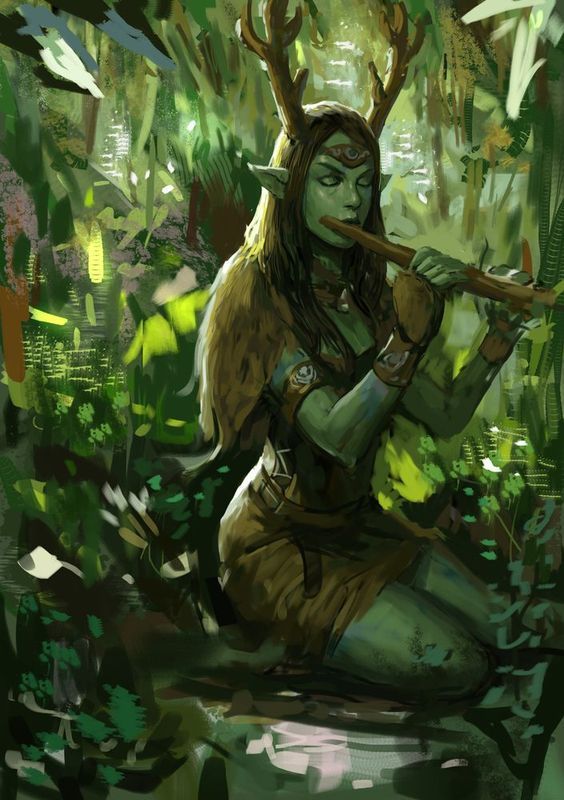
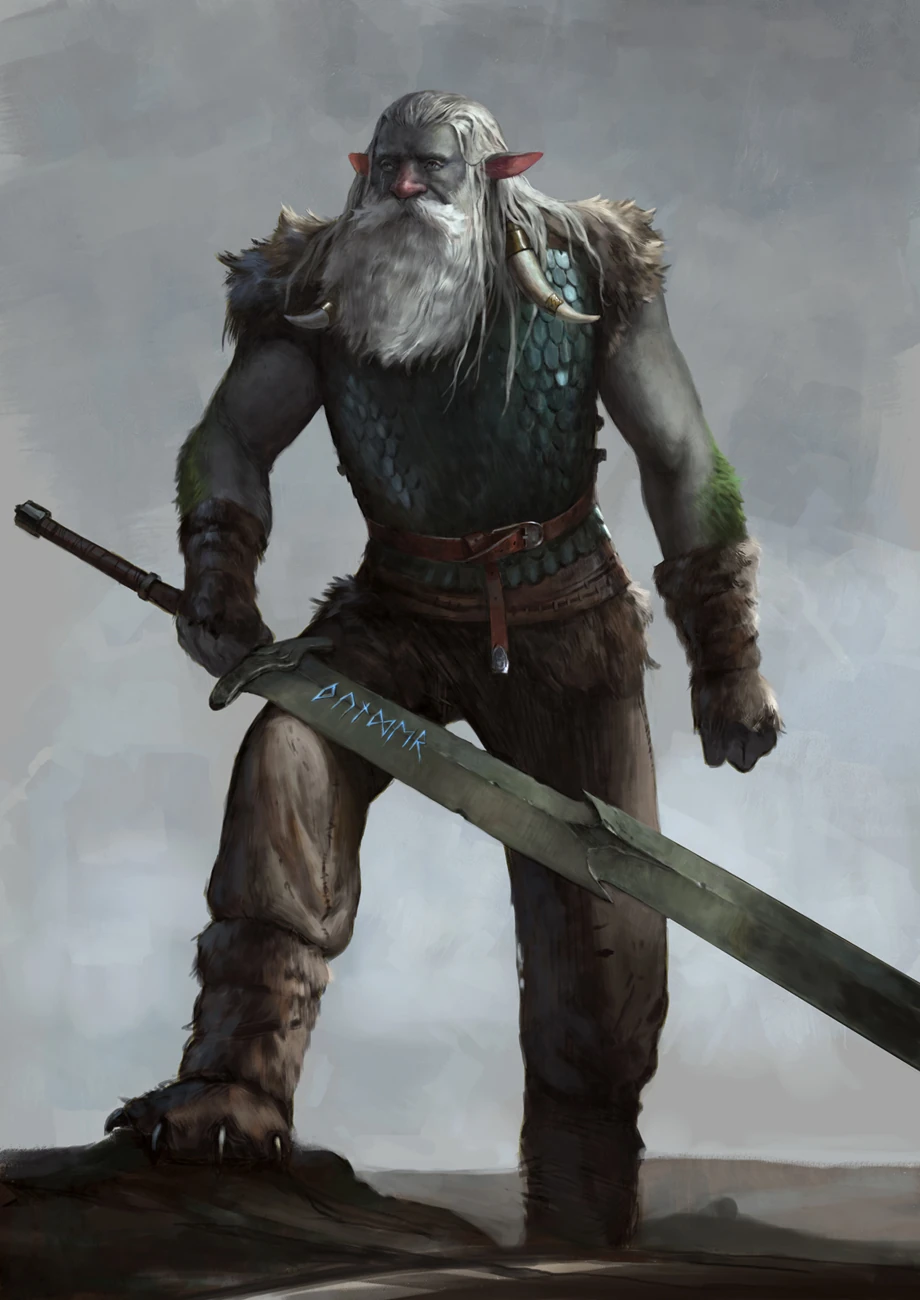
 "Fir" bolg like the tree.
Firbolgs are a reclusive race of giant-kin who prefer to avoid contact with other sentient races. They are some of both the most intelligent and the most powerful of the giant-kin. Their name was derived from the Dwarvish phrase "Fir-Bolg", meaning "large men with spears". Firbolgs resemble large humans (7 to 9+ feet tall), and the males would sport great, thick beards, with normally hairy chest, arms, and legs. Their thick, tough skin ranged from fleshy pink to dark tan and their hair, though it came in many colors, was usually either red or blond and worn long. A firbolg's voice was deep and smooth, and they tended to roll their consonants when speaking.
Firbolg tribes cloister in remote forest strongholds, preferring to spend their days in quiet harmony with the woods. When provoked, firbolgs demonstrate formidable skills with weapons and druidic magic. As caretakers of the land, firbolgs prefer to remain out of sight and out of mind. They don’t try to dominate nature, but rather seek to ensure that it prospers and survives according to its own laws. Firbolgs use their magic to keep their presence in a forest secret. This approach allows them to avoid the politics and struggles of elves, humans, and orcs. Such events concern the firbolgs only when the events affect the forest.
In the ancient times, the encroachment of humans into the lands that would become Sidheon sparked a war between the mighty Firbold and the Tuathans. The Firbolg were fearsome, honorable, warriors who battled against the Tuatha De'Danann, and although they lost the war, they gained the respect of the Tuathan gods and were allowed to remain in the forests and wilderness' of the area.
Firbolgs had a family-centered, clan-based society. They lived in settlements in remote hilly or forested areas. Their settlements were strongholds, including wooden structures, built from the trees around them, with defensive towers with catwalks between them. Rarely, they inhabited cavern complexes dug into the hillsides. They used their magic to ensure that their homes remained a secret to outsiders. These clan settlements were small, with between about four and sixteen members, often with a shaman or druid, and lived separate from each other. A few firbolg clans were nomadic.
The philosophy and faith of the Firbolg was mainly druidic in nature, with a reverence for life and the spirits of the world. Firbolgs are aware of the existence of the primordial spirits, as they term them, and some clans revere their ideals.