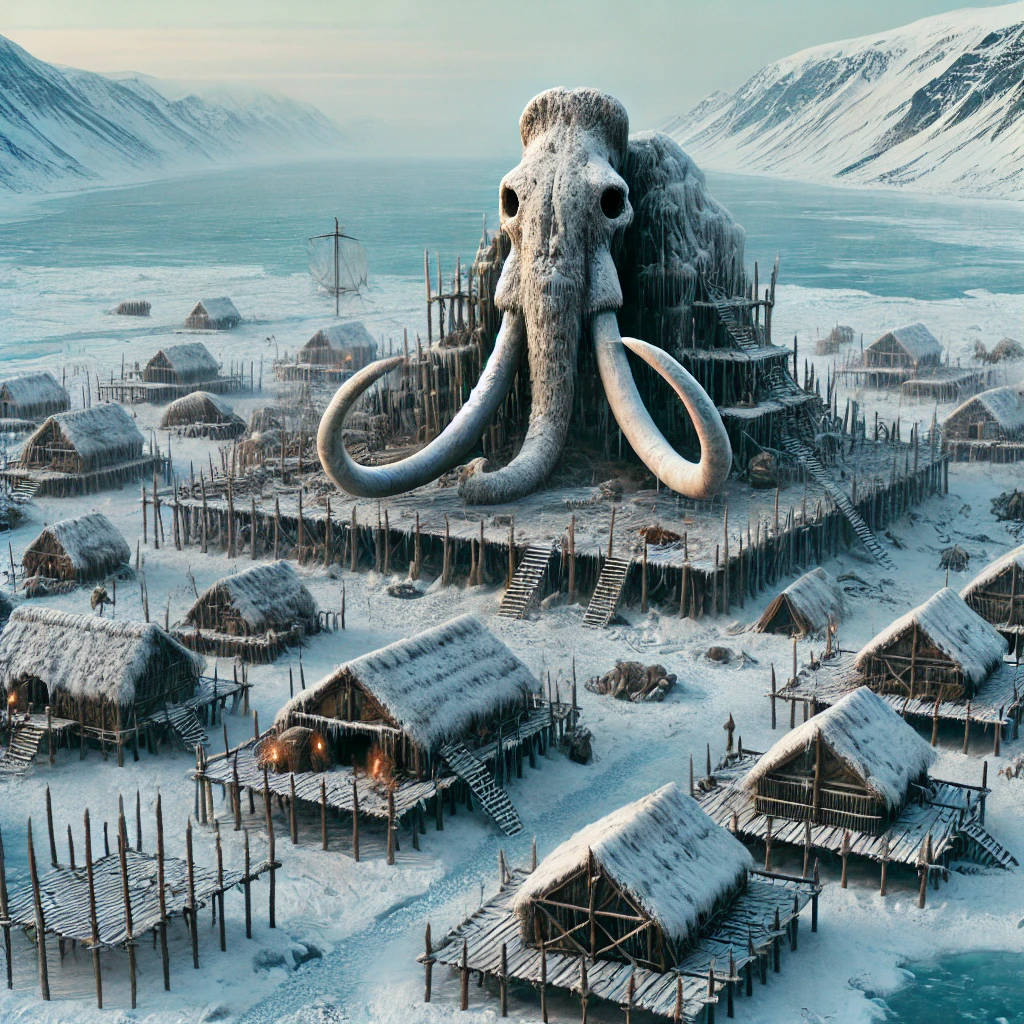
Valhrafnar Village is a formidable settlement built upon a frozen river in the northern tundras of Norska, home to the fierce Tribe of Valhrafnar. Once a prosperous fishing village, the tribe’s livelihood was built around the abundant resources of the northern river it was settled upon. However, after the perma-frost overtook the land, freezing their waters and cutting off their primary source of food, the Valhrafnar tribe was forced to abandon their peaceful existence and embrace the path of the warrior to survive. The village now stands as a testament to their resilience and ferocity, with its structures built from the bones of great mammoths and longhouses fortified with stilted wood.
Appearance and Architecture
Valhrafnar Village is situated on the icy surface of a once-thriving river, now completely frozen over due to the perma-frost. The village’s buildings are rugged and imposing, constructed from the bones of massive mammoths hunted in the surrounding tundra and stilted wood harvested from the sparse forests nearby. The centerpiece of the village is the chieftain’s longhall, a colossal structure built from the skull of a legendary mammoth said to have been slain by Valkur, the tribe's warrior-god, with his bare hands.
The longhouses and huts of the village are raised on stilts, protecting them from the shifting ice and ensuring stability on the frozen river. The use of mammoth bones gives the village a distinct, primal appearance, while furs and pelts from successful hunts cover the roofs and doorways, providing insulation against the bitter cold. The village is surrounded by vast ice fields and tundra, with snow-covered peaks visible in the distance.
History and Significance
Before the perma-frost gripped Norska, Valhrafnar Village was a thriving fishing settlement. The tribe's success came from the bountiful rivers and seas that provided them with food and trade. However, as the land grew colder and the waters froze, the tribe had to adapt to their new reality. With no food to fish, they turned to hunting the mammoths and other great beasts that roamed the tundra. This shift marked the tribe’s transformation into a warrior society, driven by the need to survive in an unforgiving land.
Valhrafnar warriors quickly gained a reputation as fierce and resourceful fighters. As their village transformed into a bastion of strength, the Valhrafnar tribe embraced their newfound identity as warriors, often venturing south to raid and plunder coastal settlements. Their longboats, now useless in the frozen waters, were repurposed into shields, weapons, and parts of the village’s fortifications.
Way of The Warrior
The harsh environment and frozen river that the village is built upon serves as an ideal training ground for the warriors of Valhrafnar. The tribe has adopted the tradition of battling upon the ice-covered river, forcing their warriors to develop strength, precision, and balance in treacherous and slippery terrain. These training sessions not only hone their combat skills but also foster resilience, teaching them to adapt to the most difficult of conditions. Only the strongest warriors survive these grueling tests, and those who excel become leaders and protectors of the tribe.
Valhrafnar warriors are renowned for their martial skill and unrelenting ferocity, each having been honed through years of battling in harsh conditions. Their weapons are often adorned with the bones and tusks of their mammoth prey, symbolizing their strength and connection to their ancestors. Combat on the ice is a sacred tradition, seen as a way to pay tribute to Valkur, who they believe watches over them from the Plane of Khaos.
The Chieftain’s Longhall
The most imposing structure in the village is the Chieftain’s Longhall, built from the skull of a massive mammoth that Valkur, the tribe’s patron god and former leader, is said to have slain with his bare hands. This longhall serves as both a symbol of the tribe’s might and a place of governance, where the chieftain and his council meet to plan raids, settle disputes, and make decisions about the tribe’s future.
The inside of the longhall is a vast, dimly lit chamber adorned with the skulls and tusks of mammoths, trophies from the tribe’s hunts. The walls are lined with furs, and a large fire pit in the center provides warmth during the coldest nights. Here, the warriors of Valhrafnar gather to feast, share tales of battle, and honor their fallen comrades.
Lasting Legacy
Valhrafnar Village stands as a testament to the resilience of the Valhrafnar tribe. The tribe's ability to adapt to the harshest of conditions and their unwavering devotion to Valkur has made them one of the most feared warrior clans in Norska. Their tradition of ice combat, their mastery over the tundra, and their deep connection to the legacy of Valkur continue to shape their culture and identity.
Today, Valhrafnar is not only a village but a symbol of strength and survival. The frozen river upon which it stands may be harsh and unforgiving, but to the Valhrafnar tribe, it is a sacred battleground where warriors are forged in the crucible of ice and blood.