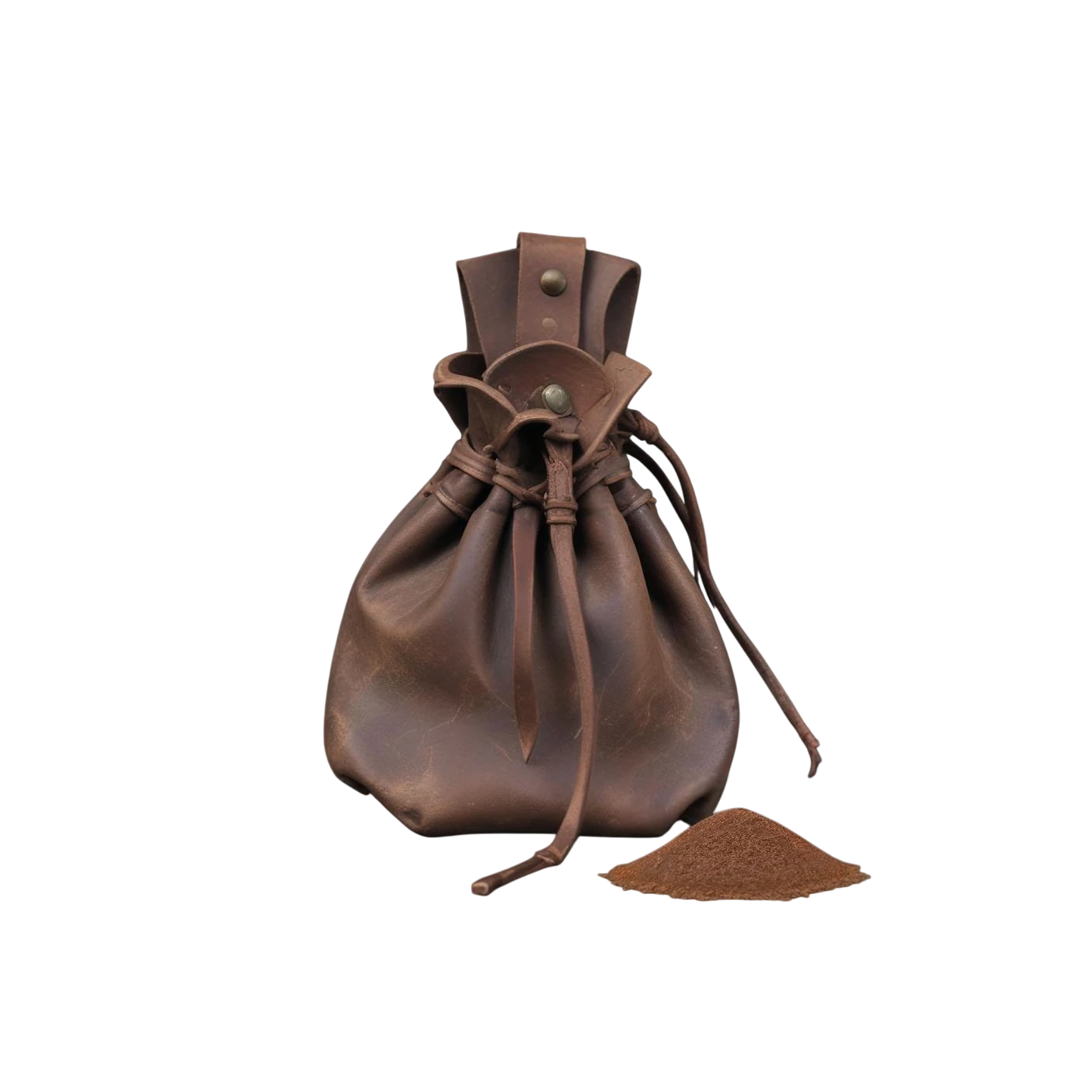
Found in a small packet, this dust is made from finely ground rust monster antennae. There is enough dust in each packet for one use. As an action, you can throw this dust into the air, filling a 10-foot cube that extends out from you. Any creature in the area holding or wearing an object of ferrous metal must make a DC 11 Dexterity saving throw to avoid the dust. Surfaces and immobile objects made of nonmagical ferrous metal in the area automatically fail this saving throw.
If the object touched is either metal armor or a metal shield being worn or carried, it takes a permanent and cumulative −1 penalty to the AC it offers. Armor reduced to an AC of 10, or a shield that drops to a +0 bonus, is instantly destroyed. If the object is a weapon or ammunition made of metal, the weapon takes a permanent and cumulative −1 penalty to damage rolls. If its penalty drops to −5, the weapon is destroyed.
Any creature in the area that is made wholly or partly out of ferrous metal must make a DC 11 Constitution saving throw, taking 2d8 necrotic damage on a failed save, or half as much damage on a successful one.