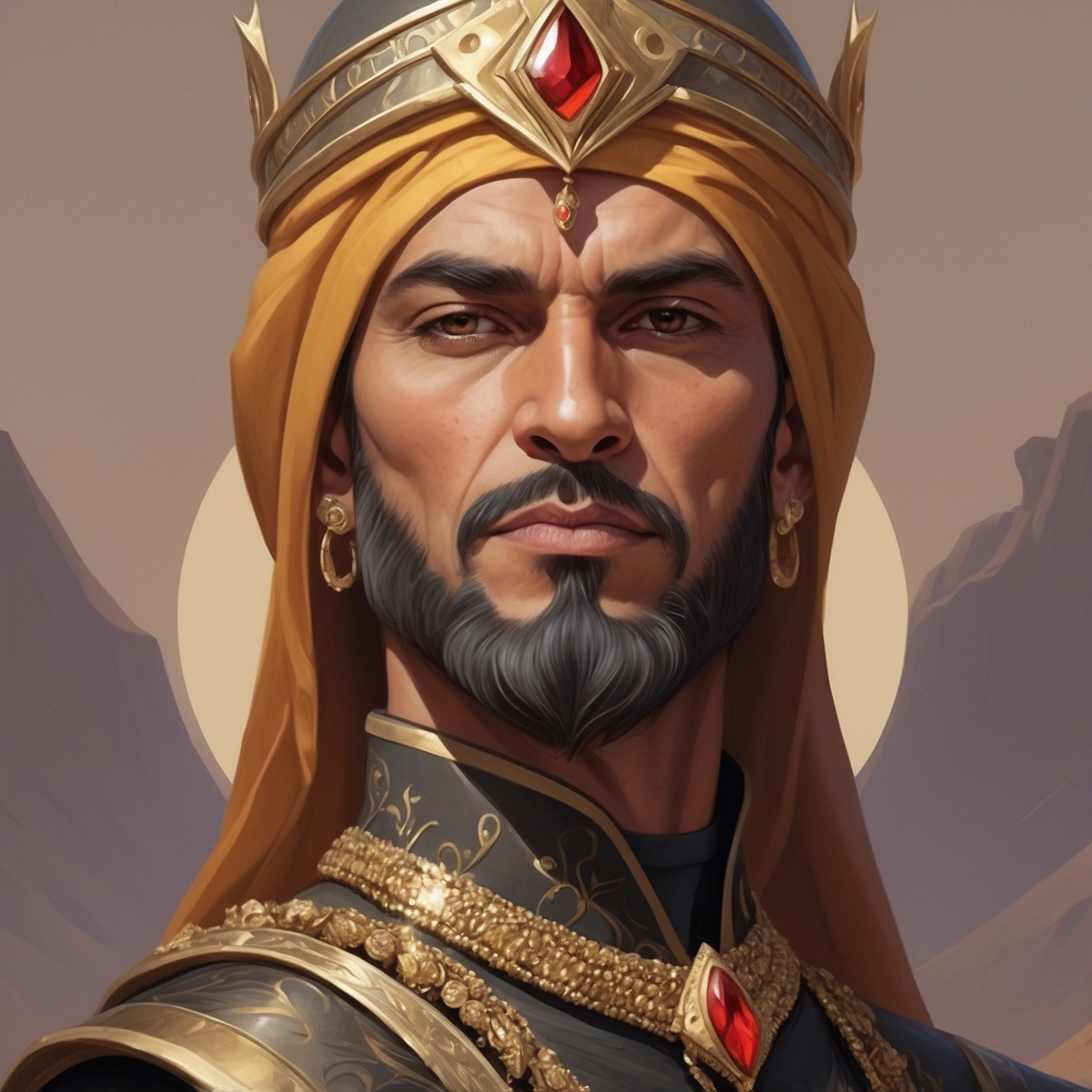
In the year 125 of the Second Age, a brief yet bloody revolt erupted in the northern reaches of the Khein Dynasty. The rebellion ended in total defeat, not at the hands of any soldier or general, but through the unyielding will of a single man — Kharn, the so-called Noble Enslaver. Born into a family of slavers, Kharn's early life was steeped in the world of power through coercion. However, his ability to bend the will of others surpassed anything his predecessors had achieved. It was said that he could enslave not just bodies, but hearts and minds, pulling entire armies under his sway.
In a land known for its strict hierarchies, Kharn's methods were regarded as both a triumph and a terror. Where others saw resistance, Kharn saw an opportunity — and with his charisma, ruthlessness, and promises of indulgence, he bent the most stubborn rebels to his will, enslaving the entirety of the northern insurgents. His actions, though brutal, were seen as a solution to an otherwise costly rebellion. This extraordinary feat caught the attention of God King Horus Khein, who, intrigued by the man's power, summoned him to Kheinopolis.
Kharn swore allegiance to Horus, pledging his loyalty in exchange for powers beyond mortal comprehension. Horus, ever the manipulator of destiny, bestowed upon Kharn the title of Prince of Lust, Excess, and Pleasure, granting him immortality and a place among the ruling family. However, unlike his fellow Prince Anubis, Kharn did not share the ideals of balance, justice, or fairness. Instead, he embraced a hedonistic and extravagant existence, indulging in the pleasures of life that only the highest nobility could afford.
The commonfolk were drawn to Kharn, not with the reverence of Anubis, but with a kind of desperate longing. The Prince’s markets — known for their opulence and excess — were filled with every kind of exotic and talented slave imaginable. From courtesans to entertainers, artisans to warriors, Kharn's trade was a beacon for those seeking to fulfill their deepest desires. Those with nothing left to their names would often travel from far corners of the Dynasty to offer their lives in service to him, promising to give their very essence in exchange for the comforts and pleasures of his domain.
Yet, despite the seductive allure of his court, Kharn was not merely a purveyor of indulgence. He was a master of military strategy, but not in the traditional sense. Kharn trusted in numbers, relying on vast legions of slaves, many of whom had been forcibly trained into a deadly, loyal fighting force. While Kharn himself rarely fought directly, his army of enslaved warriors — skilled, disciplined, and bound by loyalty — was formidable in its own right. These soldiers, promised wealth and comfort for their service, became some of the finest troops in the land, ready to die for their master. Though their presence raised ethical concerns about the morality of using slaves as soldiers, their effectiveness in combat could not be denied.
In times of war, Kharn’s approach was simple: overwhelming force. Should an enemy threat arise, Kharn would throw wave after wave of slaves at them, using their sheer numbers to wear down even the most formidable of foes. In a strange way, this made him a crucial figure in suppressing uprisings and ensuring the Dynasty’s dominance — a power that could quash any insurrection with the snap of his fingers.
Despite his role in maintaining peace through fear and excess, rumors spread that Kharn’s true power lay not just in his armies, but in his unnatural ability to bend the will of others. It is whispered that his rise to power was not entirely by Horus’s design, and that Kharn’s ability to control minds could be a threat to even the God King himself. Some say that after his ascension to Princehood, Kharn was placed under a subtle leash by Horus, a precaution to prevent his ambitions from spiraling out of control.
However, to this day, Kharn remains one of the most popular yet controversial figures within the Dynasty. His allure is undeniable, drawing the disenfranchised, the broken, and the ambitious to his court, where they can live in luxury — but only as long as they serve him.