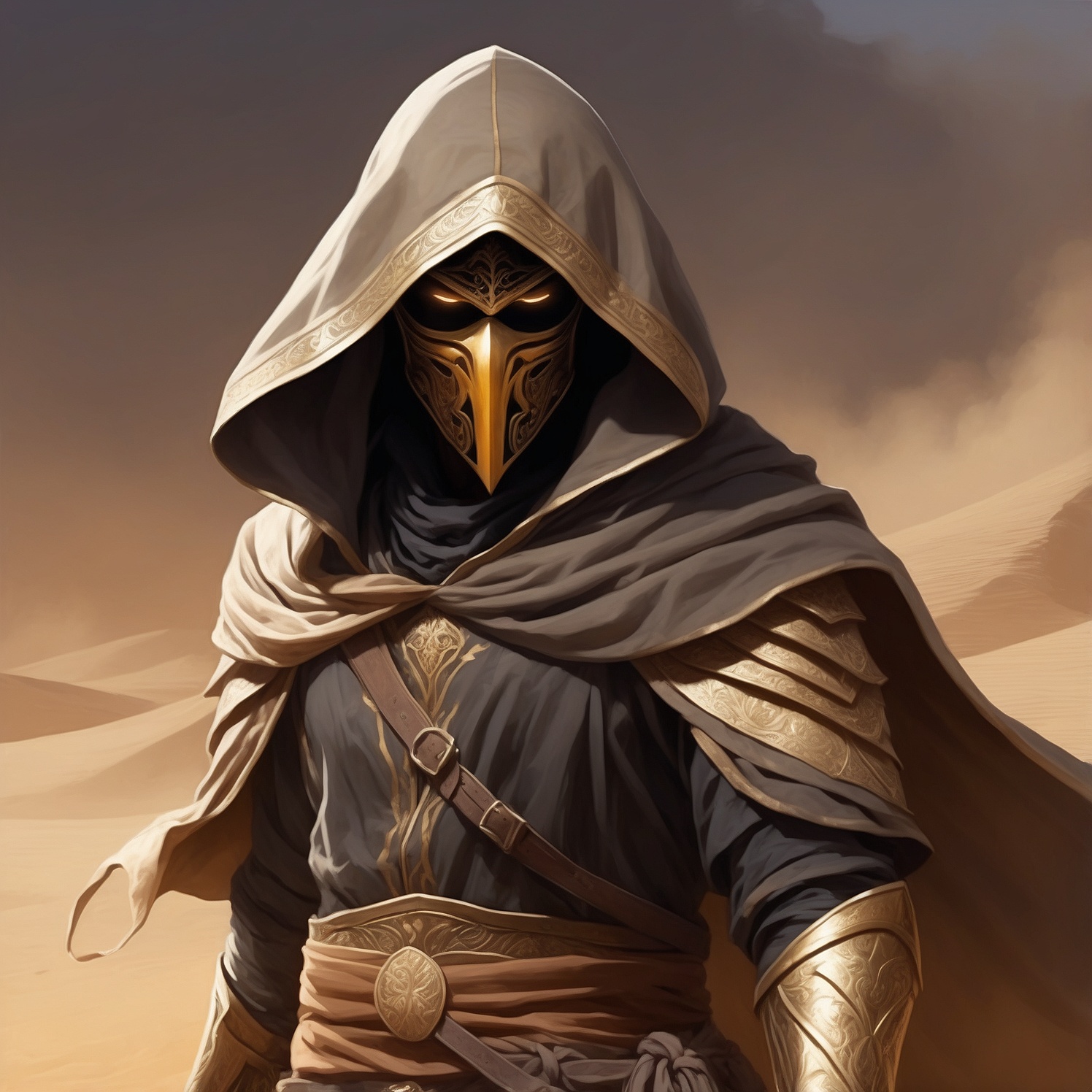
Khall Khein, known as the Jester Prince or the Prince of Exile, is a name both reviled and revered across the Khein Dynasty. Embodying the ideals of liberation, freedom, and trickery, Khall’s legend is that of a rebel spirit who defied the unyielding rule of God King Horus Khein and lived to tell the tale.
Born into obscurity but blessed with a silver tongue and a daring heart, Khall first emerged as a charismatic figure in the early days of the Third Age, year 12. His voice rang loud for the commonfolk, championing their well-being with a fiery passion that bordered on defiance. His charm and boldness caught the eye of Prince Anubis Khein, who became his patron, sponsoring Khall's events and public displays that stirred the hearts of the people. Impressed by Khall’s influence and his ability to sway the masses, the God King took him in, naming him one of his great Princes.
As a Prince of the Dynasty, Khall continued his work for the people, standing as a symbol of liberation and justice. He worked closely with Anubis, much to the dismay of some of the other Princes, who whispered that Khall was too merciful, too lenient, too eager to preach freedom over order. Their disdain was rarely vocalized but was felt in their coldness and veiled threats. Whether Khall cared for their disdain or not, none could say—but something, or perhaps someone, began to change him.
Whispers of treachery grew louder as Khall’s ambitions shifted. He began to undermine the authority of his fellow Princes, questioning their methods, disrupting their decrees, and, eventually, challenging the God King himself. The rebellion came to a head in Year 50 of the Third Age, when Khall’s defiance could no longer be tolerated. Branded a traitor, all depictions and mentions of him were erased from public record, his name stricken from banners and monuments. Yet, despite the full might of the Dynasty’s enforcers, Khall evaded capture, slipping through their grasp time and time again. He dueled with Princes, escaped unscathed, and vanished into the sands of Emya Isle—a vast, desolate island to the east, largely unexplored and untamed.
There, Khall found refuge, and in his exile, he found purpose. On Emya Isle, he gathered a band of loyal followers—those who believed in his ideals of freedom and liberation, those who saw him not as a traitor, but as a hero of the people. His roguish charisma and mastery of deception allowed him to infiltrate the Dynasty’s ranks, steal secrets, and disrupt trade routes with pinpoint precision. His guerrilla strikes on supply caravans and key strongholds kept the Dynasty in a constant state of vigilance, never quite able to catch the rebel prince.
To the people, Khall became a legend, a trickster who danced on the knife's edge of tyranny and freedom. Songs were sung of his exploits, and stories of his daring raids spread like wildfire among the downtrodden. Even in exile, Khall’s name was spoken in hushed tones by those who still believed in a freer Dynasty. Some whisper that Horus Khein himself sees Khall not as a true enemy, but as a necessary villain, a reminder that freedom and rebellion must always simmer beneath the surface of his reign.
To this day, Khall Khein remains a thorn in the side of the Khein Dynasty—a living testament to the idea that even the might of a God King cannot silence the spirit of rebellion. His monikers—The Jester Prince, The Laughing Rebel, The Fox of Emya Isle—are still spoken with admiration and fear, symbols of a defiance that never dies.