1. Journals

The Annals

This is the entire history of Érennia using all of the works I will write and plan to publish some day if possible. Technically this would be called the Annals of Érennia, considering the fact that it is a collection of in world texts, but I have called it the Legendarium because I believe it should be similar to Tolkien's legendarium. Maybe one day I would have all these texts compiled into one very large book but I doubt people would care enough for it to be worth it. 

General History of Men:

~100BN, the first cities are founded mainly around the Sea of Seleste around major rivers, first in Kadolya, and second in Doralie. By 42BA, King Nefaru I of Cis diplomatically and religiously becomes the king of Khadolsep, and in 213BA, after defeating rebel city states, king Khabenu I becomes king of the first dynasty of Kadolya, the Calin Khadolsep. The Calinen dynasty reigns until the year 512BA, before being conquered by the Aradian empire, and is succeeded in 835BA by the Arkatum dynasty, with its capital in Atum. The Arkatums conquer the Apenites in Assifya and Gibya, exerting tribute over the Gibyan port cities. Doralie during this period remained fragmented under many city states, with Talmun and Marasut being rival central cities. In 512BA, the city of Arad united Doralie and conquered Khadolsep under the Aradian Empire, which lasted until its fragmentation in 813BA. 

The Arkatum dynasty lasts from 835BA until 178TF, when it is conquered by the Akorum dynasty, ruled by the Scornu leaders from Eskabar


Kanka is built by just the two of us. Support our quest and enjoy an ad-free experience for less than the cost of a fancy coffee. Become a member.

Dhía creates the Áevaliny, Érennia, and the Firstborn

Dhia, Túlewendiel created the Áevaliny, and seven orders he created them:

The Archangels, the two highest Áevaliny to whom the most power has been granted:

Gealirian (Atheldrú): Archangel of the Moon

Gríanmár: Archangel of the Sun

The Major Angels, the highest generals of the Áevaliny, of whom there are 7: 

Arkaniel: Angel of Death

Cáechwen (Artamar): Angel of War and Sport

Erenniel: Angel of Mothers

Cúinánar: Angel of Nature

Luthaniel : Angel of Love

Dulen: Angel of the Oceans

Eponiel: The Angel of Horses and Beasts

The Avards, The highest Colonels of the Áevaliny, of which there are 21:

Brídartínú: Fire

Maepenwen: Art

Cáeventina: Horses

Áenken: Writing

Fogma: Forging

Calendiel

Rúan: Birds

Inracas: Pleasure

Tinfuil: 

Alún: Crop

Beliánar: 

Candar

The Tuathem, The highest Lieutenants of the Áevaliny, of which there are many

The Airadem, the chariots of the Áevaliny, of which there are many

The Legions, the warriors and knights of the Áevaliny, of which there are many

The Workers, the laborers of the Áevaliny, of which there are the most

He creates the world of Édennia (The Utmost North) to dwell in. In the center of Édennia (The Utmost North), he creates the city of Sáeum where Man can dwell with Him for eternity in peace. 
 

The Sons of Íadel

Erenniel came unto Iadel and bore him 10 children, the most of all Ainadels, of whom come the seven peoples of the Áena ya Dhía (Dhía's Children)

The sons of Iadel were:

Edair, Firstborn, born 42BA

Éochú, 2nd born, born 49BA

Og (Ág), Born 56BA

Déoch Born 60BA

Ros, Born 60BA

Áli, Born 67BA

Esrú, born 70BA

The daughters of Iadel were:

Túriel, Born 60BA

Elenniel, Born 78BA

Muriel, Born 90BA

The Great Cities of Men

Around 1100BA, Gealirian began the construction of the Seven Great Cities of Men, along with Inracas and Tinfuil, and completed all seven during the year 1113. He first made Aselador, where he would build his throne. 

Aselador - City of Pride

Had a tower that stretched up into to the heavens

Moroin - City of Gluttony

Countless herds of cattle, pigs and vineyards. 

Candor 

Boríæla

Dænatúa

The War of the First World, Banishment of Men

The great cities of men declare war upon the heavenly city from around 1256BA to 1257BA when they are banished via the sinking of their cities.

- Edair was tricked by Gealirian (Atheldrú) to join him in the War of the First World

Men are banished from Edennia by the power of Dhia, Túlewendiel around 1257BA


Agriculture and the First Cities

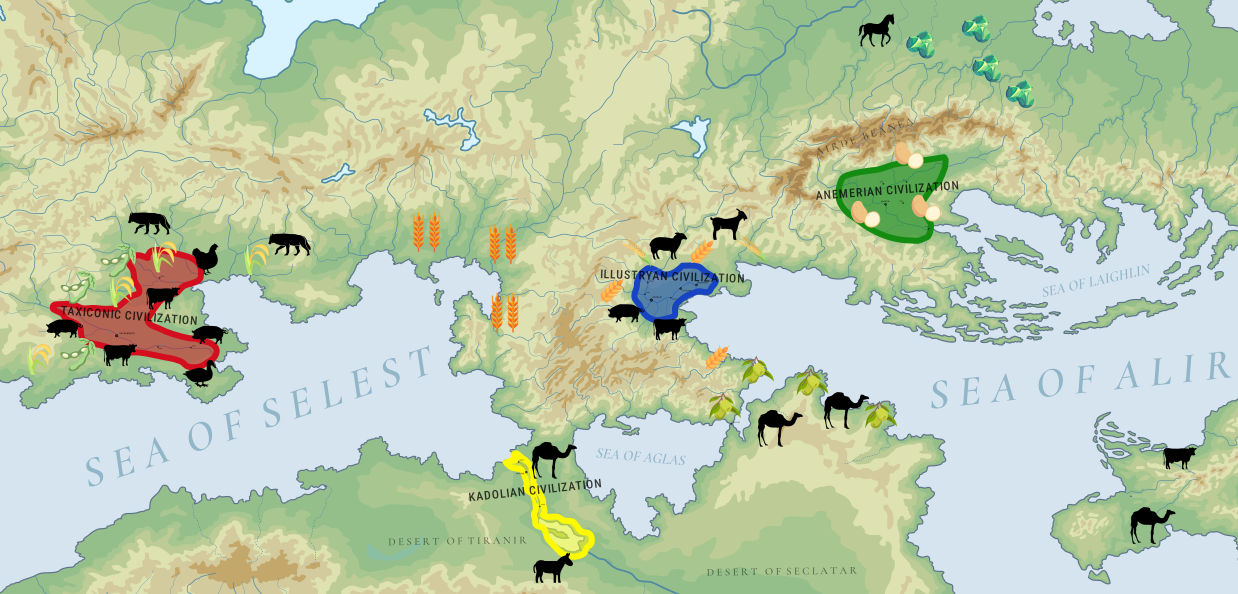
During the time between the banishment of Men in 1256BA to 1350BA, the first known cities developed around the fertile river plains in Illustrya, AnemaryaKadolya, and Doralie. These regions became centers of trade and culture, and the beginnings of civilization. They flourished with the beginnings of art, craft, and architecture. 

The first agricultural advances were sparked by Alún, the Áevalin of Agriculture, who was sent by Dhia, Túlewendiel to ensure that men would survive in their new world. By 1300, agricultural advances had led to food surpluses in many areas of the world, mainly in the river valleys of the Grand Aramak in Kadolya, the Pyranthion in Illustrya, the Atlan, and Ottis in Doralie, and the ***** in Anemarya.

Surrounding the grand river valleys of the region of Doralie, Unknowns, pigs, cattle, ducks, and chickens were domesticated. Rice became a staple of the diet in Doralie, along with soybeans. Meanwhile, in the east, in Assifya, black rice became the staple crop. In Doralie, the first roots of the grand Taxiconic empires began to take root with the development of their first cities. 

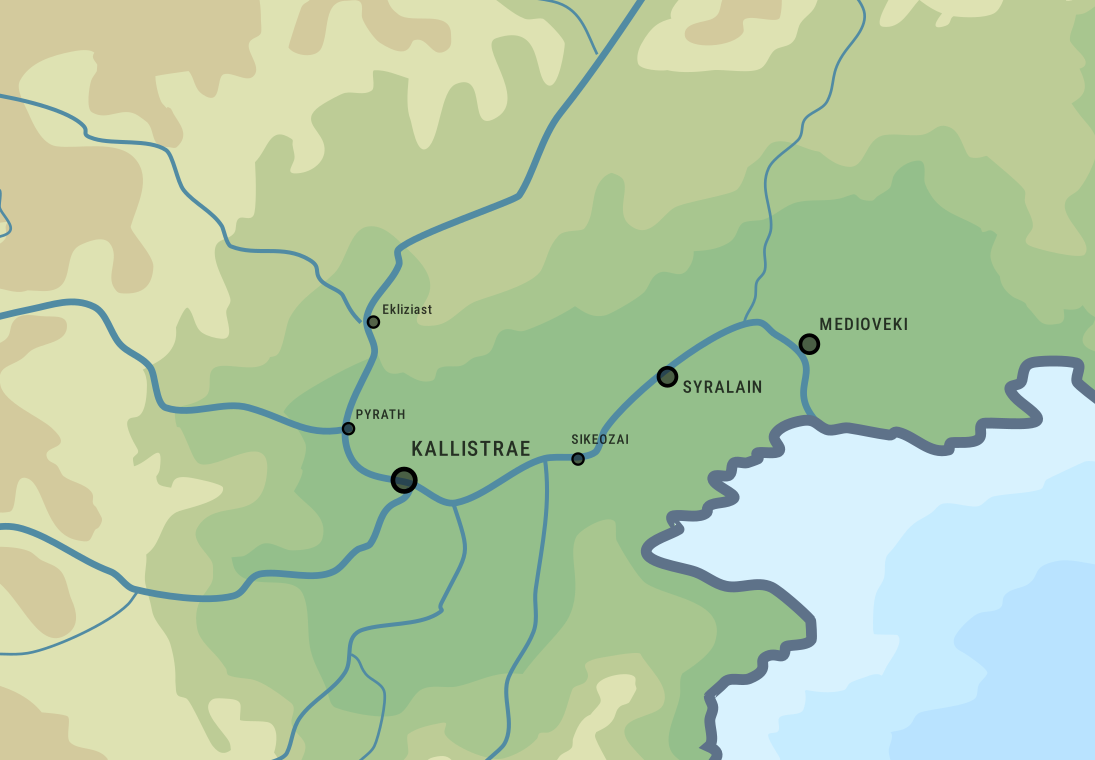
In Illustrya, the land became known as a very fertile land with the domestication of many crops such as wheat, barley, lentils, peas, and olives. The origins of cattle, pigs, sheep, and goats are also in this region. Illustrya was the origin of some of the earliest crops because of the nutrient-rich floodplains of the Pyranthion river. Around this river, the first cities of Illustyan civilization began to take root, such as Antalis and Totelion, and Mediovekie. 

Around the Aramak river, the Kadoli civilization took root. They domesticated camels and donkeys, and were able to farm crops like wheat, barley, and, to a lesser extent, black rice. 

In Anemarya, the first cities began to grow around the *** river, kickstarting the origins of the Cadinite civilization. 


The Dawn of Civilization: The Foundations of Kadolya and Doralie ~BN200-BA300

Around the year BA1, (The year the Áena ya Íadel (Íadel's Children) were born in Édennia (The Utmost North), but not important to the race of Aldrýn (Men), Cities were prevalent in Kadolya and Doralie

Kadolya: The Foundation of Kadolya (~BN200-BA200)

~BN200 The Founding of the First Cities

A very prevalent city in Kadolyan history, Atum, was the first to be founded, and was followed by many others in a similar time frame (Around BN200-BA1). In the wake of a bountiful season along the Calin and Alamheb rivers, a group of visionary settlers, guided by divine omen, established the sacred township of Cis. Under the spiritual leadership of High Priestess Senu, the settlers recognized the shimmering reflections of the twin rivers as a sign of favor from Haru—the water deity whom they believed bestowed life and fertility. In haste and hope, Senu organized the first communal gathering and oversaw the construction of the Temple of Haru, a modest yet symbolically potent shrine that would serve as the spiritual heart of the community. 

BA35 – The Rise of Neferu and the Canals

In Cis, a new leader emerged from within its ranks. Neferu, originally a respected chieftain known for his keen insights into river behavior and engineering, skillfully organized community efforts to build the first irrigation canals along the Alamheb. This remarkable feat not only secured future harvests but also established Neferu as the principal architect of Kadolya’s infrastructural renaissance. Over the next few years, local artists etched his exploits on stone reliefs near the temple, foreshadowing his eventual elevation to divine kingship.

BA42 – Coronation of the King Neferu I

The sustained success of the irrigation projects and the spiritual renewal heralded by Senu’s rites created fertile ground for transformation. In a majestic ceremony held within the hallowed precincts of the Temple of Iaru, Neferu was formally enthroned as the first proto-king of Kadolya. The coronation blended the sacred and statecraft seamlessly, symbolizing a union of divine mandate and pragmatic leadership. Chorused chants, ritual sacrifices, and the pouring of libations confirmed that Neferu’s rule was to be seen as sanctioned by Haru himself. As part of his vision to extend Kadolya’s influence, King Neferu commissioned an expedition famously known as the Journey of the Silver Canoe. A boat, skillfully crafted with silver inlays bearing the symbol of Iaru, was sent down the serpentine channels of the Calin and Alamheb. This ceremonial voyage was not only a demonstration of Kadolya’s technological ambition but also a diplomatic mission to establish early trade and cultural links with distant settlements. Detailed carvings of the journey were later installed in the temple, serving both as historical record and sacred myth. 

That same year, as night fell over Cis, a rare astronomical event captivated the citizens. In what came to be known as the Celestial Convergence, a precise alignment of stars and planet-like bodies illuminated the heavens above the temple. Witnessed by all, including King Neferu and his court, this cosmic spectacle was interpreted as Haru’s personal endorsement of Kadolya’s chosen leadership. The event was meticulously inscribed on temple walls, reinforcing the idea that divine favor and celestial order were inextricably linked to the prosperity of their society. Cis was officially recognized by Kadolyan cities as the center of religion, warranting many people from across the region and even other regions to come and witness miracles in the temple of Haru. 

Doralie: The Emergence of City-States along the Ottis (~100BN–200BA)

~BN30 – Foundations of Talmun and Marasut

Farther to the north across the sea of Seleste, along the majestic banks of the solitary Ottis River, Doralie’s pioneering settlers carved out the first urban bastions. In Talmun, Chieftain Adrim led his people to establish a modest but promising settlement. He built a humble shrine dedicated to Melkaro, the revered guardian deity of water and fertility, whose stern yet benevolent visage was believed to preside over the cycles of sowing and harvest. Almost concurrently, a neighboring community would arise downriver at Marasut, destined to become both a rival and ally in the region’s unfolding history.

BA235 – The Pact of Water

Realizing that unbridled rivalry would imperil both communities, Chieftain Azurim mediated a historic accord in BA235. Representatives from Talmun and Marasut gathered on the banks of the Ottis to negotiate a water-sharing treaty—a document later memorialized in early pictographic inscriptions. The Pact of Water established equitable access to the river’s bounty and set a precedent for peaceful coexistence. This accord, celebrated in communal feasts and ritual offerings to Melkaro, laid the ideological foundation for future Doralian governance.

In BA238, while Talmun consolidated its gains, an influential elder emerged from Marasut. Gilum, celebrated for his prophetic insights and diplomatic acumen, began to shape Marasut’s destiny. Claiming divine inspiration from Astaru—a deity of foresight and prosperity—Gilum’s visions called for a new era of unity among the settlements. His counsel resonated deeply, prompting both communities to consider a more integrated cultural and administrative future.

BA257 - The Festival of Waters

In an unprecedented display of inter-settlement solidarity, the leaders of Talmun and Marasut jointly organized the Festival of Waters in 2980 BC. Chieftain Apagis and Elder Gilum led a grand procession along the Ottis, uniting disparate communities under a shared ritual of thanksgiving and hope. The festival featured ceremonial boat processions, poetic recitations of ancient myth, and lavish offerings to both Melkaro and Astaru. This event not only secured divine favor but also reinforced the notion that cooperation was essential to harnessing the river’s power.

BA170-300 – Foundations of Trade and Early Governance

The spirit of unity and renewal instigated rapid socioeconomic transformations. By BA300, both Talmun and Marasut had expanded their settlements to encompass vibrant marketplaces at key river crossings—centers where goods, ideas, and cultural practices intermingled. In BA175, elders and priests from the various communities formed the Assembly of the River, an embryonic governing body tasked with resolving disputes and regulating water use. The culmination of these efforts came in BA187 with the codification of the Ottis Code in Marasut, one of Doralie’s earliest legal documents. The Code detailed agricultural practices, established water-sharing rules, and set forth communal responsibilities—a legal foundation that would influence Doralian society for centuries to come.

The Calinen Dynasty of Khadolsep, 213-600BA

Kadolya was united under many dynasties, each with their own unique addition to the realm and its culture.

Khabenu I 213BA-268BA

King Khabenu I reigned after his father, Nefaru II, and established himself as the king of the now fully cemented Calinen Dynasty, centered around Cis. He accomplished this in the year 214 by conquering the city states of Atum and Edrom, both rivals to the throne in Cis. They exacted tribute across bother rivers, sespite the name "Calinen.' His inauguration was celebrated by both rivers of Kadolya and he was recognized as the king of Khadolhep. His realm encompassed most northern cities of the upper Calin and Alamheb, but mainly centered around The Calin. He built the new Grand Temple of Cis, where Haru was worshiped. He deployed envoys to the neighboring regions of Gibya and Illustrya, establishing trade with the regions. 

Upon his death, Khabenu I was buried beneath a giant statue of Haru that was built in Cis. The Statue was covered with Illustryan Gold and gems, and was over forty feet tall.

Mereset and the Embryonic Diplomacy 268BA

  • 2770 BC – The Coronation of Queen Mereset Following her father’s peaceful passing, Queen Mereset ascends the throne. Emphasizing unity, she refines Kadolya’s newly emerging identity by sponsoring extended religious and trade connections.

    • Institution of the Twin Waters Festival: She establishes a grand ritual now known as the Festival of the Twin Waters—honoring both the Calin and the Alamheb. Delegations from Gibya, especially from fledgling cities like Tarchna, attend, and emissaries exchange symbols of mutual respect.

    • Cultural Archives: Queen Mereset commissions the first written records of Kadolyan myths, carefully recording both indigenous lore and newly encountered narratives from regions such as Gibya and Earean, thereby initiating a broader cultural canon.

III. Expansion Under King Nebamun and Regional Tensions (2745–2710 BC)

  • 2745 BC – Coronation of King Nebamun Known for his grand vision and architectural ambition, King Nebamun marks his reign with projects intended to awe both his people and neighboring lands.

    • The Pyramid of Atum: Nebamun commissions a towering pyramid at Atum, its intricate carvings depicting not only divine descent but also scenes of early intercultural encounters. Scenes portray traders from Gibya—represented by figures that would be later tied to cities like Fufluna and Caisra—bringing tribute.

    • Territorial Incursions: His military expeditions extend Kadolya’s influence toward coastal hills where Gibya’s merchant enclaves reside. Minor skirmishes in this border zone are resolved through ritualized combat ceremonies, ensuring that neither side loses its identity while establishing an early precedent in dispute resolution.

  • 2735 BC – The Establishment of the Coastal Trade Outpost In a daring move to secure trade routes, Nebamun dispatches a military–diplomatic detachment to set up a trading post near what would become the Gibyan hub of Fufluna. This station serves as a vital contact point along the maritime corridors of the Sea of Seleste, binding the destinies of Kadolya and Gibya ever more closely.

IV. Diplomatic Ventures and Cultural Exchange Under King Iry-esor (2710–2680 BC)

  • 2710 BC – The Maritime Pilgrimage of Atum King Iry-esor opens Kadolya to the broader world by commissioning a great fleet to embark on the Maritime Pilgrimage along the Calin, Alamheb, and into the Sea of Seleste.

    • Treaty of the Silver Shores (2705 BC): On his return journey, he negotiates the Treaty of the Silver Shores with representatives of Gibya—delegations from Vetluna and Tarchna—securing mutual rights over shared river and coastal resources.

    • Cultural Infusion: Artisans in Atum incorporate stylistic motifs that echo Gibyan sculptural traditions, a subtle but potent sign of an emerging regional synthesis that would influence art and mythology for centuries.

  • 2700 BC – The Delegation of the Eastern Winds Simultaneously, emissaries from Illustrya and even remote villages of Premerdhos embark on journeys to Atum, bearing goods and rare craft materials that would feed Kadolyan bronze workshops and enrich the royal courts.

V. The Cultural Renaissance Under Queen Senua and Peaceful Exchanges (2680–2650 BC)

  • 2680 BC – Ascension of Queen Senua A patron of the arts and wisdom, Queen Senua ushers in a golden age of intellectual and cultural flourish.

    • The Conclave of Rivers and Hills (2675 BC): Under her auspices, scholars from Kadolya and neighboring lands—including learned men from Gibya and seafaring poets from Earean—gather at the First Priesthood College in Cis to debate astronomy, theology, and art.

    • Literary Syncretism: New texts appear, blending Kadolyan hieroglyphs with the pictographic styles encountered in Gibyan villages. This unification of literary forms deepens the region’s cultural bonds while respecting local uniqueness.

  • 2660 BC – The Inception of the Maritime Lore Scrolls Inspired by the exchanged artistic traditions, court scribes begin a continuous record known as the Maritime Lore Scrolls. These relics document not only Kadolyan history but also the memories of encounters with distant peoples, preserving stories from the lands of Gibya, Illustrya, and Premerdhos.

VI. Military Reorganization and Border Fortification Under King Horemheb (2650–2610 BC)

  • 2650 BC – Coronation of King Horemheb A warrior reformed into a statesman, King Horemheb adopts measures to cement Kadolya’s power and safeguard its trade routes.

    • Expedition of the Eastern Sands (2648 BC): In a campaign along the frontier, his forces secure strategic outposts and erect the “Bastions of the Divine Stream” along crucial riverbanks. These fortifications, notably near the Gibyan frontier (adjacent to modern-day Fufluna and Vetluna territories), serve both as military defenses and as centers of commerce where local tribes and city-dwellers convene peacefully.

    • Regional Patrols: Regular patrols ensure that frequent skirmishes—especially in the rural reaches of Premerdhos—are subdued and that trade along the mountainous passes from Illustrya proceeds safely.

VII. Institutional Reform and Codification Under King Amen-her (2610–2580 BC)

  • 2610 BC – The Rise of King Amen-her King Amen-her institutes sweeping reforms that enshrine Kadolya’s values into law while acknowledging the regional mosaic of cultures.

    • Canon of Divine Ordination: He commissions a definitive legal code that, for the first time, intricately lists the rights of border communities. Notably, the Canon respects the long-established trade customs of Gibyan cities like Velathri and Tarchna.

    • Scholarly Assemblies: His reforms include extending educational privileges to scholars from neighboring states, fostering an era of shared legal and cultural discourse that cements Kadolya’s role as a stabilizing force in the region.

VIII. Architectural Triumphs and Regional Unity Under King Khabenu II and Queen Nefret (2580–2500 BC)

  • 2580 BC – The Accession of King Khabenu II King Khabenu II builds upon his regal lineage by completing monumental projects that embody both power and inclusive tradition.

    • Completion of the Prahmatuf Complex: This sprawling temple and administrative center becomes a melting pot where Kadolyan artisans, as well as delegates from Gibya—especially from Caisra—contribute artistic and architectural elements, symbolizing unity through diversity.

  • 2550 BC – The Rise of Queen Nefret Celebrated for her balanced and inclusive leadership, Queen Nefret instigates the Seasons of Renewal Festivals.

    • Cultural Bridges: These festivals draw not only Kadolya’s citizens but also visiting traders and pilgrims from Premerdhos, Earean, and Gibya. Offerings of pastoral goods, seafaring treasures, and local produce reinforce the interconnected nature of these early nations.

IX. The Unification Era Under King Saten (2500–2400 BC)

  • 2500 BC – Coronation of King Saten With a steadfast vision for long-term stability, King Saten’s accession heralds the unification era.

    • Codex of Divine Ordination (2490 BC): King Saten commissions a refined legal and mythological corpus. This work, while asserting Kadolya’s divine kingship, respectfully acknowledges the ancient customs and trade practices of bordering regions such as Gibya.

    • Convergence of Cultures (2450 BC): A magnificent state-sponsored ritual procession marches through Atum. Delegations from Gibyan cities (including emissaries from Vetluna and Tarchna), Illustrya’s mountain dwellers, and representatives of Premerdhos come together, symbolically uniting diverse peoples under a shared celestial mandate.

    • The Obelisk of Annation (2400 BC): As King Saten’s reign nears its end, a towering obelisk is erected. Its inscriptions chronicle Kadolya’s storied past and the flourishing alliances with its neighbors, ensuring that the legacy of unity and cross-cultural exchange persists into the future.

Pre-Adernian Doralie

The Aradian Empire

The Aradian Empire: A Chronology of the Doralian Concord (500–900 BÁ)

I. Unification and the Founding Age (~500BÁ)

King Eshatum (502-537) At the dawn of the 15th century BC, fierce but independent city-states along the mighty Ottis were subject to nature’s unpredictable whims and intercity rivalries. Seizing the moment, King Eshatum of Arad emerged as a unifier. In a series of swift military campaigns—epitomized by his celebrated victory at the Battle of the Silver Banks—Eshatum extended his authority over neighboring centers such as Talmun and Ishbar. His crowning achievement was the formalization of the Ottis Concord, a binding treaty under which all cities along the river pledged allegiance to the supreme mandate of Marasut. This unification was marked by a grand ritual in the renovated temple of Astaru, where emissaries swore fealty, setting the stage for an empire that would enlist divine sanction as well as military might.

II. Consolidation and Administrative Innovations (2375–2350 BC)

King Limatur (2375–2350 BC) Following Eshatum’s consolidation, King Limatur inherited an empire vast in both geography and ambition. Determined to ensure the longevity of the newly unified realm, Limatur instituted sweeping reforms:

  • Standardization and Bureaucracy: To streamline commerce and governance, he established standardized weights and measures and introduced the Canon of the Concord, an early legal code that governed trade, agriculture, and taxation along the river.

  • Provincial Governance: Regional governors were appointed as representatives of the central authority, ensuring that distant cities—from marble-like outposts near the Sea of Seleste to interior trading hubs—remained integrated into the imperial structure.

  • Festivals and Cultural Rituals: Reintroducing the annual Festival of the Flowing Waters, he celebrated the river’s bounties while symbolically reinforcing the unity of the empire.

III. Expansion and Cultural Flourishing (2350–2325 BC)

King Rimalak (2350–2325 BC) Under King Rimalak, the empire entered a phase of dynamic expansion. His reign was characterized by both military ventures and an enthusiastic patronage of the arts:

  • Territorial Growth: Rimalak led expeditions that pushed the empire’s boundaries northward and southwestward, opening up new trade routes and accessing territories that had long been a source of contention among the independent city-states.

  • Cultural Renaissance: In Marasut, monumental temples and public art played a dual role—they celebrated military conquests while also chronicling the shared mythologies of the empire. Royal stone reliefs depicted not only divine mandates but also the exchange of goods and ideas with neighboring regions such as Gibya and the mountain enclaves of Illustrya.

  • Trade and Artisan Networks: With easier access to the inland and maritime corridors, artisans from across Doralie shared techniques, and early literature began to cast the empire in both heroic and sacred terms.

IV. The Zenith: Architectural Marvels and Diplomatic Outreach (2325–2300 BC)

King Tamirum (2325–2300 BC) The empire reached its apex under King Tamirum, whose visionary projects left an enduring imprint on Doralie:

  • Monumental Construction: Tamirum launched the construction of the Great Ziggurat of Marasut, a towering edifice dedicated jointly to the deities Astaru and Melkaro. This terraced marvel not only served as a religious center but also epitomized the empire’s technological prowess and the central role of the Ottis in uniting the realm.

  • Diplomatic Marriages and Treaties: Aware that cultural coherence was as important as military might, he forged alliances through arranged marriages and treaties with neighboring peoples, including early states in Gibya. These gestures enhanced trade and ensured a measure of peace along the empire’s frontiers.

  • Artistic Syncretism: Under his patronage, artists blended indigenous Doralian motifs with exotic influences, sowing the seeds for a rich hybrid cultural identity that would persist even after the empire’s dissolution.

V. Internal Strife and the Onset of Decline (2300–2220 BC)

King Delamar (2300–2275 BC) and King Amur (2275–2250 BC) Even as monumental projects continued, underlying fissures began to show:

  • King Delamar’s Challenges: In his reign, local governors and long-entrenched elites started to chafe under central control. Rebellions erupted sporadically in border provinces—most notably in the far reaches of Talmun and Ishbar—forcing Delamar to dispatch heavy military reprisals that sowed seeds of resentment.

  • Reform Attempts Under King Amur: Recognizing the need for reform, King Amur introduced the influential Covenant of the Ottis, an updated legal document designed to balance central authority with local autonomy. Despite these efforts to stabilize the administration, regional rivalries and increasing fiscal pressures began to erode the empire’s internal cohesion.

  • Integration Through Law: During this era, the common people of Doralie saw the beginnings of a shared legal and cultural lexicon—a legacy that would later shape their national identity even as the empire faltered.

VI. Last Efforts, Fragmentation, and Enduring Legacy (2220–2000 BC)

King Saten II (2250–2220 BC) and subsequent weak rulers, followed by the gradual disintegration after King Nebukar’s decline

  • King Saten II consolidated the administrative reforms of his predecessors, instituting educational institutions and reinforcing the imperial cult that connected the dynasty with divine favour. His reign, however, could not fully arrest the centrifugal forces at play.

  • Final Consolidation and Decline: Under King Nebukar (2220–2180 BC), attempts were made to reinvigorate military discipline and re-establish the fiscal stability of the empire. Yet continuous military expenditures, rebellions in remote provinces, and increasing dissatisfaction among the local elites set the stage for a slow but inexorable decline.

  • Fragmentation: By approximately 2100 BC, central authority had eroded sufficiently that the Marasutan Empire splintered into autonomous city-states. Over the next century, what had once been a mighty unifying power faded into a mosaic of local polities—a transformation completed by 2000 BC.

Epilogue

Though the grand edifice of the Marasutan Empire ultimately yielded to internal divisions and external pressures, its legacy endures. The administrative innovations, monumental architecture, and codified laws laid down during its reign influenced subsequent generations of Doralie. The spirit of unification and the intertwined narratives of divine kingship and human ambition continue to echo along the banks of the Ottis, shaping the myths, art, and legal traditions of the region for millennia to come.

The Ainadhels meet the Doralians

After 90 years living with the Buchels, many of the Tuadë came out of Earean, led by Ainëuh, and came eastward more. They sought for lands of their own, where they could build cities of their own like. They traveled for the first week east through the mounds of Inber, of which they called Háedh Inber. Inber was a follower of Ainëuh, and he summited the hills first and laid upon the peak of the tallest hill. Likewise, they named it after Inber , and they left him to his slumber upon the hill. The hills were magical at their heights, and they kept Inber asleep for well over a decade, before he came down again and joined the Men of Cald under the name, Anoust, and he became second in command to the king in the year TF 113.

When the Tuadë moved eastward from The Earean, they noticed that they were watched in the woods by figures, taller than a Buchel, but shorter than a Tuadë. The decided to catch one in the act a question it. In the year TF 90, 1 month after the voyage started, they caught the figure. The man they caught was named Wilfag. The Tuadë hung him upon a stake, thinking him a Fomorin, but Elcmar II, known at the time as Sennigen, called the men off. “This is not a Fomorin, for he does not speak their tongue, and he does not rise against us,” said Sennigan. And it was true, for Wilfag was silent when they mocked him, for his pride was like that of his kind. Because they could not speak the same language, Sennigan attempted to communicate with the dirt. Wilfag decided to bring Sennigan to his lands to meet his king, Cald, and so Sennigan, followed by companions with armor and weapons, came to his land. They journeyed for four days, and when they reached the gate into Cald's fortress, Wilfag commands the guards of the Fortress to stand down. Ainëuh meets Cald, and they get along well despite knowing each other's language. The rest of the host of Ainëuh comes and settles near Cald's Fortess. The host of Ainëuh stays in Cald's Fortress for 2 years. In that time, they learn the language of the Cald's men and they communicate together.

However, in the year TF 93, the host of Ainëuh leaves the land that they would name Caldëa. However, some would stay, and they would make up a body of about forty. This left the host of Ainëuh with only about 2380 people, 600 people perished in the flood, 200 stayed in Earean, and 40 would stay in Caldëa. Under Ainëuh's banner, they journeyed eastward more and crossed the river Dath Valnor, and set up camp in the upper region of Eaowaindal.

The First Cities of Men FA30-100

After the collapse of the Áenadhel and Fomoiril worlds following The War of Merciless Slaughter and the Wrath of the Áevaliny, they were forever destroyed. The Fomoiri were banished to wander The Desert of Adeom and the Áena ya Dhía were forced to hide underground from the new overlords of Érennía (Éarenía), the race of Men

The Main Kindreds of men during this period were:

The Men of Dunnowie: RukanyaReichdosSevantya

The Men of Cald: Kadolya

The Men of Móen: Rukanya, Reichdos, Sevantya, Aneresy, Fotlam

The Men of Klesi: Seklya

The Men of Antolie: Illustrya

The Men of Doral: Doralie

The Men of Premer: Reichdos and all of North Donetvya

The Men of Gidi'ie: Kastrel

The Men of Gib: Gibya

The Eareanites: The Earean

In FA1, The cities of Men were situated around the Sea of Seleste, specifically around the major rivers of the Calin and Alomeb in Kadelya, and the Ottis in Doralie. Major cities such as Cis, Anan, Edrom, and Anak sprouted around the Calin and Alomeb, and the cities of Akor and Semak in Doralie The cities of Apur and Soja also spring up in Gibya. They become large trade centers around the sea of Seleste. Other cities were founded in the wealthy regions of Seklya and Illustrya (Epella, Apothis, Eesis, Apasi, and Tazar in Seklya, and Valaqui and Daburs in Illustrya). The major city of Epella, situated near the river of Postella, being the most prominent. In circa FA100, the first kingdoms were those of Kadolya and Doralie. In Doralie, the kingdom of Akorum conquered many Dorian cities, while in Kadolya, many city states were united under the guile of Epescornu the Dromæcliú. He established the kingdom of Asunot which united all of Kadolya for the first time. In Seklya and Illustrya, the cities remained independent, with the city state of Apothis creating many colonies around the sea of Lir. the Sakaloryaŝi and Cadynites claim their descendants from one of these colonies. 


The End of the Era of Men

In the years 1100-1217FA Praktorva Sakaloryaŝi was invaded by hordes of horse-riders from the west, and continual invasions from savage kings. Many Sakalorian provinces fell to a civil war and the western and outside parts of the empire crumbled away and were quickly seized by many savage kingdoms.  

Tellewen's Founding and conquest of south Aneresy DE376-DE385

Aneresy

In the year DE375, the king of Godhýl, Ebethy II conquered the southern Tellyry kingdom of Aneresy, ----. Legend told of a sacred rope that hung from the side of a cliff, and if someone were to throw a spear through this rope, they would become the new emperor of Legiond. In the year DE376, Afelwest I threw a spear through the rope and was declared the new emperor of Legiond. However, he instead declared himself Emperor of Aneresy, and founded his kingdom, Tellewen

In the following 11 years, he conquered a large chunk of the Aneresy Isle, and in his death in 387, he was succeeded by his nephew Afelaw.

Dermy directed his gaze to the other side of the room, where some children flocked around a table. “And then, Afelwest threw the spear through the rope, and from the hatch fell a crown. A great golden one of many… no, uncountable jewels and gems!” said an old man.

“And what happened when he put the crown on his head?”

“Some do say he levitated two feet off the very earth! Others reckon his face glowed fiercely like the face of God, it did. Some even say the ground shook so much it knocked those watchin' clean off their feet, and the old king's castle tumbled beneath the great vibrations.”

Perfect, a bushy-faced patriotic storyteller from Tellewen with a sailor’s voice. Not only one who is under the guise that people will believe everything he says, but has an audience that will. 

“Is it true that the soldiers of Styll felt the ground shaking and were so dismayed before battle, they raised a roast pig at the tip of a spear to call upon their god of demons?”

The storyteller laughed. His chuckle was like the gurgle of a fish, assuming fish do gurgle.

“Course’ it is, that's why they lost, isn’t it? Their own god was so afraid of Afelwest he came and blunted every single one of their blades, so they just glanced off the sides of the Tell’s armor, they did. Despite being outnumbered two to seven thousand, such a victory it was that day that the Tell’s made Afelwest their new king, and they named him Afelwest Ŵýn Edafar, that is, Afelwest the Great.”

What a liar, Afelwest the Great had almost five thousand men at his disposal. Still outnumbered, but nothing like two-thousand to seven thousand. Now that was simply outrageous. 

“And so, how did he conquer the rest of the Aneresy Isle?”

“He never rested. Once the flag of the Tells flew from the castle of Castyl, he moved on to the next kingdom, he did. Kingdom after kingdom fell to his wrath, and his army did not wane, oh no, it did grow. After each battle, men from his conquered kingdoms saw the glory of this valiant king and flocked to his side to join his grand army, they did. The Andgyr, the Oseryrýn, the Selebedrýn, the Sýnewýngyr. All fell to the might of Afelwest Ŵýn Edafar’s spear, they did. Some kingdoms even fell into disarray before his armies could approach their borders, like the Vesteny. Poor folks. It’s no wonder they are the least treated duchy in Tellewen, isn’t it?”

“Why did he stop there?”

“Now that’s the question. Some say he grew tired of the bloodshed. Others that he was hit by a rock in head during battle, but ever since he had conquered the whole of south Aneresy, he wasn’t the same person. He beat his wife, he burned people who denied his power, he had sex with many women. Some say he even castrated his own son, and appointed his sister's son, Afalaw king of Eved, to be his successor”

Fisk shivered at the thought. “How dreadful,” he thought to himself.

“What was worse of all,” the storyteller lowered his voice for dramatic effect, making it hard for Fisk to hear. 

“He murdered his brother, in fear he would take his throne. He threw him into a pit of Enfields.”

When Fisk heard the words, his mouth grew dry, and his eyes swelled like a chest taking in a breath. 

But his chest only took in an air of utter regret and shame.

He wanted to cry. He wanted to run out and scream, “Banestýn ýgs hyr sien, O Syigary wa hyreth Vanenn!” Kill me now, oh Demons of my heart! But instead, he mustered all his body strength to hold himself in his seat. Though he had heard this story hundreds of times over his lifetime, and knew what was to come, he needed to hear the rest of the story. Surely there was a way out? Surely there was some salvation? His people must have loved him again. Otherwise, he would no longer be called Afelwest the Great. Otherwise, his story wouldn’t be told by almost every grandfather with a beard east of Meep. Besides, why would anyone call somebody who murdered their brother great?”

“What did they do to him?”

“Yeah, did what happened next?”

The storyteller chuckled again and rubbed his chin. 

“He grew so raving mad that he threw himself over a balcony, he did. Trying to impress the ladies one can assume. After his death, his sister’s son Afelaw I became king, and his kingdom fell back into disarray.”


weqwe

In the years 2100 - 2275 Praktorva Ethedya was invaded by hordes of horse-riders from the west, and continual invasions from savage kings. Many Ethedian provinces fell to a civil war and the western parts of the empire crumbled away and were quickly seized by many savage kingdoms.  

In the year 256, the Legiond Empire conquered all Legyarian territory, before falling in 312 at the death of its king. 

9e2d13c5-6063-4ee7-abdb-a1742df610b6.png

The First Kingdoms of Men ~FA100

The first kingdoms of men were those of Kadolya and Doralie. In Doralie, the kingdom of Akorum conquered many Dorian cities, while in Kadolya, many city states were united under the diplomacy of Epescornu the Dromæcliú


Andalisian and Seklian Colonies:

500: Divisyan Kingdoms, Satisyan Kingdoms and city states, Alyoxan Colonies, Sevantyan Colonies, Cadyny Colonies