Kanka is built by just the two of us. Support our quest and enjoy an ad-free experience for less than the cost of a fancy coffee. Become a member.
Sakalorya, the illustrious capital of Praktorva Sakaloryaŝi, stands as a testament to the grandeur of an empire that once dominated vast territories. Before it was known as Sakalorya, the city was called Filisia, a radiant capital of the Faerie kingdom of Tiriadair. Centuries ago, Filisia stood as a beacon of magic, beauty, and harmony, the heart of the Faerie realm and the seat of the Faerie High King. This city has witnessed the rise and fall of imperial powers, leaving behind a legacy of splendor and resilience. Although its empires have fragmented into numerous kingdoms, Sakalorya remains a beacon of commerce, culture, and naval supremacy.
Sakalorya, with its rich history, architectural splendor, and strategic importance, continues to shine as the radiant capital of the Praktorva Sakaloryaŝi Thatixav (The Ethedyan Empire of the Living God). Despite the fragmentation of the empire, the city remains a center of commerce, culture, and naval power, embodying the resilience and grandeur of a bygone era. Sakalorya stands as a testament to the enduring spirit of its people and their unwavering commitment to preserving their heritage and legacy.
Layout
Filisian Time:
Filisia was a city of breathtaking beauty and ethereal architecture. The buildings were crafted from smooth white rocks from the famous white cliffs of and enchanted stones that glowed softly with an inner light. Towers and spires reached towards the sky, adorned with intricate carvings and flowing, organic designs that seemed to grow naturally from the earth. The city was interwoven with lush gardens and sacred groves, where flowers bloomed in perpetual spring and trees bore fruits of every color imaginable. The city was famous for its giant grand temples and palaces used as sanctuaries and places of worship, reflection, and communal gatherings, celebrating the Faeries' deep connection to Dhia, Túlewendiel.
Filisia was renowned for its vast repositories of arcane knowledge. Libraries filled with ancient tomes and scrolls documented the history, spells, and wisdom of the Faerie people. Scholars and magicians from across the realm came to study and add to this collective knowledge. The city was alive with art and music, reflecting the Faeries' creativity and joy. Streets and plazas were adorned with sculptures, murals, and mosaics, while the air was filled with the enchanting melodies of faerie harps and flutes.
Sakaloryan Time:
The city was rebuilt by the Illustrian men who conquered it around c.50 FA, after the area was vacated by the Fomoiri of Eskabar. Sakalorya is strategically situated on a peninsula that juts into a vast, azure sea. Its harbors are well-protected by natural formations and fortified walls, making it an ideal location for maritime trade and defense. The city is encircled by multiple massive stone walls, built over many centuries to withstand invasions and protect its citizens. These walls are adorned with watchtowers and battlements, providing both a defensive stronghold and a symbol of the city's enduring strength.
Sakalorya's architecture is a blend of Byzantine grandeur and classical elegance. The city is dotted with magnificent structures, including palaces, churches, and public buildings, all featuring intricate mosaics, domes, and arches. The imperial palace is a sprawling complex of opulent halls, serene courtyards, and lush gardens. It serves as the residence of the ruling monarch and the administrative heart of the city. Sakalorya's markets are a hive of activity, with traders from across the known world converging to buy and sell goods. The air is filled with the vibrant sounds of haggling, the clinking of coins, and the rich aromas of spices and exotic foods.The city's strategic location makes it a pivotal hub for trade routes linking the East and West. Ships laden with silk, spices, precious metals, and other goods dock at Sakalorya's bustling harbors, fueling the city's economy and wealth.
The city is also dominated by many military building and defences built over the many centuries and wars fought over this magnificent city. Three large walls surround the inner city, while a smaller wall surrounds the rest of the outer city. Its port is guarded by many fortresses and towers as well as water walls. Sakalorya's navy is the strongest in the world, renowned for its formidable warships and skilled sailors. The city's shipyards are constantly bustling with activity, building and maintaining a fleet that protects the empire's maritime interests. The Naval Academy of Sakalorya is a prestigious institution where the best and brightest are trained in the art of seafaring and naval warfare. Graduates of the academy are known for their strategic acumen and bravery. There are no other cities in Érennía that come close to the shipbuilding quality of Sakalorya
Above: A map of Sakalorya during the year **** EM, 380 years from the fragmentation of the great Praktorva Sakaloryaŝi
History
Filisia

The Great War of Merciless Slaughter was a dark and devastating conflict that tore through the Faerie realm. Invading forces sought to conquer and destroy, driven by envy and fear of the Faeries' power and beauty. Filisia, the jewel of the Faerie kingdom, became a battleground. The city's defenses, though formidable, could not withstand the relentless assault. Towers crumbled, gardens were scorched, and the palace of the High King was reduced to ruins. The Faeries fought valiantly to protect their home, but the onslaught was merciless. The streets ran red with blood, and the air was filled with the cries of the dying. In the end, the Faeries were overwhelmed, and Filisia fell, its beauty shattered and its inhabitants slain. Only small parts of the city remained while other parts were burned to the ground or destroyed by the great dragons and Great Fomoiri of the enemy armies.
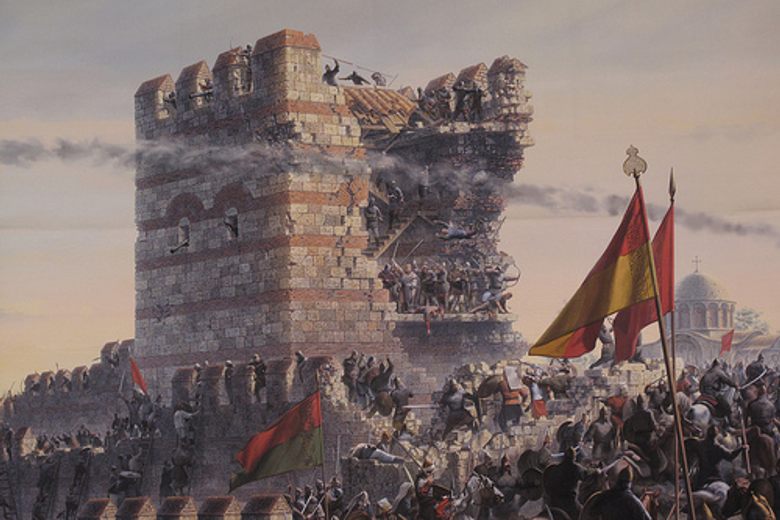
Above: The ruins of Filisia stood as a haunting reminder of what was lost. Over time, new inhabitants settled in the area, building upon the remnants of the old city. The magical essence of the Faeries lingered in the land, influencing the development of the new city.

Above: As the Sakaloryan Empire rose to power, the city was reborn as Sakalorya. Though the Faerie magic had faded, the city retained an air of mystery and enchantment. Sakalorya grew to become a center of commerce, trade, and naval power, honoring the memory of its ancient past while forging a new future.
People
Filisia:
Filisia housed the grand palace of the Faerie High King, a magnificent structure at the heart of the city. The palace was a marvel of enchanted beauty, with walls that shimmered like water and halls that echoed with ancient songs of magic and lore.
Above: Council of the high king of the Faeries Edár.
Sakalorya:
Sakalorya is a cultural melting pot, with influences from various regions and peoples who have passed through or settled in the city. This diversity is reflected in the city's cuisine, festivals, and artistic expressions. A grand arena where chariot races, public ceremonies, and theatrical performances are held, the Hippodrome is a central gathering place for citizens and visitors alike. It serves as a symbol of the city's cultural vitality and love for entertainment. The city boasts numerous libraries and schools, preserving and advancing knowledge in various fields such as philosophy, medicine, and the arts. Scholars from across the empire come to Sakalorya to study and contribute to its intellectual legacy.
Sakalorya's population has evolved rapidly during its history as the capitol of an immense empire. After Sakalorya's collapse, the cities population shrunk to about 200,000 by the year 100DE, and had grown to 300,000 by 500DE.
Érennia is a Celtic mythology-inspired fantastical world of Faeries, Men, and Fomoiri rich in history and lore. Although the world has finally seen the end of Atheldru and the evil Avalyn, the days of Mortel Men are haunted by a new evil king, Abaddon, and his Crown of Death.
We remember the days long lost over decades,
when the land was cheery and merry.
When the long ole sailors cruised the ocean with glee,
But this time you should know was long before you and me.
-Andy Rigehead
Érennia is the campaign about the world that is the setting of All books in the Tales From Pelaria series, which I am currently writing. Currently, it is very experimental as it is nowhere near being finished.
Knights of Cellewen
Dermod is the main character of Cuwedh Lyvar (Book). He is the son of Connall, and the brother of Cian.
Biography:
Dermod was born to Connall King of Cehýl. He was the younger brother of the heir to the throne of Cehýl, grew up in the shadow of his charismatic and admired elder brother, Cian. Despite their close friendship as children, Dermod became envious of Cian, especially when Cian won the affection of the woman he desires, Ellewen. Consumed by jealousy and anger, Dermod turns to alcohol and forms a close bond with two men, Conn and Céthan, who share his resentment. Together, they plot to kill Cian and frame a guard named Cadonn.
When the plan is executed, Ciandies. Although Dermod plotted to kill him, he is still paralyzed with guilt and does nothing to help. Conn and Cethan frame the guard. However, the scheme unravels, and all three conspirators are caught. Dermod is shunned by his parents, abandoned by Ellewen, and banished from the kingdom. He wanders in shame and regret until he meets Lady of the Good News.
Character Basics
Character’s name: Dermod
Role in story: Center Main Character
Age: 24
Appearance
Physical Description:
"The young man was nigh older than twenty-four, but had himself a crooked shape, this meaning that he was bent like an old walking staff. His eyes were red and baggy, his dry skin dirtied and his clothes ripped. An image most would assume to be that of a homeless beggar, or perhaps a running criminal."
-QFDC, Chapter 1, 11/20/24
Eye color: Green
Skin color: White
Hair color: Brown
Height: 5'8"
Build: Average
Fitness level: Average
Distinguishing Features: Red eyes
Other:
Character Voice:
Tone:
Dermy's tone begins as self-depriving and with little confidence. It should reflect his personality of being persistent and hard of mind and heart, but it should also show his self-guilt and doubt. As Dermod grows and learns from his experiences, his voice evolves. His self-doubt lessens, and his speech becomes more confident and assured. By the end of his journey, his voice will reflect a balance of confidence and humility, showing his path to self-acceptance and faith in the Living God.
Common Phrases:
Dermy speaks wih casual Tellewenhyr Slang.
Conn is Dermod's closest and most faithfull friend throughout the Quest For Death's Crown. He is one of The Knights of Dermod's Company and a significant part of Dermod's journey, and character development.
Biography:
enter
Character Basics
Character’s name: Connavwy
Role in story: Main Character, Foil
Age: 27
Appearance
Physical Description:
"A man with a sly grin and a cheery face had thrown the door open and was marching into the tavern. He wore a mail coif and a white, but visibly dirty tunic. Fisk instantly recognized the man, for he had spent almost his whole life with him."
12/9/24
Eye color: Blue
Skin color: Light
Hair color: Black
Height:
Build: Strong and Lean
Fitness level:
Distinguishing Features:
Other:
Personality Notes:
* = develops over time
Strengths:
Faithful, Loyal, Caring, Resiliant*, Strong in mind*, Courageous," Humerous
Weaknesses:
Desires Glory, Shame, Unconfident
Fears:
Falling back into sin
Desire:
To be with this new "Living God"
Misbelief:
He is held back by his humanity (Technically true, but he doesn't know that The Living God has given him faith. Predistination is complicated)
Hobby's/Interests:
enter
Skills:
enter
Internal Conflict
Conn acts as Dermod's walking stick on his journey through faith. Since the beginning, Conn's faith has grown immensely, and he is what helps push The Knights of Dermod's Company along their way and is always there to help. However, he is not immune from conflict of his own.
Temptation to Give Up:
Doubt
Conn starts questioning his own abilities and worth. He might think, "If I can’t help Dermod, what does that say about my faith and wisdom?" This self-doubt can gnaw at his confidence, making each setback with Dermod feel like a personal failure.
Draining
Constantly being the beacon of hope is draining on him. Conn feels emotionally exhausted from always trying to be the strong one, despite not being too confident in himself. He starts to feel like his efforts are a never-ending uphill battle, with no end in sight.
Frustration:
Despite his usual calm demeanor, Conn might experience moments of intense frustration. He might think, "Why isn’t Dermod trying harder? Why does he keep giving in?" This anger could be directed at both Dermod and himself for not being able to do more.Temptation for peace:
The lure of personal peace and a life without the constant stress of Dermod’s struggles can be very tempting. Conn might envision a simpler, more carefree life and feel tempted to abandon his mission for his own well-being.
Guilt from Past Actions
Reminders:
The consequences of Conn’s past actions might still be visible in his current life. He could encounter people affected by his past, or there could be physical reminders (like a place associated with his actions) that trigger his guilt.
Inner Turmoil:
On a daily basis, Conn battles with inner turmoil. He might have moments where he feels unworthy of giving advice or doubts his own morality. This can lead to moments of withdrawal or emotional outbursts.
Character Arc
enter
Character Voice:
Tone:
Constantly trying to break up arguments.
Humerous at times
Loves to talk about theology/moral dilemmas.
Common Phrases:
enter
One of the knights of Dermod's company. He ends up betraying them because of his own pride.
Character Basics
Character’s name: Rhonavan
Role in story: Main Character
Age: 28
Appearance
Physical Description:
Eye color:
Skin color:
Hair color:
Height:
Build:
Fitness level:
Distinguishing Features:
Other:
Personality Notes:
* = develops over time
Strengths:
enter
Weaknesses:
enter
Fears:
Being poor and disrespected
Desire:
To be rich and to be admired by others
Misbelief:
Believes he will only be happy if he is wealthy and is thought highly of.
Hobby's/Interests:
enter
Skills:
enter
Internal Conflict
enter
Subplot: Rhonavan's Betrayal
Rhonavan feels like he is being left in the shadows during the quest and that others are taking the spotlight. He also feels like this idea of not getting any of the praise from the quest ending is a foolish one, and he would rather betray the Quest than to continue on with his rewardless trek.
Character Arc
enter
Character Voice:
Tone:
enter
Common Phrases:
enter
Biography:
enter
Character Basics
Character’s name:
Role in story:
Appearance
Physical Description:
Eye color:
Skin color:
Hair color:
Height:
Weight:
Fitness level:
Distinguishing features:
Age:
Personality Type (MBTI):
Distinctive skills/abilities:
What is their greatest fear?
Internal Conflict
Cethan is the third Main part of the Quest For Death's Crown and one of Dermod's oldest friends.
Biography:
enter
Character Basics
Character’s name: Cethan
Role in story: Main Character
Age: 27
Appearance
Physical Description:
Eye color:
Skin color:
Hair color:
Height:
Build:
Fitness level:
Distinguishing Features:
Other:
Personality Notes:
* = develops over time
Strengths:
Smart, Scheming,
Weaknesses:
Arrogant, Selfish, Pridefull, Controlling, Egotistical, Jealous, mischievous
Narcissim (Specific Weakness):
Argumentative: Cethan tends to engage in debates and conflicts, always trying to prove his point, regardless of the topic or stakes.
Selective Listening: He pays attention only to information that supports his views and dismisses anything contradictory.
Manipulative: Cethan might twist facts or use underhanded tactics to win arguments and maintain his sense of superiority.
Superficial Relationships (Specific Weakness):
Cethan's interactions are often superficial, based on mutual benefits rather than genuine connection. He struggles to form deep, meaningful relationships.
Fears:
Being weak, being incompotent
Desire:
Control over self and others, being
Cethan craves control over his environment and the people in it. He desires to be recognized as the smartest, most capable person in the room, and he wants others to acknowledge his superiority. This desire for recognition and control fuels his need to dominate conversations, make decisions, and prove his worth. He seeks validation and admiration from those around him, believing that this will affirm his self-worth.
Misbelief:
He must be right to be happy, admitting falseness is a sign of weakness or failure
Cethan firmly believes that showing any sign of weakness or admitting to mistakes is a form of failure. He thinks that in order to be respected and successful, he must always project an image of perfection and infallibility. This misbelief leads him to avoid vulnerability at all costs, even when it would be more beneficial to acknowledge his limitations and grow from them. He fails to see that true strength and respect often come from honesty and humility.
Hobby's/Interests:
enter
Skills:
enter
Other:
Internal Conflict
Cethan is arrogant and wants to be right all the time. He is under the belief that being wrong means to be a failure and he is stuck on that belief. Here are his internal conflicts;
Fear of Failure and Vulnerability
Cethan's biggest fear is being seen as a failure. This fear drives him to act arrogantly and stubbornly, doubling down on his mistakes rather than admitting he was wrong. Cethan's refusal to show vulnerability or admit mistakes stems from a deep fear of being hurt or taken advantage of.
Struggle for Control
His desire to control everything and everyone around him can lead to frustration and anxiety when things don’t go his way.
Jealousy and Resentment
Cethan’s envy towards those who are genuinely respected and admired can create deep resentment and a desire to undermine them.
Identity Crisis
Over time, the realization that his arrogance and need to be right have isolated him might lead Cethan to question his identity and purpose.
Character Arc
enter
Subplot: Cethan's Downfall (Cuwedh Lyvar (Book))
Cethan succeeds in passing the many trials of temptation but ultimatly is revealed to have done it all for the sake of impressing men and not out of faith in the Living God.
In the end, Cethan is called to abandon earth to be with his god. This requires him to let go of his control, acknowledge that he might not have all the answers, and show faith in something greater than himself. He clings to his need to be right and his fear of appearing weak.
Note:
Cethan stood on the precipice, the call of the divine echoing in his mind, a whisper that promised peace and eternal solace. The wind howled around him, a symphony of celestial voices urging him to let go, to trust.
But he couldn't.
The memories of his victories against temptation flashed before him—each triumph, a testament to his strength and righteousness. He had resisted the allure of forbidden pleasures, denied the seduction of power, and emerged unscathed from every trial. He was right. He had to be right.
"What if I’m wrong?" The thought gnawed at him, an insidious whisper that threatened to unravel everything he believed in. To admit he was wrong, to accept that he didn’t have all the answers, felt like a betrayal of everything he had fought for.
"Come, Cethan," the divine voice called again, gentle but insistent. "Abandon your fears. Trust in me."
His heart pounded, his breath coming in ragged gasps. He took a step back, away from the precipice. "I can’t," he whispered, the words choking him. "I can’t."
- Idea?
Character Voice:
Tone:
enter
Common Phrases:
enter
Alahad was once one of the Knights of Treshýl, but was banished from his guild for sleeping with a fellow nights maiden. He, along with Gwinrhod are two of the knights of The Knights of Dermod's Company.
Biography:
enter
Character Basics
Character’s name: Alahad
Role in story: Main Character
Age:
Appearance
Physical Description: Attractive
Eye color: brown
Skin color:
Hair color:
Height:
Build: Aesthetic
Fitness level: High
Distinguishing Features:
Other:
Personality Notes:
* = develops over time
Strengths:
Brave, Strong, Social, Loyal, Determined
Weaknesses:
Vain, Wrathfull, Lustfull, sesceptable to tempation
Fears:
- Being rejected or unlovable if he doesn't maintain a certain image or status.
- Falling into the sin of lust and vanity and it brought him to his end.
Desire:
- To be loved and admired.
- To be freed from his lusts and vanity.
Misbelief:
He believes his worth comes through how others view him, and that he will only be happy when he gets admiration and validation from others.
Hobby's/Interests:
enter
Skills:
enter
Internal Conflict
Desire for Love and Admiration vs True Worth Via Chastity and Humility
Desire for Love and Admiration:
Need for Validation: Alahad seeks external validation through love and admiration, often equating these with his self-worth. This desire drives him to act in ways that attract attention and praise, such as flaunting his appearance or engaging in relationships that offer superficial gratification.
Fear of Rejection: His fear of being rejected or unlovable if he doesn't maintain a certain image or status exacerbates this desire. He might believe that without admiration or physical attraction, he is unworthy or insignificant.
Vanity and Lust: This desire manifests in vanity and lust, leading him to prioritize physical appearance and sensual pleasures over deeper, more meaningful connections. He might seek out numerous relationships to fill an emotional void, mistaking lust for love.
True Worth via Chastity and Humility:
Inner Peace and Contentment: Alahad yearns for a sense of inner peace and contentment that comes from knowing and accepting his true worth beyond physical appearance and external validation. He understands that chastity and humility can lead to a more authentic and fulfilling life.
Moral and Ethical Values: He recognizes that true worth is found in virtues like chastity and humility. Chastity represents self-control and respect for oneself and others, while humility involves acknowledging one's limitations and valuing others' worth.
Genuine Relationships: Embracing chastity and humility would allow Alahad to form deeper, more genuine relationships based on mutual respect and understanding rather than superficial attraction.
Character Arc
Early Story:
Pursuit of Admiration: Alahad actively seeks the admiration and affection of others, often displaying his vanity and engaging in lustful behavior. He revels in the attention he receives but feels a nagging emptiness.
Moments of Doubt: In private moments, he questions whether this superficial admiration truly fulfills him. He feels a sense of dissatisfaction and longs for something more meaningful.
Mid-Story:
Turning Point: Alahad faces a situation that forces him to confront the hollowness of his pursuits. Perhaps he experiences a significant betrayal or loss that reveals the emptiness of his superficial relationships.
Reflection and Insight: Through interactions with other characters, such as Conn or Dermod, Alahad begins to see the value of chastity and humility. They challenge his views and offer alternative perspectives on love and worth.
Late Story:
Embracing Change: Alahad starts making conscious efforts to change his behavior. He practices chastity by avoiding superficial relationships and focusing on genuine connections. He demonstrates humility by acknowledging his flaws and valuing others' worth.
Final Sacrifice: In a climactic moment, Alahad makes a selfless sacrifice that embodies his newfound values. This act of humility and chastity represents his acceptance of true worth beyond external validation.
Internal Struggle and Resolution
Ongoing Battle: Throughout the story, Alahad continues to struggle with his desires for admiration and his pursuit of true worth. His journey is marked by moments of relapse and growth, highlighting the complexity of overcoming deep-seated beliefs and habits.
Resolution: Ultimately, Alahad's acceptance of chastity and humility leads to a deeper sense of self-worth and inner peace. His relationships become more meaningful, and he finds fulfillment in virtues rather than external validation.
Character Voice:
Tone:
enter
Common Phrases:
enter
The Faeriefolk are enchanting beings known for their ethereal beauty and otherworldly grace. The Faeriefolk are a race of law and tradition. They were the chosen race of Dhia, Túlewendiel but were banished from Édennia (The Utmost North) when they rejected him. They can live for up to eight times the lives of Aldrýn (Men), and unlike men have large angel-like wings.
Appearance
Faeries have elegantly sculpted facial features, with high cheekbones, finely arched eyebrows, and almond-shaped eyes. Their eyes are particularly striking, often shimmering with a luminescent glow that reflects their magical nature. The expressions of faeries are often serene and composed, yet their eyes can convey a wide range of emotions, from mischievous playfulness to profound wisdom. Faerie hair, in both males and females, is typically long and flowing, cascading down their backs like a waterfall of silk. It comes in various shades, ranging from deep chestnut to shimmering silver, often with a subtle iridescent sheen. Faeries possess slender, graceful bodies. They hardly ever get obese or fall into the love of food.
One of the most distinctive features of faeries is their majestic white feathered wings. These wings are large and graceful, resembling those of an angel or a bird of paradise. The feathers are pristine and soft, with an iridescent glow that catches the light and creates a captivating visual effect. As children, their wings cannot carry them, but when they grow older, they can float above the ground for short periods of time. Their wings are not made for flight above their own height however, but when they reach the age of three hundred, they grow to their prime and can glide for long distances. In order to glide howere, they need to jump from a high height. Their wings grow nonstop until they die. At the age of six hundred, their wingspans can be up to three times their body-length, or about eighteen feet.
History
The Faeries were the first race created by Dhia, Túlewendiel in Édennia (The Utmost North). The first Faeries born from the earth where known as the firstborn, and where the first intelligent life in Érennía .
Cultures
Aging and Generations:
Aging:
Faeries are born similar to human babies, only their wings are unfit to carry them. Their childhood lasts about forty years, and they become sexually mature near the age of two hundred. They can live for up to twelve-hundred years.
During the Blídwiny ya Áeóbéad (Years of the First World) Faerie generations were about three centuries in length. This is because of the Faerie reproductive system. Unlike the reproductive systems of man, Faeries take ages to mature into the age to bear children, around three centuries from birth. Dhia, Túlewendiel created this so that Faerie populations would not grow out of control, given their great age of youth.