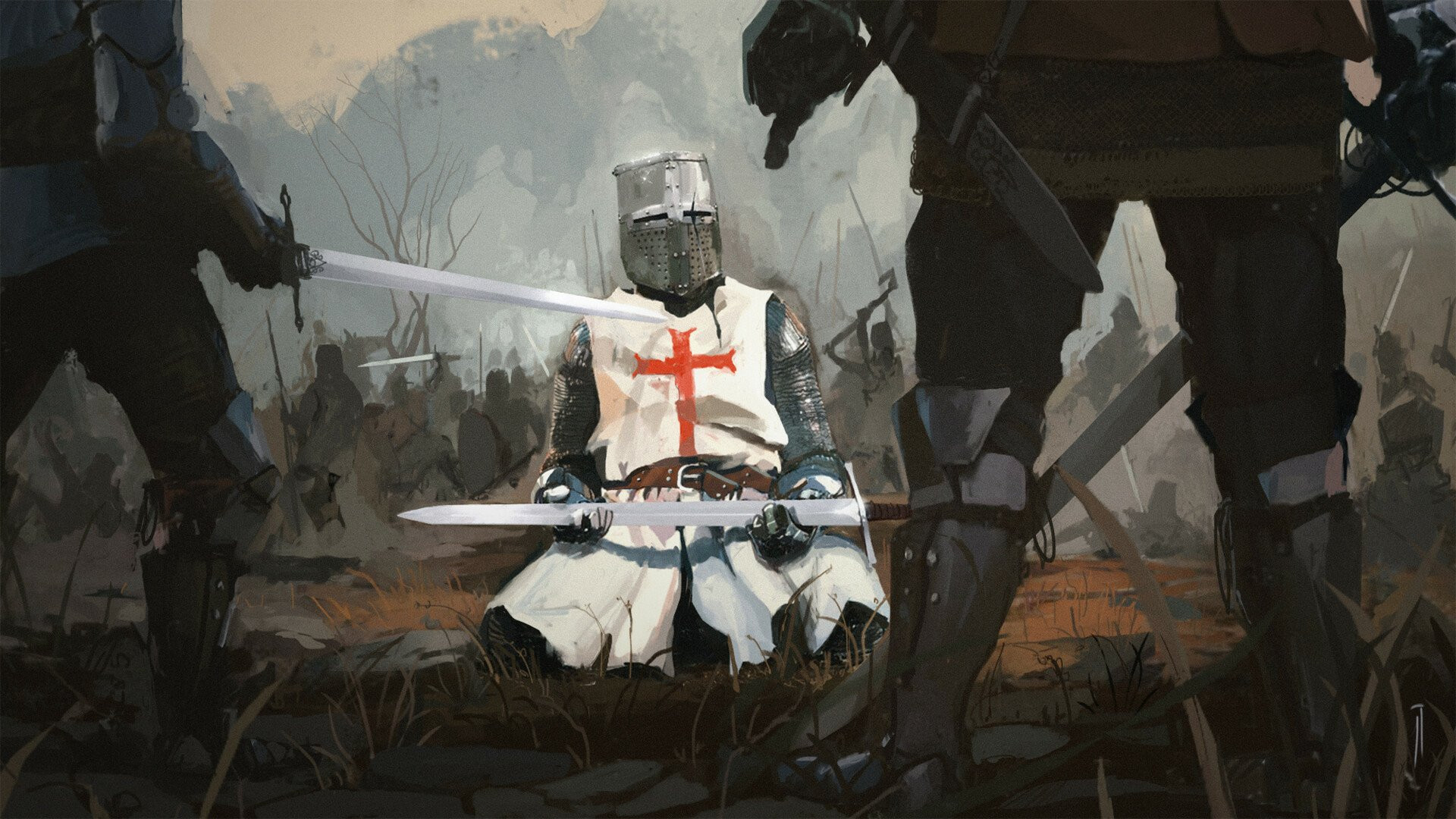
Personality Notes:
* = develops over time
Strengths:
Hopeful*, Faithful*, Persevering, Hardworking
Weaknesses:
Doubtful, Envious, Wrathful, Lustful, Pride, Arrogance, Infatuation
Fears:
- Being hated, being looked down upon
- Falling back into the slavery of sin, returning to his father the devil
Desire:
- Being loved again by his people
- To be righteous and innocent, to become child of the Living God
Misbelief:
He can never change for the good, and he will always be fallen into sin. "Redemption is Earned Through Perfection"
Hobby's/Interests:
enter
Skills:
enter
First plan to Success: Seeking Forgiveness from Men
Dermod initially believes that by gaining the approval and validation of others, he can prove his worthiness and achieve forgiveness. He focuses on performing grand gestures and public displays of piety, hoping that the praise and admiration he receives will fill the void within him.
Second plan to Success: Seeking Forgiveness from the Living God
After realizing the flaws in his initial approach, Dermod shifts his focus inward. He understands that true forgiveness and redemption come from a sincere heart and a commitment to change. He starts seeking forgiveness through personal reflection, honest repentance, and a genuine effort to live a righteous life.
Aha Realization: Perseverance vs Genuine Faith
Dermy realizes that the reason that the armor of light is not working is because he doesn't have faith.
Internal Conflict
Dermod begins as a flawed person. He is given everything at a young age and has a great childhood with loving parents and a great brother. However, he soon grows to envy his brother for having more than him. This establishes envy as one of Dermod's major flaws. He has two major conflicting fears and desires:
- Being hated, being looked down upon -> Being loved again by his people
- Falling back into the slavery of sin -> To be righteous and innocent
Dermys Internal Conflicts:
Self-Doubt vs Confidence:
Ever since Dermy made the decision to kill his brother, has had doubt that he can ever change. He fears that he will fall back into sin and that he has no ability to change to a good person.
Desire for Redemption vs. Worthlessness:
He might crave redemption and a chance to make amends, but his sense of worthlessness and belief that he doesn't deserve forgiveness could hold him back. This conflict is fueled by his self-loathing and remorse.
Past Deeds vs. Present Actions:
Dermod struggles to reconcile his past actions with who he wants to become. Even if he genuinely wants to change and seek forgiveness, the weight of his past constantly drags him down, making it difficult to move forward.
These can all be basically summed up with:
Dermy's Confidence in his ability to become a child of the Living God vs His past making him doubt whether he can change.
Self-Doubt vs. Confidence
Dermod might frequently question his own worth, particularly in light of his past actions. He could be plagued by thoughts like, "Am I truly capable of change?" or "Do I deserve forgiveness?" This self-doubt can erode his belief in his ability to seek and achieve redemption.
Questioning His Worth:
Dermod might frequently question his own worth, particularly in light of his past actions. He could be plagued by thoughts like, "Am I truly capable of change?" or "Do I deserve forgiveness?" This self-doubt can erode his belief in his ability to seek and achieve redemption.
Fear of Failure:
Dermod might be terrified of failing in his efforts to make amends. This fear can lead to hesitation and procrastination, as he worries that any attempt to seek forgiveness or improve himself will end in failure, reinforcing his negative self-image.
Comparing Himself to Others:
Dermod might constantly compare himself to others, especially those who seem morally upright or successful. These comparisons can deepen his sense of inadequacy and make him feel that he can never measure up.
Internal Critic:
An internal critical voice might constantly undermine Dermod’s efforts, telling him that he is not good enough or that his attempts at redemption are meaningless. This voice can be a significant obstacle to his progress.
Confidence
Moments of Success:
Despite his self-doubt, Dermod might experience moments of success that boost his confidence. These moments can be small victories, such as a kind act that is well-received or a personal milestone in his journey toward change.
Support from Others:
Positive reinforcement from friends, family, or mentors can help Dermod build confidence. Their belief in his ability to change and their encouragement can provide a counterbalance to his self-doubt.
Recognizing Growth:
As Dermod makes progress, he might begin to recognize his own growth and change. This self-awareness can help him build confidence in his ability to seek and achieve redemption.
Setting and Achieving Goals:
Dermod might set small, achievable goals for himself. Each goal he meets can serve as a confidence booster, proving to him that he is capable of positive change and that his efforts are making a difference.
Interplay Between the Two
Fluctuating Emotions: Dermod’s confidence might fluctuate, with moments of self-assurance followed by periods of intense self-doubt. This ebb and flow can create a dynamic and realistic portrayal of his internal struggle.
Impact on Actions: His actions might vary based on which emotion is dominant. When feeling confident, Dermod might take bold steps toward redemption, reaching out for forgiveness or engaging in acts of service. When self-doubt takes over, he might withdraw, hesitate, or even sabotage his progress.
External Influences: External events and interactions can significantly impact this internal conflict. A positive encounter or a supportive word can boost his confidence, while a setback or negative comment can plunge him back into self-doubt.
Growth and Resilience: Over time, the interplay between self-doubt and confidence can lead to significant personal growth. As Dermod navigates these emotions, he can develop resilience, learning to push through doubt and build a stronger sense of self-worth.
Desire for Redemption vs. Worthlessness
Desire for Redemption
Motivation to Change:
Dermod's desire for redemption could be driven by a profound need to make amends for his past actions. This motivation might come from a realization of the gravity of his crime and a genuine wish to rectify his wrongs.
Seeking Forgiveness:
Redemption for Dermod might mean seeking forgiveness from those he has wronged, particularly his parents. This could involve him undertaking difficult tasks to prove his remorse and willingness to change.
Acts of Atonement:
He might engage in acts of service or penance, hoping that through these actions, he can balance out his past misdeeds. These acts might be significant gestures or consistent, everyday efforts to help others.
Spiritual or Moral Awakening:
Dermod could experience a spiritual or moral awakening, leading him to seek a higher sense of purpose. This transformation might be influenced by new beliefs or the guidance of a mentor or religious figure.
Future Aspirations:
Dermod’s vision for his future could be centered on becoming a better person, contributing positively to society, and building new, healthy relationships. This forward-looking mindset might give him hope and a sense of direction.
Feelings of Worthlessness
Overwhelming Guilt:
The guilt of having killed his brother could be a constant, heavy burden. Dermod might feel that no matter what he does, he can never undo his actions or fully atone for them.
Self-Loathing:
Dermod might struggle with intense self-loathing, believing that he is fundamentally flawed or evil. This internal dialogue could make it difficult for him to see any good in himself or his potential for change.
Fear of Inadequacy:
He might fear that his efforts at redemption will never be enough to gain true forgiveness. This fear could paralyze him, making it hard to even start the process of seeking redemption.
Isolation:
Dermod might isolate himself due to his feelings of worthlessness, pushing away those who care about him or want to help. This self-imposed isolation can deepen his despair and reinforce his negative self-view.
Resistance to Forgiveness:
Even if others begin to forgive him, Dermod might resist accepting it, feeling that he doesn’t deserve their mercy. This resistance can create a vicious cycle where he sabotages any progress toward redemption.
Interplay Between the Two
Constant Battle: Dermod's journey is marked by a constant battle between these two forces. His desire for redemption might propel him to take positive steps, but his feelings of worthlessness can undermine these efforts, causing setbacks.
Moments of Weakness and Strength: He might experience moments of hope and determination followed by periods of deep despair and self-doubt. These fluctuations can make his journey unpredictable and emotionally charged.
Support Systems: The support of friends, family, or mentors can play a crucial role. They can help him see his potential for redemption and provide the encouragement needed to overcome his feelings of worthlessness.
Personal Growth: Through this struggle, Dermod can experience significant personal growth. His journey toward redemption, despite his feelings of worthlessness, can demonstrate resilience and the human capacity for change.
Past Deeds vs. Present Actions
This internal struggle is centered on Dermod's journey to reconcile his past misdeeds with his current desire to seek forgiveness from God and become a more righteous. Here are some key aspects:
Flashbacks and Remorse
Dermod is haunted by vivid memories of his crime: his brother’s face, the wine in the cup, and especially the chains and whip of the slaveholders. These flashbacks can be triggered by mundane things, such as hearing a noise, a phrase, or even a scent. Each flashback can bring a wave of remorse, making it difficult for Dermod to focus on his present goals.
Identity Crisis
As Dermod seeks forgiveness, he experiences an identity crisis. He once identified as a person willing to commit a heinous act. Now, he aspires to be someone worthy of forgiveness and redemption. This shift can create a deep sense of confusion and self-doubt. He might ask himself, "Who am I really?" and "Can a person truly change?" He also has shame and fear that he isn't enough to be forgiven. Even though he knows God can forgive him, he fears whether he is really a good person or not.Sruggle to Forgive Himself
Even if others begin to forgive him, Dermod might find it nearly impossible to forgive himself. This internal battle can be the most challenging aspect of his journey. He might feel that self-forgiveness is a form of self-indulgence that he does not deserve. This can lead to a continuous internal dialogue of self-recrimination and condemnation.
Character Arc
eginning: Struggling with Guilt and Self-Doubt
Introduction:
Self-Doubt vs. Confidence: Dermod is introduced as someone deeply troubled by his past actions, filled with self-doubt. He questions his worth and struggles with confidence, feeling like he will never be able to redeem himself.
Desire for Redemption vs. Worthlessness: His desire for redemption is overshadowed by feelings of worthlessness. He believes he doesn't deserve forgiveness and that his efforts to change will be futile.
Past Deeds vs. Present Actions: Dermod is haunted by his past, constantly reliving the moment he killed his brother. This makes it difficult for him to take positive actions in the present.
Inciting Incident:
A triggering event, such as a chance encounter with a family member or a pivotal moment of realization, pushes Dermod to consider the possibility of seeking redemption. This sets the stage for his internal conflicts to come to the forefront.
Middle: The Journey of Self-Discovery and Redemption
Inner Turmoil:
Self-Doubt vs. Confidence: As Dermod starts to take steps toward redemption, his self-doubt intensifies. He questions every action and often feels paralyzed by fear of failure. However, small successes and moments of encouragement from others begin to plant seeds of confidence.
Desire for Redemption vs. Worthlessness: Dermod's desire for redemption grows stronger, but he is frequently pulled back by his sense of worthlessness. He starts engaging in acts of atonement, hoping to prove to himself and others that he can change.
Past Deeds vs. Present Actions: He begins to confront his past more directly, perhaps by visiting places connected to his brother or talking to people who knew him. These actions help him start to reconcile his past deeds with his present efforts.
External Challenges:
External obstacles, such as resistance from family members or societal judgment, challenge Dermod's progress. These challenges force him to dig deeper into his internal conflicts and test his resolve.
Support and Guidance:
Dermod finds support in unexpected places. Friends, mentors, or even strangers provide him with the encouragement and wisdom he needs. This external support is crucial in helping him build confidence and see his worth.
End: Finding Resolution and Self-Acceptance
Climactic Moment:
Self-Doubt vs. Confidence: Dermod faces a critical moment where his confidence is put to the ultimate test. Perhaps he needs to perform a brave act of atonement or stand up for his new values in a significant way. His success in this moment helps solidify his growing confidence.
Desire for Redemption vs. Worthlessness: He reaches a point where he starts to believe that redemption is possible. This might come from forgiveness from someone important, or a personal breakthrough that allows him to see his own worth.
Past Deeds vs. Present Actions: Dermod begins to accept that while he cannot change the past, he can shape his future. His present actions start to reflect this acceptance, and he becomes more focused on making positive contributions.
Resolution:
Self-Doubt vs. Confidence: Dermod’s confidence is more stable, though he may still experience moments of doubt. He has learned to navigate these emotions better and has developed resilience.
Desire for Redemption vs. Worthlessness: He feels a stronger sense of self-worth and believes in his capacity for change. Dermod continues his journey of redemption with a clearer sense of purpose and hope.
Past Deeds vs. Present Actions: Dermod has found a way to integrate his past into his present without being consumed by it. He uses his past mistakes as lessons that guide his future actions.
Character Growth:
By the end of the story, Dermod is a more complex and relatable character. He has faced his internal conflicts head-on, growing and evolving in a way that readers can connect with. His journey of self-discovery, redemption, and acceptance can inspire readers and make his story deeply engaging.
By carefully depicting Dermod’s internal struggles and his gradual journey toward redemption and self-acceptance, you can create a character arc that resonates with readers and keeps them emotionally invested in his story.
Integrating external challenges of temptation and sin into your medieval adventure story can greatly enhance Dermod’s character arc, emphasizing his internal conflicts and growth. Here’s how you can weave these elements together:
Structuring Dermod's Journey with External Challenges
1. Initial Temptations and Testing His Resolve
Early Trials: Introduce temptations early in Dermod’s journey to test his initial resolve. These could be smaller challenges that shake his already fragile confidence.
Example: Dermod is tempted by wealth or power offered by a corrupt noble. He struggles with the temptation but ultimately refuses, albeit with doubt about his own strength.
2. Heightening Internal Conflicts
Self-Doubt vs. Confidence: Each external challenge should push Dermod to confront his self-doubt. Early failures can deepen his self-doubt, while small victories build his confidence.
Example: When faced with the temptation to use a forbidden magical artifact that could ease his path, Dermod initially hesitates but then resists, gaining confidence in his moral strength.
3. Confronting Desires and Worthlessness
Significant Temptations: Present Dermod with significant temptations that force him to weigh his desire for redemption against feelings of worthlessness.
Example: Dermod is offered a chance to erase his past sins through a dark ritual. The temptation is strong, but he realizes that true redemption requires facing his past, not erasing it. This decision reinforces his worthiness of redemption.
4. Integrating Past and Present Actions
Complex Challenges: Challenges that relate directly to Dermod’s past can create a powerful connection between his past deeds and present actions.
Example: A challenge might involve saving someone in a situation similar to his brother's, forcing Dermod to relive his guilt and make amends by choosing a different path.
5. Catalysts for Growth
Mentorship and Support: Introduce mentors or allies who help Dermod navigate these temptations and provide guidance. Their support can help him reconcile his internal conflicts and grow.
Example: A wise monk or a fellow knight could guide Dermod, helping him see the value of his efforts and offering wisdom that builds his resilience.
Key Stages of Dermod’s Arc through External Challenges
Initial Temptation and Doubt:
Dermod is confronted with temptations that play on his self-doubt. He experiences moments of weakness but also small triumphs that plant the seeds of confidence.
Heightened Conflict and Resolution:
As Dermod faces more significant challenges, he is forced to reconcile his desire for redemption with his feelings of worthlessness. Each temptation becomes a crucible that tests and strengthens his resolve.
Critical Turning Point:
A major trial, perhaps involving a life-or-death scenario, acts as a turning point. Dermod’s response to this challenge, influenced by the lessons and confidence he has gained, solidifies his path toward redemption.
Final Test and Redemption:
The climax of Dermod’s journey involves the ultimate temptation, one that requires him to use all he has learned and grown from his experiences. Successfully overcoming this challenge demonstrates his transformation and inner strength.
Resolution and Reflection:
After conquering his final temptation, Dermod reflects on his journey. He may still face moments of self-doubt, but his overall arc shows a significant shift towards self-acceptance and confidence. This growth allows him to truly start seeking forgiveness and making amends.