Game Mechanics
The right gear at the right time can make all the difference between life and death. But how do you keep track of what you're carrying? This section introduces inventory slots, object bulk, and new systems to help you manage your inventory.
Inventory Slots
Size | Inventory Slots | Bulk of Creature |
Tiny | 6 + Strength | 5 |
Small | 14 + Strength | 10 |
Medium | 20 + Strength | 20 |
Large | 24 + (Strength x 2) | 40 |
Huge | 30 + (Strength x 4) | 80 |
Gargantuan | 46 + (Strength x 8) | 160 |
Equipment to increase Inventory Slots
- Backpack increases Slots by 6
- Handy Haversack increases Slots by 20
- Bag of Holding increases Slots by 80
- Portable Hole increases Slots by 200
Free Inventory Items (No Bulk)
- Ration Box (Holds 5 Food Rations)
- Water Skins (Holds 5 Water Rations)
- Coin Purse (Holds 200 coins)
Quickdraw Slots
- # of Quickdraw Slots = 3 + Dex Modifier
- Retrieving other items from your inventory requires use of an Action.
- Equipment can increase # of Quickdraw Slots.
- Change items in Quickdraw Slots during Short Rest.
Bulk
Objects have Bulk values that determine the number of Inventory Slots filled — the bulkier the object, the more slots it occupies.
Bulk represents the effort needed by a medium-sized creature to carry an object based on its size, weight, and shape—the more awkward or uncomfortable it is to hold an object, the higher its bulk.
Bulk Table
Category | Bulk | Size | Weight |
Tiny | 0.2 | Many fit in one hand | Negligible |
Small | 1 | About one handspan long. Can be held easily in one hand | 2 pounds or less |
Medium | 2 | Up to an arms-length. Can be held in one hand but requires some manual dexterity | 2 - 5 pounds |
Large | 3 | Less than the length of a medium creature. Can be held in one hand but more comfortable using two | 5 - 10 pounds |
X-Large | 6 | Longer than the length of a medium creature. Requires two hands to hold. | 10 - 35 pounds |
XX-Large | 9 | Longer than two medium creatures. Requires some effort to hold in two hands | 35 - 70 pounds |
Equipment Wear and Tear
Equipment damage tracked by Notches.
- Armor – Armor gains Notch on Critical Hit. Each Notch reduces AC by 1.
- Weapons – Weapons gain Notch on Critical Failure. Each Notch reduces damage die by one die size, ie 1d8 -> 1d6 or 2d6 -> 1d6 + 1d4.
- Spellcasting Focus – Spellcasting Focus gains Notch on Critical Failure. Each Notch removes the ability to cast spells without Material Components and will either reduces Spell Attack Bonus or Spell Save DC by 1.
Notches can be removed by craftsmen for 10% item cost per Notch OR characters can repair equipment with with 1 hour of work using appropriate tools and an Ability Check.
- Critical Success = All Notches repaired.
- Success = Repair one Notch.
- Failure = No effect
- Critical Failure = Add one Notch.
Craftsmen can temper equipment against damage following the table below.
Tempering Table
Temper Quality | Rarity | Notch Resistance | Cost | Time | Value Added |
Lesser | Common | 1 | Value x 2 | 3 days | Value x 3 |
Greater | Uncommon | 2 | Value x 4 | 1 tenday | Value x 6 |
Superior | Rare | 4 | Value x 6 | 2 tendays | Value x 12 |
Supreme | Very Rare | 8 | Value x 8 | 4 tendays | Value x 24 |
Ammunition/Usage Dice
Ammunition and kit usage will be tracked by Usage Dice. Roll the Ammo/Usage die for your ammo/kit, if roll is 1 or 2, die drops following the table below.Die Size | Avg Uses |
d20 | 30 |
d12 | 20 |
d10 | 14 |
d8 | 9 |
d6 | 5 |
d4 | 2 |
d2 | 1 |
1 | - |
The lands outside of protection from city walls, guards, and armed citizens can be extremely dangerous! Starvation, thirst, and exposure to the elements can be just as deadly as weapons and magicks, so planning before travel is advised. Before embarking on a long journey, plan your route, investigate the details of the road, and gather supplies or allies to protect your party against the hazards of weather, terrain, and banditry.
Prepare For Your Journey:
Successful travel relies on planning— choose a destination and a means of conveyance to estimate the time your journey will require..
1. Pick a destination, plot your route, and estimate your journey length
After choosing a destination, you can estimate the amount of time to reach the destination based on ideal travel conditions. On foot, you can travel 15+ miles per day with good weather, ideal travel terrain, and a moderate travel pace. Many factors can affect travel time and survival difficulty, such as weather conditions, terrain conditions, pace, and type of conveyance.
Pace | Day (mi) | Guide DC | Forager DC | Scout DC |
Slow | 10 | 5 | 5 | 5 |
Moderate | 15 | 10 | 10 | 10 |
Fast | 20 | 15 | 20 | 20 |
Grueling | 25 | 20 | 30 | 30 |
Additionally, you can discuss your trip with locals to obtain maps, learn of shortcuts, or be warned of conditions to prepare for.
2. Gather information and supplies, then outfit your party
With your destination and route set, it’s time to get to the specifics of the trip. You may want to investigate for information about the route and destination, which could be critical to survival along the trail. How many are in your party? Do you have allies tagging along? Do you have livestock to feed and water? Check the ration requirements for your party and stock up before traveling to ensure that you have enough food and water for the trip, expecting there could be complications along the way. Additional equipment and supplies may make your travel easier, so find out what might be available for sale at various vendors.
Starting the Day’s Travel
Planning a Travel Day
Before setting off, you should check weather conditions, food/water ration levels, terrain conditions, and survival conditions to determine if travel is advisable. Travel through more difficult terrains and during inclement weather could be disastrous to the party! Weather ranges from fair to severe, with a chance to shift 1 step in either direction 4x a day. Different seasons bring different weather, and bad weather (flagged in red in the below table) makes travel treacherous and travel checks far more difficult.
Winter | Spring | Summer | Fall |
|---|---|---|---|
Blizzard | Thunderstorm | Thunderstorm | Thunderstorm |
Freezing Cold | Heavy Rain | Heavy Rain | Heavy Rain |
Snow | Rain | Rain | Rain |
Rain | Snow | Light Clouds | Snow |
Fog | Fog | Clear Skies | Fog |
Heavy Clouds | Light Clouds | High Winds | Light Clouds |
Light Clouds | Clear Skies | Scorching Heat | Clear Skies |
Clear Skies | High Winds | Strange | High Winds |
Strange | Scorching Heat | Scorching Heat | |
Strange | Strange |
Pack Up or Stay Put?
If travel conditions seem too risky, The Party can spend the day crafting, training, gathering supplies, or resting to prepare for travel under improved conditions. Even under ideal conditions, it may be beneficial to spend some time resting, healing, and resupplying during long or difficult journeys.
Assign Travel Roles
There are four roles to fulfill while travelling: guide, forager, scout, and lookout. Each character can only lead or assist in one role per day, and any role not fulfilled will result in an auto-fail during checks.
Each role can have only one leader, but any number of assistants. The leader performs the check appropriate to each role, and additional assistance grants advantage.
Guide
- Responsible for navigating the traveling party to their destination.
- The Guide Check determines if the guide successfully kept to the chosen route or if the party gets lost and cannot travel as far as planned.
- Cartography tools, maps, and information about geographic areas can improve Guide Check roll.
Forager
- Responsible for finding food and water along the trail.
- The Forager Check determines if you find potable water and edible foods and how much of each the traveling party gains
- Hunting equipment, purifying potions and spells, and information about geographic areas can improve Forager Check roll.
Scout
- Responsible for ranging ahead of the traveling party to give warning of potential encounters along the road.
- The Scout Check determines whether the party will be surprised by any encounters while traveling.
- Spyglass, flight, communication with nature, and information about geographic areas can improve Scout Check roll.
Lookout
- Responsible for securing the camp at night. Stays watch overnight and sleeps during the daytime.
- The Lookout Check determines if the party will be surprised by potential encounters occurring while camping.
- Traps/alarms, enhanced vision, and information about geographic areas can improve Lookout Check roll.
Set Pace
How quickly do you want to get to your next destination? How quickly do you NEED to get to your next destination? You will need to choose a travel pace: slow, moderate, fast, or grueling. Slower paces reduce the difficulty of Travel Role Checks and your resistance to survival conditions at the expense of time spent traveling. Faster paces will decrease travel time but Travel Roll Checks will become more difficult. You should try to find a good travel balance depending on travel conditions and supplies on hand.
Pace | Day (mi) | Guide DC | Forager DC | Scout DC |
Slow | 10 | 5 | 5 | 5 |
Moderate | 15 | 10 | 10 | 10 |
Fast | 20 | 15 | 20 | 20 |
Grueling | 25 | 20 | 30 | 30 |
Travel Day:
A Travel Day has four phases.
Morning
The sun rises, providing light to navigate your journey again.
- Check weather: Weather can have a drastic impact on your travel plans, especially if you're not properly prepared. You may want to avoid travel completely during heavy rains, storms, and snows.
- Assign roles: Decide the roles each character will play: guide, forager, scout, and lookout.
- Set pace: Decide travel pace
- Hit the trail: Start the travel day.
>>Scout check
Afternoon
The sun is at its peak, providing an ideal time to take a short break in the pace of travel.
>>Forager check
Evening
The sun is beginning to set and the party uses the last of the day’s light to continue travel.
>>Guide check
Night
The time of night creatures approaches, set up camp and rest until daylight.
- Set up camp: Each character in the party will perform a Camping Check to determine how well the campsite was prepared, determining DC for Camp Activities Checks.
- Eat/Drink: Account for required food and water rations for the day, assign survival conditions for Hunger and Thirst.
- Camp Activities: Each character can attempt to perform one Camp Activity.
- Sleep: Go to bed to heal, regain abilities, and reduce Fatigue.
>>Lookout check
>>Campsite check
Adventuring is a tough business. After battle or at the end of a long travel day, you'll need to heal wounds, rest, and prepare for whatever hazards may come up next. This section defines the rest periods and describes how they work, what activities can be done during them, and the results of taking some much needed down time.
Short Rest
Minimum of 1 hour, maximum of 8 hours. Can be done anywhere.
Activities During Short Rest
- Regain HP by spending Hit Dice.
- If Bloodied, must expend use from Healer’s kit. Only one use required per Short Rest.
- Regain Class/Species features that recharge on Short Rest.
- Eat and Drink to improve Survival Conditions.
- Recover from Magical Burnout by spending Hit Dice.
- Change Inventory Quick Slots.
- Treat Wounds and Injuries.
- Research/Investigate: books, magical items, maps, etc.
Long Rest
Minimum of 8 hours, maximum of 24 hours. Can be done anywhere.
Steps to long rest:
1. Set Up Camp: Establish a campsite to facilitate Camping Activities and get some sleep.
- Campground DC determined by Terrain and Weather tables.
- Skills Checks: Each PC performs the following.
- Describe a way they will contribute to improving the campsite.
- Roll Skill check for contribution (one Survival Check required).
- # Failures determines Camp Activities DC.
2. Securing Campsite: PC serving as Lookout from travel day rolls Lookout Check.
- INT/WIS Check to determine security of camp site.
- Spells and equipment can be used to improve chances of securing campsite.
- Failure results in Surprise for Encounter (if one occurs).
3. Camp Activities: Perform 1 activity during rest, each requiring a Skill Check against Camp Activities DC.
Forage: Repeat Forager Role (Travel) to gather additional food and water rations.
Cook Food: requires proficiency with and access to Cooking Utensils.
- Create Food Rations: Turn excess fresh food rations into stored food rations.
- Stretch rations: Consumed food rations reduce Hunger by 2 instead of 1.
- Cook hot meal: Consuming food rations provides Well-Fed condition.
Brew Drinks: requires proficiency with and access to Brewer’s Kit.
- Create Water Rations: Distill clean water rations from potentially tainted sources gathered while Foraging.
- Brew a balm: Roll 1 Hit die. Consumed water rations reduce Thirst by 2 instead of 1 and provide Temp HP = Roll + Constitution Modifier.
- Brew a restorative: Consuming water rations provides Well-Hydrated condition.
Play Music/Tell Story: requires proficiency with a musical instrument or in Arcana, History, Religion, or Performance.
- Choose 1 PC to gain Inspiration Point.
Repair or Improve an Item: requires necessary tools.
- Remove 1 damage Notch.
- Improve 1 offensive or defensive item to gain Improved Condition.
Craft an Item: requires proficiency in and access to any tools required for item being crafted.
- Crafting rules apply for objects that can be made within 4 hours.
- Create ammunition or kit uses: Increase ammunition/usage die by 1.
Relax: perform activity to improve your physical/mental state.
- Gain 1 Inspiration point.
or
- Reduce Stress by 1d4.
or
- Reduce Fatigue by -1
4. Sleep: Get a good night’s rest to heal and recover.
Healing and Recovery
At the end of a Long Rest, characters regain the following:
Hit Points
- Roll Hit Dice # of times = 1 + Constitution modifier (without expending Hit Dice).
- Further healing by expending Hit Dice.
Hit Dice
- # Hit Dice recovered = Half of spent Hit Dice (rounded down) + Constitution modifier.
Magic
- All Spell Slots.
- 1 Magical Burnout die level.
Survival Status
- -1 Exhaustion (if not from poor Survival Conditions)
- -2 Fatigue
- -1 Fatigue if rest interrupted/under poor conditions
- -1 Stress
- Temperature condition change depends on weather/campsite
- Species and Class Abilities that recharge on LR
Extended Rest
Minimum of 1 day, usually 1 tenday, no maximum. Requires a sanctuary of some kind, outside of the wild.
Steps to an Extended Rest
1. Sell loot: Spend time selling valuable items.
2. Lifestyle: Choose the quality of lifestyle to maintain during rest from Lifestyle table below.
3. Primary Activity: Choose 1 primary activity to pursue during rest.
- Buy/sell magic or exotic items (XGtE 126)
- Carouse (XGtE 128)
- Craft Items
- Mundane (XGtE 128, Crafting Rules)
- Magical (XGtE 133)
- Criminal activities (XGtE 130)
- Gamble (XGtE 130)
- Pit fight (XGtE 131)
- Religious services (XGtE 131)
- Rest and Relax (XGtE 131)
- Research (XGtE 132)
- Run a Business (5e DMG 129)
- Training
- To gain XP (XGtE 134)
- Required to increase Character Level
- Learn tools, languages, weapon, armor proficiencies
- Volunteer work (XGtE 134)
- Work for wages (XGtE 134)
4. Hear 3 Rumors: Pick up on possible quests or hear about news from around the Realms.
5. Free Activities:
- Buy equipment, ammunition, kits, etc.
- Restock food and water rations.
- Treat Injuries.
- Attempt to remove Afflictions.
6. Settle Up:
- Resolve expenditures from lifestyle and collect gains from activities.
- Lose all Stress
- Roll to determine is lingering Injuries heal.
7. Bastion Turns
Lifestyle | Cost per Week | Start Max HP | Start Hit Dice | Start Hunger | Start Thirst | Start Fatigue |
Wretched | 0 | 50% | 0 | Starving | Dehydrated | Barely Awake |
Squalid | 10 SP | 50% | 25% | Ravenous | Dry | Very Sleepy |
Poor | 20 SP | 75% | 50% | Hungry | Thirsty | Sleepy |
Modest | 10 GP | 100% | 75% | Peckish | Parched | Tired |
Comfortable | 20 GP | 100% | 100% | OK | OK | OK |
Wealthy | 40 GP | 100%* | 100% | Well-fed | Refreshed | Well-rested |
Aristocratic | 100 GP | 100%** | 100% | Stuffed | Quenched | Energized |
* Begin with Well-Fed OR Well-Rested Status Conditions
** Begin with Well-Fed AND Well-Rested Status Conditions
Magic is a powerful force that can rewrite the laws of reality—turn ice into fire, restore life to the dead, travel great distances in a heartbeat. Magic can grant unimaginable power, but it is not without risk—channeling raw energies can be deadly to the unprepared. The advent of the Spellplague has made magic much more chaotic and unpredictable, so discretion may be needed when deciding to tap into The Weave.
Spells by Level
| 4 | 5 | 6 | 7 | 8 | 9 |
Spells by School
Spells by Class
| Artificer | Barbarian | Fighter | Monk | |||
| Paladin | Ranger | Rogue | Sorcerer | *Special |
Mechanics
Magical Burnout
All spellcasters begin with a d12 Magical Burnout die. When a character uses magic, they roll their Burnout Die dependent upon the magical conditions in their environment, following the Magic Zone Effect table below. On a roll of 1 or 2, the character’s Magical Burnout die reduces by one die level and they roll d100 with the effect from the Burnout Consequences table below. Note that while magic can be a fickle mistress, not all Burnout Consequences are negative - sometimes the fates align to provide benefits from a perceived loss! Magic abilities granted through species or class traits and magic items are all Safe Magic, and never require a roll for Magical Burnout.
Magic Zone Effect
|
Magic Zone |
Roll Burnout Die |
|
Normal |
Upon casting a Leveled spell, excluding rituals and cantrips. Max 1x per encounter. |
|
Unstable |
Upon casting a Leveled spell, excluding rituals and cantrips. |
|
Wild |
Upon casting any spell, including cantrips and rituals. |
|
Spellplague |
Upon casting any spell, including cantrips and rituals. Roll burnout with Disadvantage. |
Burnout Consequences
|
d100 |
Effect |
|
01 |
Magic Drain: Lose (Spell Level) Spell Slot |
| 02 - 05 | Essence Drain: Lose (Spell Level) Hit Dice |
|
06 - 15 |
Backfire: Lose (Spell Level x 4) HP |
|
16 - 37 |
Ricochet: Lose (Spell Level x 2) HP |
|
38 - 49 |
Flare Up: Lose (Spell Level) HP |
|
49 - 80 |
Stupefy: Disadvantage on spell casting for (Spell Level) rounds |
| 81 - 85 | Reverse: Gain 1 level of Burnout Die |
|
86 - 87 |
Focus: Advantage on spell casting for (Spell Level) rounds |
|
88 - 91 |
Mend: Gain (Spell Level) HP |
|
92 - 94 |
Heal: Gain (Spell Level x 2) HP |
|
95 - 96 |
Cure: Gain (Spell Level x 4) HP |
|
97 - 98 |
Essence Infusion: Gain (Spell Level) Hit Dice |
|
99 |
Magic Infusion: Gain (Spell Level) Spell Slot |
|
100 |
Protect: Burnout die increases to d20 |
Burnout Recovery
Rest and potions provide opportunities to increase a character’s Burnout Die, but may come at a cost.
- Short Rest: increase Burnout Die level by 1, must sacrifice 1 Hit Die
- Long Rest (minimum 8 hours): = increase Burnout Die level by 1
- Extended Rest (minimum 4 days): = return to d12 Burnout Die
- Consumables: Potion of Mageblood increases Burnout Die level by 1, Elixir of Inner Peace provides Advantage when rolling Burnout Die for 1 hour
Spellcasting Foci
Critical Failure when casting spells requiring Spell Attack causes 1 Notch of Damage. Damaged Foci lose the ability to cast spells without Material Components, and each Notch reduces Spell Attack Bonus by 1.
Spell Components
Spell components are required for casting spells that have a Material Component if the spellcaster does not have a Spellcasting Focus. Having Material Components for a spell allows casters to cast those spells even when their focus is damaged. Component Pouches and spell components can also be damaged/destroyed by magical mishaps.
Magic Items
Magic items will be more difficult to identify and attune to. Identification of a magic item can be attempted during a Short Rest, but will require one or more skill checks, depending on the rarity of the item. Attunement will require attempts during a Long Rest, and one or more skill checks. Spells and potions will provide opportunities to speed up the process and make it easier.
|
Rarity |
Identify DC |
# Checks Required to Identify (1 per Short Rest) |
Attunement DC |
# Checks Required for Attunement (1 per Long Rest) |
|
Common |
5 |
1 |
5 |
1 |
|
Uncommon |
5 |
1 |
10 |
2 |
|
Rare |
10 |
2 |
15 |
4 |
|
Very Rare |
15 |
2 |
20 |
8 |
|
Legendary |
20 |
4 |
25 |
16 |
|
Artifact |
25 |
4 |
30 |
32 |
A typical combat encounter is a clash between two sides, a flurry of weapon swings, feints, parries, footwork, and spellcasting. This game includes additional rules for flanking, facing, high/low ground, targeting specific body parts, and more.
Random Combat Encounters
When Random Combat Encounters occur (i.e. encounters experienced during travel or encounters with low threat levels), combat mechanics will be simplified to expedite play. Simplified Combat will have 4 phases per round, as per the following.
(1) Movement
Each character/creature decides on their position for the round
- Melee: within 5 - 10 feet of enemies
- Ranged: 10+ feet from enemies
(2) Action
Each character/creature decides on 1 Action for the round. Characters with access to Bonus Actions may use them as well.
- Attack: choose weapon and target(s) for round
- Dodge: defend against attacks for round
- Hide: attempt to conceal self for next round
- Magic: choose spell and target(s) for round
- Utilize: use abilities or items that are available as Action or Bonus Action
(3) Execution
Each character/creature rolls d20 to determine outcomes of Execution phase.
- Initiative: d20 + Initiative Bonus to determine order for round
- Attack: d20 + Attack Bonus to determine Chance to Hit for round (for each Attack per Action)
- Dodge: add +5 to AC for round
- Hide: d20 + Stealth Modifier vs DC = 10 + Highest Perception Modifier, on save gain Invisible Condition (+5 to Attack/AC, access to Sneak Attack) for next round
- Magic: d20 + Spell Attack Bonus to determine Chance to Hit for round
- Utilize: if abilities require a d20 Check, perform as normal
(4) Resolution
Determine results of Execution phase for each character/creature in order of Initiative for round
- Attack/Defense: normal Chance to Hit versus AC Check, on hit roll Damage Dice
- Saves: d20 (from Execution phase) + Save Modifier
- Condition: add/subtract HP from Actions, and determine characters/creature downed or dead
- Advance: start next round or end encounter
Combat Encounters with Tactical Modifiers
Normal combat encounters will have enhanced Tactical Modifiers to make combat more dynamic and increase potential threats, making tactical planning much more important. Additional Tactical Modifiers are as follows.
Dim Light
Characters or creatures without Darkvision receive -2 Attack Modifier when targeting an enemy in Dim Light.
Flanking
A character or creature is Flanked when two or more enemies are within Melee range and on apposing sides. Attackers gain +2 Attack Modifier to Flanked characters/creatures.
Facing
While in combat, a character/creatures ends their turn Facing the direction of their last Action or Bonus Action. Attackers gain +2 Attack Modifier on creatures Facing the opposite direction. (Does not stack with Flanking)
Threatened
When within melee range of an attacking enemy, a character/creature is in a Threatened condition. Creatures with the Threatened condition provoke Opportunity Attacks when attempting Ranged Attacks or Magic on a target outside of melee.
High/Low Ground
High/Low Ground affects a creature’s ability to see and attack enemies with Ranged attacks. Changes to cover/concealment and Attack Modifiers are as follows.
Height (ft) | Cover | Attack Modifier |
> 10 above | Ignore All | Advantage |
10 ft above | Ignore ¾ | + 5 |
5 ft above | Ignore ½ | + 2 |
At Level | No effect | No effect |
5 below | Provides ½ | - 2 |
10 below | Provides ¾ | - 5 |
> 10 below | Full | Disadvantage |
Cover from Other Creatures
Creatures obscured behind creature of the same or larger size and in direct line of sight have three-quarters cover (+5 AC) from Ranged attacks and spells. If the Attack roll made on the target misses due to the increased AC, the Attack hits the creature that is blocking line of sight.
Called Shots/Attacks
Targeting a specific limb/part of an enemy is allowed (ie head, wing, arm, eye, etc) but will increase AC of the target by an amount determined by the GM.
Cleave Through Creatures
If a melee attack reduces an undamaged creature to 0 hp, excess damage carries to adjacent creature, if the original Attack Roll would hit that creature as well.

Additional Actions Available in Combat
Additional Actions will be available in combat to make combat more dynamic and improvisatory. These additional actions are as follows.
Climb Onto Larger Creature: Contested Strength (Athletics)/Dexterity (Acrobatics or Sleight of Hand) checks as determined by GM.
Disarm: Melee Attack roll to hit. In lieu of damage, contested Strength (Athletics) or Dexterity (Acrobatics or Sleight of Hand) check. Disadvantage on Attack if defender is wielding two-handed weapon. Size difference between attacker/defender may also confer Advantage or Disadvantage. On success, defender drops weapon.
Mark: Successful Melee Attack allows for use of Bonus Action to Mark target, which lasts until end of attacker’s next turn. Attacker gains Advantage on Opportunity Attacks against target.
Overrun/Tumble: Can move through enemy creature’s space with contested Strength (Athletics) or Dexterity (Acrobatics) check. Provokes Opportunity Attack.
Push/Shove: Attempt to move enemy 5ft in any direction with contested Strength (Athletics) or Dexterity (Acrobatics) check. Size difference between attacker/defender may also confer Advantage or Disadvantage.
Mastery is a class feature shared between some martial classes that reflects their specialization with certain types of weapons, shields, and armor. Each piece of equipment lists a mastery property in addition to it's Properties. If the equipment meets the requirements in your class's Mastery feature, you can learn its mastery property and use it in combat.
Learning a mastery property isn't permanent. During an Extended Rest, you can practice weapon drills and swap out one of your choices at the end of the rest.
There are 16 total masteries, be sure to click Next Page!
An adventurer without a scar is either very good, very lucky, or very new to the profession—trap-ridden dungeons, rabid monsters, and sharp weapons are notoriously bad for your health. Some adventurers are fortunate enough to retire with just a few injuries to show for their career. Many, however, die from injury long before retirement.
Wounds
On dropping to 0 HP, suffer a serious injury creating a Wound. Roll d10 to determine location of wound.
Wound Effects
- Arm/Hand: DISADVANTAGE on STR/DEX Attacks, Checks, and Saves requiring arms/hands.
- Leg/Foot: Movement speed halved. DISADVANTAGE on STR/DEX Checks and Saves requiring legs/feet.
- Stomach/Back/Chest: DISADVANTAGE on CON Saves, strenuous activity requires CON Save, DC = 15; failure results in +1 exhaustion
- Head/Face: DISADVANTAGE on Attacks, Checks, Saves requiring WIS/INT/CHA.
- Ass: You have trouble sitting and you look like an idiot.
Injury Location | |||
d10 | Area | d10 | Area |
1 | Arm | 6 | Back |
2 | Leg | 7 | Head |
3 | Hand | 8 | Face |
4 | Foot | 9 | Chest |
5 | Stomach | 10 | Ass |
Wound Treatment
While Wound is open and untreated, gain one level of Exhaustion. Spend 1 hour and 1 use of Healer’s Kit with DC = 10 Wisdom (Medicine) check to treat wound. Treated wounds no longer cause Exhaustion but Wound Effects persist.
Reopening Wounds
Becoming Bloodied or receiving a Critical Hit can reopen wound, making it no longer Treated. Roll d20 + CON modifier to see if wound reopens.
Reopening Wounds Check | |
d20 | Effect |
1 - 2 | Wound Reopens and Lose 1 Hit Die |
3 - 15 | Wound Reopens |
15 - 20 | Wound Remains Closed |
Wound Healing
At the end of a Long Rest, roll Constitution check, DC = 15 for wound to heal. Greater Restoration Magical healing removes wound, but forfeits regaining HP. A healed Lingering Wound leaves a scar, which can be removed with Greater Restoration or higher healing spells.
Lingering/Permanent Injuries
When taking Massive Damage (a single damage source of more than half of max HP), roll on Lingering/Permanent Injuries table below. In addition, take 1 level of Exhaustion that remains until Lingering Injury is Treated.
d20 | Injury | Effect |
1 | Brain Damage | Disadvantage on INT, WIS, CHA checks and saves. Healing magic such as Greater Restoration removes injury. |
2 | Lose an Eye | Disadvantage on Wisdom (Perception) Checks, any check requiring sight, and on Ranged attacks. Healing magic such as Regeneration removes injury. |
3 | Lose an Arm | Can no longer hold anything with two hands and can only hold 1 object at a time. Climbing speed halved. Disadvantage on checks and saves requiring two arms. Healing magic such as Regeneration removes injury. |
4 | Lose a Leg | Speed is halved and require crutch/cane to move. Fall Prone after taking Dash action. Disadvantage on all checks and saves requiring balance or use of 2 legs. Healing magic such as Regeneration removes injury. |
5 | Lose a Hand | Can no longer hold anything with two hands and can only hold 1 object at a time. Disadvantage on checks and saves requiring two hands. Healing magic such as Regeneration removes injury. |
6 | Lose a Foot | Speed is halved. Fall Prone after taking Dash action. Disadvantage on all checks and saves requiring use of 2 feet. Healing magic such as Regeneration removes injury. |
7 | Mangled Hand | Disadvantage with any action, check, or save requiring 2 hands. Can only hold small objects with mangled hand. Healing magic such as Greater Restoration removes injury. |
8 | Mangled Foot | Speed reduced by 5 ft. Disadvantage with any action, check, or save requiring 2 feet. DC =10 DEX save after taking Dash action. Healing magic such as Greater Restoration removes injury. |
9 – 11 | Severe Internal Injury | In combat, all Actions require DC = 15 CON save. On fail, lose Action and Reaction until next turn. Healing magic such as Greater Restoration removes injury. If Treated by successful DC = 15 Wisdom (Medicine) Check, condition ends after Extended Rest. |
12 – 14 | Festering Wound | HP Max reduced by 1 every 24 hours. If HP Max is reduced to 0, instant death. Healing magic such as Greater Restoration removes injury. If Treated by successful DC = 15 Wisdom (Medicine) Check, condition ends after Extended Rest. |
14 – 16 | Disfiguring Scar | Damn you UGLY! Disadvantage on Charisma (Persuasion) checks, Advantage on Charisma (Intimidation) checks. Healing magic such as Regeneration removes scar. |
17 – 20 | Moderate Scarring | Choose location and appearance of scar. No adverse effects. Healing magic such as Greater Restoration removes scars. |
Lingering/Permanent Injury Treatment
Lingering/Permanent injury treatment follow that of Lingering Wounds, with the following caveats:
1. Injuries involving loss require treatment with appropriate prosthesis.
2. Non-loss injuries require DC = 15 Wisdom (Medicine) check.
3. Effects from Lingering/Permanent Injuries are not removed with natural healing.
Encounter Conditions are triggered on either a Critical Hit or a roll of maximum damage.
Defender makes a Constitution saving throw, DC = 12 or half damage received, whichever is higher. On failure, defender suffers Encounter Condition, depending on damage type. Creatures that are immune or resistant to damage types always succeed on saving throw.
At the end of the creature's turn, they make a DC 12 saving throw, ability as specific by the Encounter Condition
All Encounter Conditions end with the end of the encounter.
Bleeding
Triggered by Slashing or Piercing damage. Constitution saving throws.
- At the beginning of turn, take 1d4 bleed damage.
- Disadvantage on Constitution saving throws.
- Condition ends with use of healer’s kit or magical healing.
Burning
Triggered by Fire damage. Constitution saving throws.
- At the beginning of turn, take1d4 fire damage.
- Disadvantage on Attack rolls.
- Can fall prone and use Bonus Action to end condition.
- Condition ends on contact with non-flammable liquids.
Chilled
Triggered by Cold damage. Constitution saving throws.
- At the beginning of turn, take 1d4 cold damage.
- -5 Speed.
- Disadvantage on Dexterity saving throws and ability checks.
- Condition ends when within 5 feet of heat source.
Confused
Triggered by Lightning or Psychic damage. Wisdom saving throws.
- Disadvantage on Intelligence, Wisdom, and Charisma saving throws and ability checks.
- Disadvantage on Ranged or Spellcasting Attack rolls.
- Any source that removes Charmed condition also removes Confused.
Concussed
Triggered by Thunder damage. Wisdom saving throws.
- Disadvantage on ALL rolls using Dexterity.
- Gain Deafened condition, which ends when Concussed ends.
- Condition ends with magical healing.
Dazed
Triggered by Bludgeoning or Force damage. Constitution saving throws.
- Cannot use Bonus Actions or Reactions.
- Condition ends with magical healing.
Singed
Triggered by Radiant damage. Constitution saving throws.
- At the beginning of turn, take 1d4 radiant damage.
- Gain Blinded condition, condition ends when Singed ends.
- Condition ends with magical healing.
Weakened
Triggered by Poison or Necrotic damage. Constitution saving throws.
- Damage from attacks using Strength reduced by 1d4.
- Disadvantage on Strength saving throws and checks.
- Speed is halved.
- Condition ends with magical healing.
Conditions alter a creature’s capabilities in a variety of ways and can arise as a result of a spell, a class feature, a monster’s attack, or other effect. Most conditions, such as blinded, are impairments, but a few, such as invisible, can be advantageous.
A condition lasts either until it is countered (the prone condition is countered by standing up, for example) or for a duration specified by the effect that imposed the condition. If multiple effects impose the same condition on a creature, each instance of the condition has its own duration, but the condition’s effects don’t get worse. A creature either has a condition or doesn’t.
The following definitions specify what happens to a creature while it is subjected to a condition.
Berserk/Bloodlust
A Berserk/Bloodlusted creature is driven mad with blind rage/blood frenzy. The conditions are commonly due to the effects of a drug or a curse, overindulging in violence or sadism, or through fits of madness.
- Must use Movement, Action, Bonus Actions, Reactions, and Opportunity Attacks to attack nearest creature (including allies).
- Disadvantage on Intelligence and Wisdom ability checks and saving throws. Cannot cast or concentrate on leveled spells.
- Immune to Charmed and Frightened.
- Calm Emotions, any effect that suppresses/removes Charmed also ends Berserk/Bloodlust.
Blinded
- Blind and automatically fail any ability check that requires sight.
- Attack Rolls against have Advantage, Attack Rolls have Disadvantage.
Charmed
- Can’t attack the charmer or target the charmer with harmful abilities or magical effects.
- Charmer has Advantage on any ability check to interact socially with the creature.
- Calm emotions removes Charmed condition.
Deafened
- Can’t hear and automatically fail any ability check that requires hearing.
Frightened
- Disadvantage on ability checks and attack rolls while the source of fear is within line of sight.
- Can’t willingly move closer to the source of fear.
- Calm Emotions, any effect that suppresses/removes Charmed also ends Frightened.
Grappled
- Movement speed is 0.
- Disadvantage on attack rolls against any target other than the grappler.
- The grappler can drag or carry the grappled, movement speed is halved unless grappled is Tiny or at least two sizes smaller.
- Grappled creature can use Action to make Strength (Athletics) or Dexterity (Acrobatics) check against grapplers Escape DC or against Strength (Athletics) check if no Escape DC is given. On success, grappled creature escapes. On failure, Grapple continues.
- Condition ends if Grappler becomes Incapacitated or if distance between grappler/grappled is <5 ft.
Hallucinating
A hallucinating creature is plagued by false sensations, usually due to the effect of a drug, poison, spell, or curse.
- Disadvantage on Attack rolls, as well as ability checks that use Intelligence, Wisdom, or Charisma.
- May encounter false objects, creatures, or scenarios that only they can perceive, as if they were experiencing a Major Illusion spell.
- Lesser Restoration or any other similar effect ends condition.
Ill
An Ill creature suffers from a minor, common disease that would not benefit from expanded rules or is otherwise suffering from a bout of nausea, such as from bad food or drink.
- Disadvantage on Strength, Dexterity, and Constitution checks and saving throws.
- Lesser Restoration or any other similar effect ends condition.
- Condition ends when creature finishes a Long Rest.
Incapacitated
- No Action, Bonus Actions, or Reactions.
- Concentration is broken.
- Cannot speak.
Inebriated
An Inebriated creature is drunk as fuck.
- Disadvantage on Dexterity, Wisdom, Intelligence, and Charisma ability checks and saving throws, as well as Attack rolls/Spellcasting using these abilities.
- Advantage on Strength ability checks, saving throws, and attacks.
- Gain Temporary Hit Points equal to level + 5 for the duration of the condition.
- Further consumption of intoxicants requires Constitution Saving Throw, DC = 10 + 2 x Exhaustion. On failure, gain level of Exhaustion. On save, remove one level of Exhaustion.
- Condition ends after a Long Rest.
Invisible
An invisible creature is impossible to see without the aid of magic or a special sense. For the purpose of hiding, the creature is heavily obscured. The creature’s approximate location can be detected by any noise it makes or any tracks it leaves.
- Not affected by any effect that requires a target to be seen.
- Advantage on Initiative rolls.
- Attacks against have Disadvantage and Attack Rolls have Advantage. These effects do not apply to creatures with Blindsight or Truesight.
Paralyzed
- Gain Incapacitated condition.
- Movement speed is 0.
- Automatically fail Strength and Dexterity saving throws.
- Attack rolls against have Advantage.
- Any attack that hits is a Critical Hit, if made within 5 feet.
Petrified
A petrified creature is transformed, along with any nonmagical object it is wearing or carrying, into a solid inanimate substance (usually stone). Its weight increases by a factor of ten, and it ceases aging.
- Can’t move or speak, and unaware of surroundings.
- Gain Incapacitated condition.
- Attack rolls against have Advantage.
- Automatically fail Strength and Dexterity saving throws.
- Resistance to all damage.
- Immune to poison and disease, although a poison or disease already in its system is suspended, not neutralized.
Poisoned
- Disadvantage on Attack Rolls and Ability Checks.
Prone
- Only movement is crawl, unless it stands up and thereby ends the condition.
- Disadvantage on Attack rolls.
- Melee Attack rolls against have Advantage. +1 AC against ranged and light-of-sight based spells.
Restrained
- Movement speed = 0.
- Attack rolls against have Advantage, Attack rolls have Disadvantage.
- Disadvantage on Dexterity saving throws.
Stunned
- Gain Incapacitated condition.
- Automatically fail Strength and Dexterity saving throws.
- Attack rolls against have Advantage.
Unconscious
- Gain Incapacitated and Prone conditions.
- Movement speed = 0.
- Automatically fail Strength and Dexterity saving throws.
- Completely unaware of surroundings.
Well-Fed
- A Well-Fed creature has had a particularly delicious and healthy meal.
- Gain Temp HP equal to Hit Die + Constitution Modifier.
Well-Hydrated
- A Well-Hydrated creature has quaffed a beverage of particularly high quality.
- Boon follows Bardic Inspiration mechanic, but Well-Hydrated Die expires after 24 hours.
- Well-Hydrated Die received is determined by Constitution Modifier, as follows.
0 = d4 (minimum)
+1 = d6
+2 = d8
+3 = d10
+4 = d12
+5 = d20
Well-Rested
- A Well-Rested creature has had a particularly comfortable and restful rest, outside of the uncertainty of the wild.
- Boon follows Luck Point mechanic, but Well-Rested Points expire after 24 hours.
- Gain Well-Rested Points equal to Constitution Modifier (minimum 1)
The adventuring life is not an easy one. Moving from town to town, delving into dark dungeons and hunting dangerous monsters for perhaps a few gold coins, is not a safe—or sane—way to make a living. A character's survival conditions and the stress they accrue, can have lasting consequences on their adventuring career.
Survival Conditions
Survival Conditions Table
Stage | Hunger | Thirst | Fatigue | Temperature | Effect | Stamina DC |
0 | Stuffed | Quenched | Energized | Perfect | Gain Condition Boon | - |
1 | Full | Refreshed | Rested | Comfortable | - | 5 |
2 | OK | OK | OK | OK | - | 10 |
3 | Peckish | Parched | Weary | Noticeable | - | 15 |
4 | Hungry | Thirsty | Tired | Uncomfortable | - | 20 |
5 | Ravenous | Dry | Sleepy | Overwhelming | +1 Exhaustion | 25 |
6 | Starving | Dehydrated | Bleary | Unbearable | +1 Exhaustion | 30 |
Stamina Checks
After particularly strenuous physical activities such as repeated or high DC Athletics/Acrobatics checks, the GM will ask a character to perform a Stamina Check (Constitution Saving Throw) with a DC equal to the character's best Survival Condition. Stamina Check failure increases a Survival Condition Stage by 1, with the condition determined by Stamina Failure Table.
d6 | +1 Survival Condition |
1 - 2 | Hunger |
3 - 4 | Thirst |
5 - 6 | Fatigue |
Stress
Stress reflects the emotional, psychological, and metaphysical strain that adventurers encounter during their travails. Stress can come from a variety of sources and in varying amounts, detailed in the Stress Table below.
Stress Table
Category | Stress | Cause |
Minor | + 1 | Small frustration, worry, or annoyance |
Moderate | 1d4 | Critical error or facing serious risk |
Major | 1d6 | Devastating event |
Severe | 1d8 + 2 | Incomprehensible or reality-shattering |
Afflictions
While a little stress is easily shrugged off, as it builds it can trigger emotional breaks that cause Afflictions. Afflictions can manifest in either beneficial or destructive ways and may take some time and effort to remove.
- Afflictions are triggered at 10, 20, and 30 Stress. When triggered, character rolls d100 following Affliction Table below.
- When suffering from an Affliction, a character's stress has a base of +10, which stacks. Additional afflictions are only triggered when increased by 10 stress over base (ie at 20 Stress)
- At 40 Stress, character gains 2 Failed Death Saves and becomes Incapacitated until treated with Greater Restoration or finds safe sanctuary for an Extended Rest.
- During an Extended Rest, a character can attempt to remove an Affliction by paying GP = 10 x Character Level and rolling on Afflictions Removal Table below.
Afflictions Table
d100 | Affliction | Effect |
01 - 03 | Meek | DIS on Attack Rolls |
04 - 07 | Fatigued | +1 Exhaustion |
07 - 11 | Weakened | DIS on STR Saves |
12 - 16 | Clumsy | DIS on DEX Saves |
17 - 21 | Queasy | DIS on CON Saves |
22 - 26 | Forgetful | DIS on INT Saves |
27 - 31 | Foggy | DIS on WIS Saves |
32 - 36 | Insecure | DIS on CHA Saves |
37 - 41 | Slowed | ½ Speed |
42 - 46 | Feeble | Lose 1 Hit Die |
47 - 70 | Hesitant | DIS on Initiative |
71 - 75 | Eager | ADV on Initiative |
76 - 78 | Fleet | 2x Speed |
79 - 82 | Powerful | ADV on STR Checks & Saves |
83 - 85 | Nimble | ADV on DEX Checks & Saves |
86 - 88 | Resilient | ADV on CON Checks & Saves |
90 - 91 | Acute | ADV on INT Checks & Saves |
93 - 94 | Perceptive | ADV on WIS Checks & Saves |
96 - 97 | Confident | ADV on CHA Checks & Saves |
98 - 99 | Focused | ADV on Attack Rolls |
100 | Unyielding | Resistant to Non-Magic Damage |
Afflictions Removal Table
d20 | Result |
1 | Gain a new Affliction |
2 - 9 | No effect |
10 - 19 | Remove 1 Affliction |
20 | Remove All Afflictions |
Skill in crafting, and the associated tools, help you make specialized ability checks, craft certain items, or both.
Ability. This entry lists the ability to use when making an ability check with the tool.
Utilize. Examples of things you can do with the tool when you take the Utilize action. You can do one of those things each time you take the action. This entry also provides the DC for the action.
Craft. This entry lists what, if anything, you can craft with the tool.
Variants. This entry appears if the tool has variants, which are listed. Each requires a separate proficiency. (For example, proficiency with a Lute, does not grant you proficiency with a Viol.)
Tool & Skill Proficiency
If you have proficiency with any Tool, add your Proficiency Bonus to any ability check you make that uses the tool.
If you have proficiency in the Skill that’s used with that check, you have Advantage on the check as well.
Example: a musician with proficiency in the performance skill as well as an instrument adds their proficiency bonus and rolls with advantage.
If you use an Artisan Tool you are not proficient with, you make the roll with Disadvantage.
To craft an item, you must have the appropriate Tool Kit in your inventory.
Toolkit and Crafting Syngeries
Adventurers can combine their proficiencies to craft items or tackle complex problems together.
For example, a character proficient in Woodcarving might craft arrow shafts that another character—skilled in Fletching—can turn into finished arrows.
A player with a Forgery Kit could partner with someone proficient in Calligraphy to produce a highly convincing invitation or collaborate with a Book Binding expert to fabricate an entire false historical text.
A Bastion is a location that belongs to a player character: a home, a stronghold, and a place of power that the character develops over the course of a campaign. A Bastion offers a character temporary refuge from the dangerous world of adventuring, and it provides opportunities for a character to craft magic items, conduct research, harvest poisons, build ships, and carry out a range of other activities.
Introduction
Not every character needs to have a Bastion. It's fine for some players in your campaign to opt in to Bastion ownership and others to opt out.

There's no need to choose between going on adventures and commanding a Bastion; a character can do both at once. A Bastion has special facilities that generate benefits. and these facilities can also undertake projects while the character is otherwise occupied.
Most importantly, a Bastion is a creative playground for a player and a shared storytelling space in the campaign. Be as permissive as you can with the stories players tell in their Bastions, but players should know their control might be limited by the campaign's larger story, which you strive to make fun for everyone.
Gaining a Bastion

The shape, style, and function of a character's Bastion are up to the player to determine. For example, a Wizard might build a tower, a Cleric might establish a shrine, a Fighter might build a fortified keep or similar stronghold, and a Rogue might establish a guildhall or lodge.
Characters of other classes might choose one of these forms or combine them— a Paladin's Bastion might be similar to a Cleric's shrine but as fortified as a Fighter's stronghold. And multiple characters can combine their Bastions to form a single large structure (see Bastion Map).
Every Bastion has facilities that serve basic needs as well as special ones, such as libraries, menageries, and workshops (see Basic Facilities and Special Facilities).
Bastion Turns
As time passes in the campaign, players take Bastion turns to reflect the activity occurring in their Bastions, whether or not the characters are present. On a Bastion turn a character can issue orders to the special facilities in their Bastion or issue the Maintain order to the entire Bastion (see Orders).
Frequency of Bastion Turns
By default, a Bastion turn occurs every 7 days of in-game time. Here are common examples of players taking one or more Bastion turns:
• The characters are on a long journey away from their Bastions. After the characters have been away for 7 days you might say, "Time for a Bastion turn. Since you're not there, we'll assume you issue the Maintain order for your Bastions." Then roll for events as described in the Bastion Events section in this chapter.
• The characters spend 7 days or more in their Bastions between adventures, You might say, "You have six weeks to spend in your Bastions. Go ahead and resolve six Bastion turns."
• The characters return to their Bastions in the midst of an adventure. You might say, "You have just enough time to take a Bastion turn before you leave again in the morning,"
• The characters are adventuring near their Bastions and resting in their Bastions at night. You might say "lt's been a week since your last Bastion turn, so you can take one now."
You can slow the frequency of Bastion turns to better serve the needs of your players and your campaign. For example, if the characters have months between adventures, you can call for a Bastion turn every month instead of every 7 days, so the characters aren't issuing so many orders or reaping too many benefits at once.
Bastion Map
Encourage players to create floor plans of their characters' Bastions, configuring its facilities as they see fit and using the same techniques you use to create dungeon maps (see Dungeons in chapter 3 and Adventure Maps in chapter 4 of the 2024 DMG).
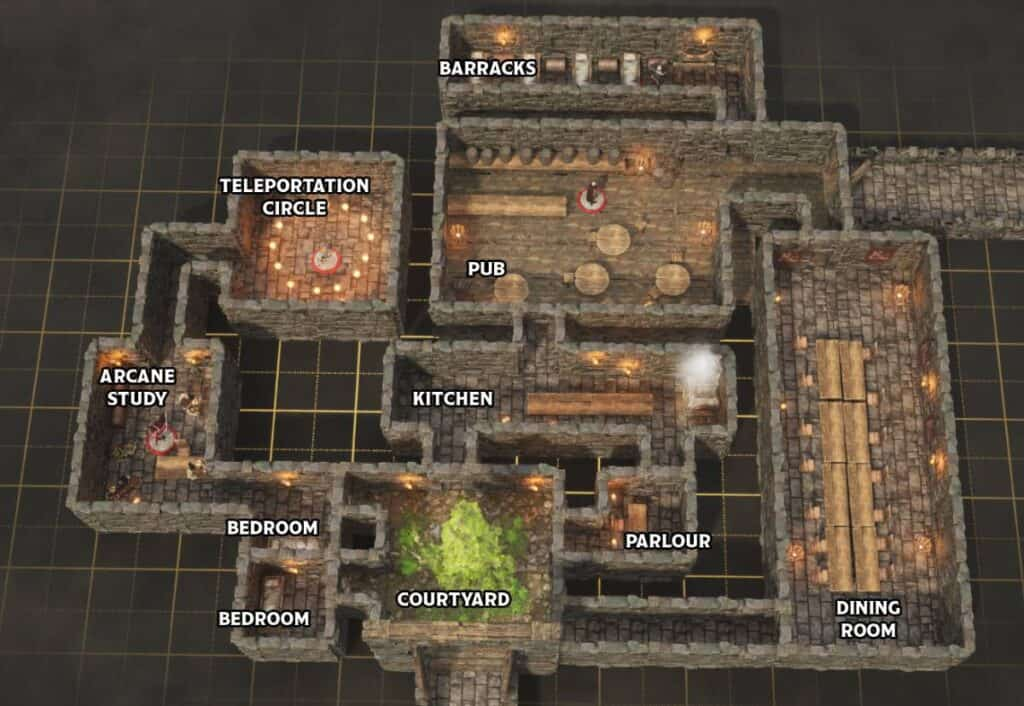

In addition to basic and special facilities (described later in this chapter), a Bastion can have the following features:
Closets. A basic or special facility can have one or more closets, washrooms, or similar enclosures. The closets must be inside the facility and can't increase the facility's area in squares, These features are free.
Corridors, Ramps, and Staircases. A facility can contain one or more corridors. ramps, or staircases leading to other facilities in the Bastion. These features are free.
Defensive Walls. A character can add defensive walls around their Bastion. A defensive wall is 20 feet high and may include a walkway along its top, with a means to access it (such as a ladder or lift). Each 5-foot square of defensive wall takes 10 days to build and costs 250 GP. If a character's Bastion is completely enclosed by defensive walls and it comes under attack (see Bastion Events at the end of this chapter) reduce the number of dice rolled by 2 to determine how many Bastion Defenders are lost in the attack.
Doors and Windows. Each facility comes with one or more doors and shuttered windows, placed wherever the player sees fit. See Doors in chapter 3 of the DMG for kinds of doors to choose from, including locked doors, secret doors, and portcullises. These features are free.
Combining Bastions
Two or more players can combine their characters' Bastions into a single structure. Doing so doesn't change the number of special facilities each Bastion can have, how those special facilities work, or who issues orders to each Bastion.
Each Bastion retains its own hirelings. which can't be sent to or shared with another Bastion, Bastion Defenders are handled differently: if some event deprives one character's Bastion of defenders, another character can apply all or some of those losses to their Bastion instead, provided the two Bastions are combined.
Facility Space
The amount of space in a basic or special facility determines its maximum area in 5-foot squares, as shown in the Facility Space table. A player can configure the squares of a facility as they please on their Bastion's map. The squares can be stacked so that a facility's area is distributed over multiple levels or stories.
Facility Space Table
| Space | Maximum Area |
| Cramped | 4 squares |
| Roomy | 16 squares |
| Vast | 36 squares |
Basic Facilities
A character's Bastion starts with two free basic facilities, which the character's player chooses from the Basic Facilities list below. One of the chosen facilities is Cramped and the other is roomy (See the Facility Space table). A Bastion can have more than one of each basic facility.
Basic Facilities include: Bedroom, Dining Room, Parlor, Courtyard, Kitchen, Storage
A basic facility comes with nonmagical furnishings and decor appropriate for that facility. Basic facilities don't have any game effects, but they can inspire roleplaying opportunities and enhance a Bastion's verisimilitude. A Bastion with a kitchen is functionally the same as one without, but the former gives you and your players a fun setting to start game sessions, have in-character discussions, or introduce new NPCs.
A character can add new basic facilities or enlarge existing ones by spending money and time, as discussed in the sections that follow. Any number of basic facilities can be added or enlarged at the same time. A character doesn't need to be in their Bastion while basic facilities are being added or enlarged.
Adding Basic Facilities
A character can add a basic facility to their Bastion by spending money and time. The cost of adding a basic facility and the time required depend on the facility's space, as shown on the table below.
Time/Cost to add Basic Facilities
| Facility Space | Cost | Time Required |
| Cramped | 500 GP | 20 days |
| Roomy | 1,000 GP | 45 days |
| Vast | 3,000 GP | 125 days |
Enlarging Basic Facilities
There is no in-game benefit to enlarging a basic facility, but a character might enlarge a facility for cosmetic reasons or to increase the Bastion's size.
A character can spend money and time to increase the space of a basic facility in their Bastion by one category, as shown on the table below.
Time/Cost to Enlarge Basic Facilities
Space Increase | Cost | Time Required |
Cramped to Roomy | 500 gp | 25 Days |
Roomy to Vast | 2000 gp | 80 Days |
Special Facilities
Special facilities are Bastion locations where certain activities yield game benefits. A character's Bastion initially has two special facilities of the character's choice for which they qualify. Each special facility can be chosen only once unless its description says otherwise.
Unlike basic facilities, special facilities can't be bought; a character gains them through level advancement. At level 9, a character gains two additional special facilities of their choice for which they qualify; they gain one additional facility at level 13 and another at level 17. The Special Facility Acquisition table shows the total number of special facilities in a character's Bastion.
Each new special facility immediately becomes part of the character's Bastion when the character reaches the level. Each time a character gains a level, that character can replace one of their Bastion’s special facilities with another for which the character qualifies.
Special Facility Level Acquisition
Lvl 5: 2 Special Facilities
Lvl 9: 4 Special Facilities
Lvl 13: 5 Special Facilities
Lvl 17: 6 Special Facilities
Requirements
Each special facility has a level. A character must be that level or higher to gain that facility. A special facility might also have a prerequisite the character must meet to gain that facility. For example, only a character who can use an Arcane Focus or a tool as a Spellcasting Focus can have an Arcane Study.
Space
A special facility occupies a certain amount of space (see Facility Space). A player can configure the squares of a special facility as desired on the Bastion’s map. A special facility can be enlarged to grant additional benefits if its description says so.
Hirelings
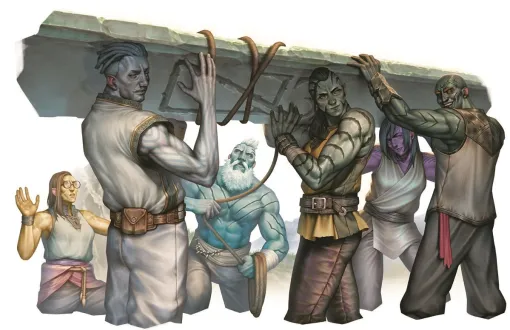
A special facility comes with one or more hirelings who work in the facility, maintain it, and execute Bastion orders there, as described in the next section. A player can assign names and personalities to hirelings in their character's Bastion using the same tools DMs use to create NPCs (see chapter 3 of the DMG).
Each special facility in a Bastion generates enough income to pay the salary of its hirelings. Hirelings follow the orders they're given and are loyal to the Bastion’s owner.
Orders
On a Bastion turn, a character in their Bastion can issue special orders—called Bastion orders—to one or more of their Bastion's special facilities. A character needn't issue orders to all the special facilities in their Bastion on a given Bastion turn.
The Maintain order is unusual; it is issued to the whole Bastion rather than to one or more special facilities. If a character isn't in their Bastion on a given Bastion turn, the Bastion acts as though it were issued the Maintain order on that turn unless the owner can communicate with the Bastion hirelings using the Sending spell or similar magic.
The orders are as follows:
Craft. Hirelings in the special facility craft an item that can be made in that facility. During the time required to craft an item, the facility can’t be used to craft anything else, even if a special ability allows the facility to carry out two orders at once. The hirelings have proficiencies with Artisan's Tools as specified in the facility's description.
Empower. The special facility confers a temporary empowerment to you or someone else.
Harvest. Hirelings gather a resource produced in the special facility. During the time required to harvest a resource, the facility can't be used to harvest anything else, even if a special ability allows the facility to carry out two orders at once.
Maintain. All the Bastion’s hirelings focus on maintaining the Bastion rather than executing orders in special facilities. Issuing this order prohibits other orders from being issued to the Bastion on the current Bastion turn. Each time the Maintain order is issued, the DM rolls once on the Bastion Events table at the end of this chapter. Bastion events are resolved before the next Bastion turn,
Recruit. Hirelings recruit creatures to the Bastion.
These creatures might include one or more Bastion Defenders, whose main purpose is to defend the Bastion if it is attacked (see “Bastion Events” at the end of this chapter). The Bastion generates enough income to provide for the needs of its Bastion Defenders.
Research. Hirelings in the special facility gather information.
Trade. Hirelings buy and sell goods or services stored or produced in this special facility.
Special Facilities Descriptions
Special facilities are presented in alphabetical order. The Special Facilities table lists all the special facilities presented in this section, along with their prerequisites and orders. Some facilities confer additional benefits, specified in their descriptions.
| Facility type | Level | Requirements | Benefits |
| Arcane study | 5 | Uses arcane focus | Craft an arcane focus, book or magic item |
| Armory | 5 | None | Makes bastion defenders harder to kill |
| Barracks | 5 | None | Recruit up to 12 bastion defenders |
| Garden | 5 | None | Harvest for rations, potions of healing, antitoxins or basic poison. Can also sell produce for gold. |
| Library | 5 | None | Research to acquire information |
| Sanctuary | 5 | Uses holy symbol or druidic focus | Craft a sacred focus and cast healing word |
| Smithy | 5 | Has fighting style or unarmored defense | Craft weapons, armorand equipment, including magic armaments |
| Storehouse | 5 | None | Buy and sell items at a profit |
| Workshop | 5 | Expertise in a skill | Gain heroic inspiration or craft adventuring gear and magic items |
| Gaming hall | 9 | None | Earn gold from gambling winnings |
| Greenhouse | 9 | None | Eat fruits that provide lesser restoration or create potions of greater healing or poisons |
| Laboratory | 9 | None | Craft potions, poisons and concoctions |
| Sacristy | 9 | Uses holy symbol or druidic focus | Regain a spell slot on a short rest here and produce holy water or a temporary sacred item |
| Scriptorium | 9 | None | Copy a book, multiple sheets or create a scroll |
| Stable | 9 | None | House horses, mules and similar beasts. Gain advantage handling these beasts and buy and sell similar beasts |
| Teleportation circle | 9 | None | Invite mages to stay and cast a spell in the bastion |
| Theater | 9 | None | Stage performances to receive theater dice. These can be used like bardic inspiration with a longer duration |
| Training area | 9 | Has fighting style, unarmored defense or expertise in a skill | Gain an expert training benefit for 7 days like damage reduction or skill proficiency |
| Trophy room | 9 | None | Learn lore about a legend, monster or famous item. Discover magical trinkets |
| Archive | 13 | None | Gain effects of legend lore and a listed, rare book |
| Meditation chamber | 13 | None | Roll twice for bastion events and pick one, advantage on 2 saving throws |
| Menagerie | 13 | None | House and acquire creatures that can defend your bastion |
| Observatory | 13 | Uses a spellcasting focus | Random chance of having a boon bestowed by an unknown power |
| Pub | 13 | None | Research local events. Create magical beverages for enlarge, spider climb, necrotic resistance, frightened immunity or darkvision |
| Reliquary | 13 | Uses holy symbol or druidic focus | Allows casting of greater restoration and create an amulet that can ignore material components of a spell up to 1,000gp |
| Demiplane | 17 | Uses arcane focus | Gain 5 x level of temporary hit points, create basic, non-magical object |
| Guildhall | 17 | Expertise in a skill | Guild members perform special assignments |
| Sanctum | 17 | Uses holy symbol or druidic focus | Gain temporary hit points equal to level and cast heal and use sanctum as destination of word of recall (which you have prepared) |
| War room | 17 | Has fighting style or unarmored defense | Reduces numbers of lost defenders when bastion is attacked and amass additional guards |
Fall of a Bastion
A player character can lose their Bastion in the following ways:
Divestiture
A character can give up their Bastion anytime, releasing the Bastion's hirelings and abandoning the location. The divested Bastion is quickly vacated, is eventually looted, and might even be burned to the ground.
Neglect
If a character issues no orders to their Bastion for a number of consecutive Bastion turns equal to the character's level (typically because the character is dead or otherwise out of commission), the hirelings abandon the Bastion and the site is eventually looted. If the character returns later; they can start a new Bastion, perhaps building it amid the ruins Of the old one.
Ruination
Drawing the Ruin card from the Deck of Many Things (as described in chapter 7 of the DMG) instantly deprives a character of their Bastion. When such an event occurs, the player can decide what terrible fate befalls the Bastion. The Bastion might be sacked by enemies or destroyed by an earthquake, for example.
Regardless of how the Bastion falls, the player can work with the DM to establish a new Bastion and determine how it comes into being. Use the Special Facility Acquisition table to determine how many special facilities come with it. The new Bastion also starts with two basic facilities (one Cramped and one Roomy) of the player's choice.