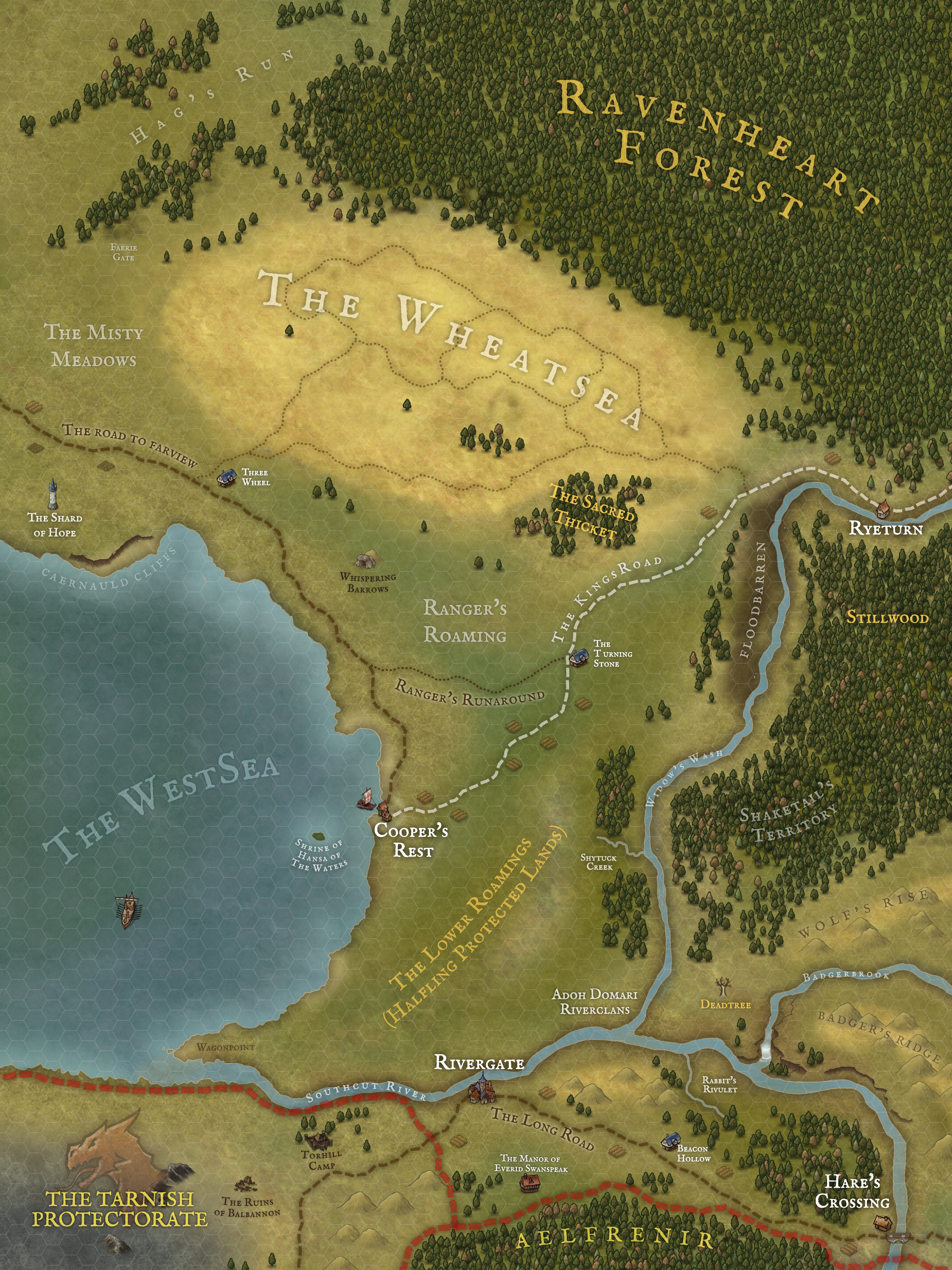
The Wheatsea is so named for its vast fields of wild grain and tall grasses which grow here. These can be dangerous for the unwary traveler since easy for predators to hide among the scrub. There are a number of competent halfling guides, however, who know the safe paths and can escort merchants that need to cross it. Here too you'll find the halfling protected lands, a few villages and towns on the rivers and sea, and a scattering of farms that supply the nearby communities.
Of note are two inns, owned by brothers at either ends of the Wheatpaths (trails forged across the grasslands by the halflings). On its east end is the Turning Stone Inn, a play on early Dwarven currency, and to the west is Three Wheel, another halfling trope that when you go into the Wheatsea without a guide, you'll come out one wheel or one leg less.
Other features include the Shard of Hope, a white tower belonging to an elven wizard not far from the treacherous Carnauld Cliffs, said to have been formed when a mage miscast Earthquake and collapse the entire coast. There's also a simple cave structure called "Whispering Barrows" by local pranksters, who use it to scare children and con coin from gullible adventurers (though as of late there has been some unexplained behavior in the area).
Most importantly is a copse of woods known as the Sacred Thicket. Here a large Circle of the Land druids make their home and protect a small set of standing stones thought to have been here since before the folk settled into the lands. Its origin is most certainly fairy, since the stones glow in different hues under certain moonlight, but its true purpose is unknown to those outside the circle.