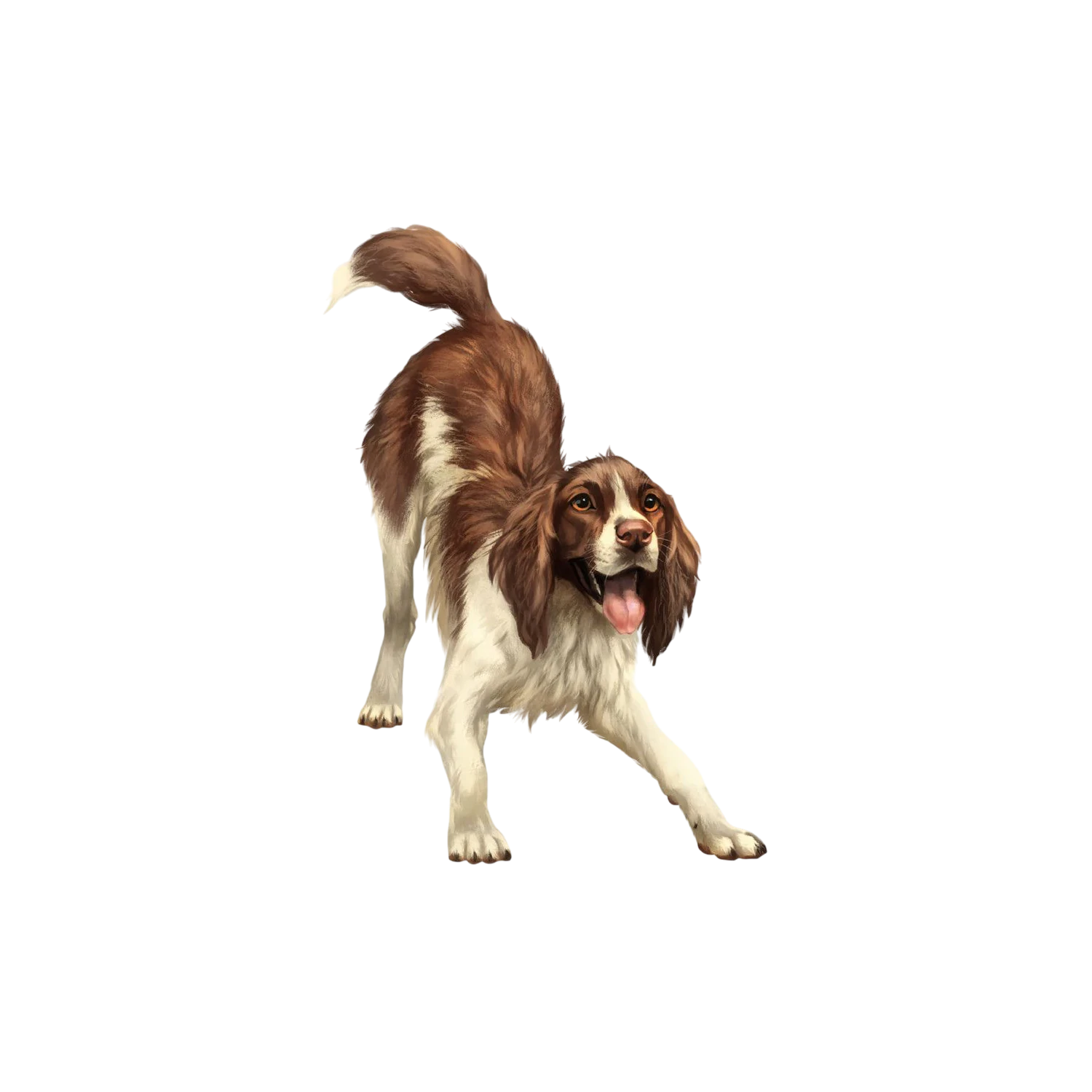
Dogs were common domestic Beasts found in towns, farmland, and along rural roads. They had forward-facing eyes, keen hearing, and a wide range of coat patterns and lengths that varied by region and lineage. Adult dogs ranged from roughly 0.3 to 0.9 meters (1–3 feet) at the shoulder and weighed between 5 and 40 kilograms (11–88 pounds), depending on breed and lineage. Descended from Wolves, they were social, followed pack structure, and bonded strongly to individuals or households. They learned commands quickly and adapted well to human settlement patterns, making them one of the most successful domestic species across settled lands.
Dogs hunted small animals when allowed and retained strong chase instinct even when fed. They tracked by scent with accuracy, could trail individuals over distance, and often alerted when threats approached long before people heard them. Pack-trained dogs could mob larger beasts by coordinating their strike and driving prey into open ground. They also served as guardians and herd managers. Their presence reduced theft, discouraged predators, and stabilized livestock patterns in rural communities.
Dogs paired and mated often, producing litters of several pups at once. Pups imprinted early and became shaped by whatever household raised them. Dogs lived ten to fifteen years (sometimes longer for hardy working breeds). In some regions, certain lineages held symbolic weight and were kept by specific households, noble lines, or religious orders. Their spread across the continent mirrored the growth of settled trade routes and long-standing agricultural towns.