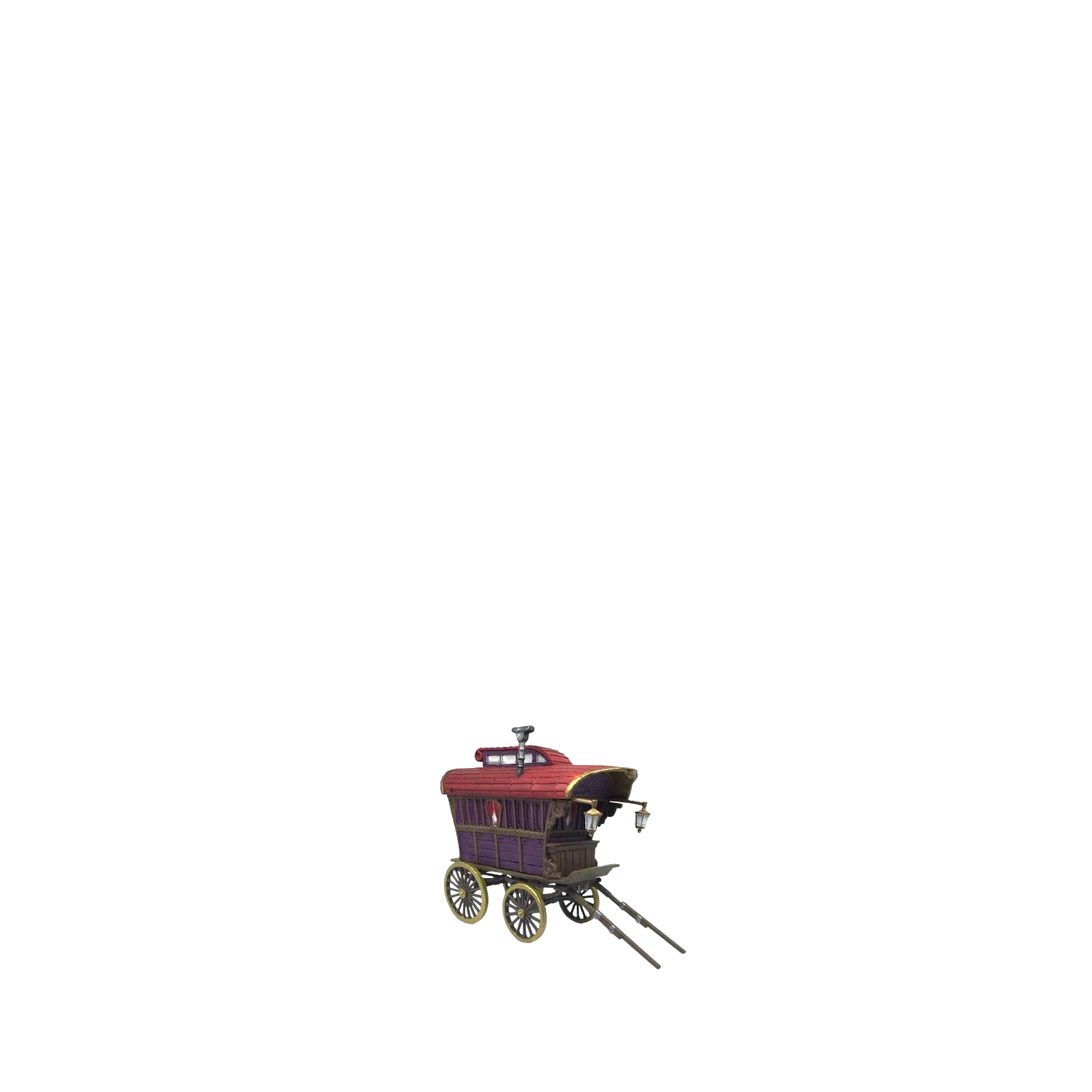
In Vistani culture, wagons were called "vardos", and were used as both homes as well as methods to traverse across the Plane of Shadow. These wagons were covered with curved roofs, often described as being "barrel-topped", and had a fairly uniform look across the culture. Vardos held great significance in Vistani culture, being viewed as symbols of prestige and signs of wealth; as such, any given vardo was much more likely to be a magic wagon than their counterparts in the Prime Material.
Similar to their mundane variants, magic wagons were four-wheeled, open-topped vehicle hauled behind a pair of Horses or other Beasts of burden. Typically, much of a magic wagon was unenchanted, but footboards, porch, and shaft would be affected by permanent Spells. Such magic could include abjurative defenses for the wagon, enchantments to lighten the wagon and increase speed, the ability to conjure magical towing animals, or enchantments to enable self-repair.
Wealthy merchants could be found using magic wagons to travel and sell goods all across the Head of the Greatwyrm, though they were sometimes also used by armies to carry siege engines to battle. Such wagons were equipped with a light catapult or ballista atop their roof or rear porch.