
Camp Refuge Overview
Location:
Camp Refuge is a temporary encampment located 12 days upriver from Seregon, on the Lula River, in the dense jungle of the region. Built by the Ithosian Talons, an elite military faction, this camp serves as a staging ground for expeditions and patrols. It’s strategically positioned 4 days north of the Greylight Overlook, and 5 days south of Camp Vanguard, the more permanent outpost further into the wilds. Despite its temporary nature, Camp Refuge holds significance due to its proximity to an ancient ruin known as the House of the Crocodile.
The Camp Layout:
Camp Refuge is a functional tent camp, designed for flexibility and speed rather than comfort. Military-grade canvas tents are spread in orderly rows, set upon raised wooden platforms to protect against flooding and jungle wildlife. The camp serves as a hub for soldiers, explorers, and hunters who venture deeper into the territory, and it’s frequently being built up and dismantled based on need.
- Barracks Tents: Long canvas tents with cots, where the Ithosian Talons rest between patrols. These tents offer minimal protection from the elements, but the disciplined soldiers have adapted to the harsh environment.
- Command Tent: The largest tent in the camp, serving as both a planning room and meeting space. Maps of the Lula River, Greylight Overlook, and the surrounding jungle are strewn across tables, marked with plans for future excursions.
- Supply Depot: A guarded section of the camp where provisions, weapons, and basic equipment are stored. The jungle’s beasts and raiders, including the local beastmen, often attempt to raid this area.
- Animal Pens
House of the Crocodile
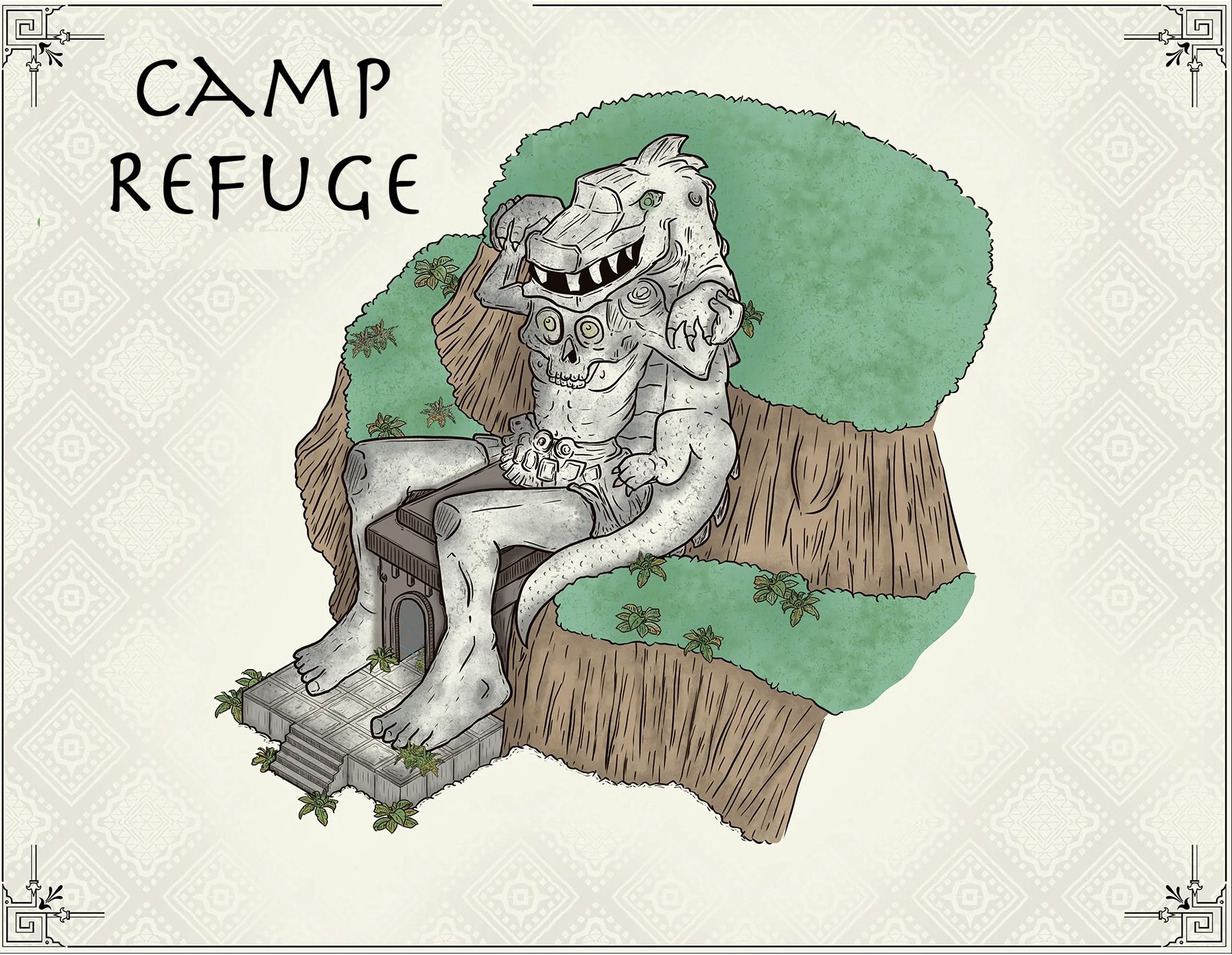
Near Camp Refuge, hidden beneath the jungle canopy, is the House of the Crocodile, an ancient shrine of the Nosgar Tribe, dedicated to a forgotten deity. This ruin predates the Ithosian presence and has long been a place of eerie power. The shrine’s architecture is dominated by carvings of crocodiles, and its crumbling stone walls depict images of serpents, floods, and sacrifices.
The Shrine's Features:
- Central Altar: At the heart of the shrine, a massive stone altar stands, shaped like a crocodile with its mouth agape. Local legends claim that sacrificial offerings made here could grant great power—or summon the wrath of the river gods.
- Underground Passages: The House of the Crocodile is rumored to have tunnels beneath it, partially flooded and unexplored, potentially filled with traps, treasures, and dangers. Some believe it’s a sacred burial site for ancient warriors.
- Cursed Territory: It is said that disturbing the shrine risks awakening the Crocodile Spirits—malevolent beings tied to the river and its deadly currents. Locals and soldiers alike avoid staying near it after dark.
Geography & Environment:
The region around Camp Refuge is characterized by its deep, oppressive jungle, teeming with life and dangers. The Lula River cuts through the landscape, winding through dense foliage and ancient, forgotten ruins.
Jungle Depression (The Zombie Pit):
The area is known for its peculiar geography—a natural depression that seems to trap the undead. Jungle Zombies, animated corpses of those who died in the wild, often stumble into this basin and are unable to escape. This pit has become a notorious landmark, avoided by most travelers. The Ithosian Talons patrol the edge of the depression to ensure the zombies don’t wander too close to camp, though they use it as a natural barrier against intrusions from the river.These zombies are slow but relentless, mindlessly wandering until disturbed. There are frequent efforts to clear them out, but new ones seem to accumulate with unsettling frequency.
Beastman Territory:
The deeper jungle north and east of Camp Refuge is claimed by beastmen, a savage race of humanoid predators with the strength and cunning of both man and beast. They have little regard for the Ithosian Talons’ presence and frequently clash with the camp’s forces. Their raids target supply lines, and they are rumored to worship darker, primal gods, making them fierce defenders of their territory.The beastmen see the House of the Crocodile as a sacred place, though their rituals there are long lost to time. Their tribe leaders, often marked by strange talismans of bone and tooth, view any attempt by outsiders to enter the shrine as a grave offense.
Threats and Encounters:
Jungle Zombies:
These undead are a constant danger, stumbling into the camp’s outskirts from the depression. They are slow-moving but can be dangerous in large numbers. Occasionally, more intelligent or powerful forms of undead are seen wandering among them, perhaps remnants of those who once sought the shrine’s secrets.Beastmen Raiders:
The beastmen often launch raids against the camp, appearing from the jungle with swift, brutal strikes before retreating back into the underbrush. Their tactics are primal yet effective, using the terrain to their advantage. Encounters with them are frequent, and it’s said that the deeper one goes into the jungle, the more feral and unpredictable the beastmen become.Crocodile Spirits:
The House of the Crocodile has its own dangers beyond the mortal realm. Ancient tales speak of Crocodile Spirits, vengeful entities tied to the waters, rising from the river during storms to drag intruders into the depths. These spirits are seldom seen, but strange sightings of spectral crocodiles have been reported by the camp’s soldiers during stormy nights.
Life at Camp Refuge:
For the Ithosian Talons stationed at Camp Refuge, life is a constant battle against the jungle, the undead, and the beastmen. Morale is kept up through rigorous discipline, but the oppressive heat, swarming insects, and eerie atmosphere of the House of the Crocodile weigh heavily on their minds.
Daily Patrols: The soldiers conduct daily patrols around the camp, ensuring that the jungle zombies are kept at bay and scouting for beastman activity. The watchtower gives an advantage, but the dense foliage makes it difficult to see far, so patrols are dangerous.
Ritual Offerings: Some of the more superstitious soldiers have taken to leaving small offerings at the House of the Crocodile—coins, trinkets, or food—hoping to appease the spirits that they believe linger there.
Training and Rest: Despite the dangers, the camp functions as a military outpost, with soldiers training for combat, repairing weapons, and keeping supplies in check. The nearby Greylight Overlook offers a strategic vantage point, and troops from there sometimes arrive to assist in larger operations.