The Manyfaced Wizard | The Tyrant That Would Not Die

"There is no such thing as a final death for a wizard who is willing to compromise everything—including himself."
— Leosin Erlanthar, Spirit Wyrmspeaker

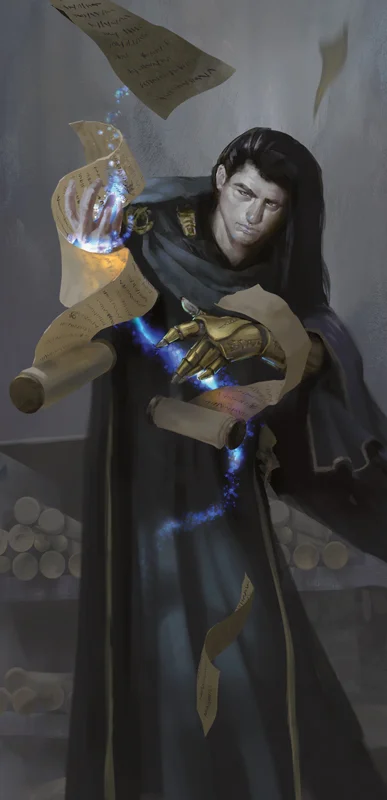
Among the great liches, archmages, and madmen that Faerûn has birthed, few strike such an enduring and uneasy chord in the annals of magical history as Manshoon—former founder of the Zhentarim, master of arcane cloning, and perennial thorn in the side of order and ambition alike.

In the Contemporary Era, Manshoon returned once more—reconstituted from secret contingencies known only to his former selves, seeking to reassert his place in a world that had left him behind. This “Returned” version of Manshoon was no longer interested in crude conquest or domination. Instead, he sought nothing less than singularity—to reclaim or destroy all his surviving clones and weave their knowledge into a perfected, transcendent self.

He nearly succeeded. And the world has not yet recovered from what that meant.

Kanka is built by just the two of us. Support our quest and enjoy an ad-free experience for less than the cost of a fancy coffee. Become a member.

Origins and Cloning Legacy

First among the original Zhentarim Lords, Manshoon once stood beside the likes of Fzoul Chembryl and Sememmon, commanding both arcane might and political terror. Paranoid of death and betrayal, he crafted countless clones hidden across Faerûn—each one a contingency, each one a potential tyrant.

When one clone died, another awakened. When that clone died, another stepped forward. So many Manshoons awakened simultaneously at one point that they began hunting each other across the planes. Several were destroyed, a few escaped, and at least one joined other causes (including briefly aligning with Waterdeep, the City of Splendors). But this Manshoon—the Returned—was different.

He remembered them all. Or tried to.

Return

The Returned Manshoon emerged in Waterdeep’s shadows not long before the The Grand Game  began—a magical arms race that pitted factions, nobles, cults, and even dragons against one another for dominance over secrets left by the mysterious Lord Neverember.

He operated from a hidden tower within Kolat Towers, concealed behind layered illusions and wards. There, he began amassing power through forbidden experimentation and planar conjuration, seeking to construct a spell that could absorb the remnants of all surviving Manshoons—essentially fusing fractured personas into a single divine arcane will.

Among his followers were mercenary mages, corrupt Watch officers, and rogue Zhentarim operatives who refused Enna Baenre‘s authority. He also experimented on captured clones—his own—and lesser arcanists drawn to his magnetic mind.

The Fall and the Spellbook

Manshoon’s ambitions were ultimately foiled by the Hype Squad, a group of Waterdeep adventurers acting through the chaos of the Grand Game. In a daring assault on his sanctum, the Hype Squad broke through his arcane defenses and, with the personal aid of Leosin Erlanthar, forced the Returned into magical stasis.

Ambrose Rosznar, bard of the Hype Squad, famously recovered Manshoon’s personal spellbook during the raid—an artifact of immense power, encoded with multiple minds and protective sentience. Rather than keep or destroy it, the Squad used it as a bargaining chip with Jarlaxle Baerne, leader of Bregan D'aerthe.

Jarlaxle accepted the trade, promising aid in exchange—and now holds the book as a key part of his plan to maneuver Luskan into The Lords' Alliance.

Grand Game and Unsteady Alliance

Though thought vanquished after the destruction of his hidden demiplane headquarters, Manshoon—true to his mythic resilience—escaped the collapse, grievously wounded but far from defeated. Despite the loss of his spellbook, now in the hands of Jarlaxle Baenre and traded to aid the Hype Squad, the returned Manshoon continued to weave himself into the fabric of the Grand Game.

He was not alone in his survival. The Xanathar, that beholder tyrant whose mind should have collapsed under its own paranoia long ago, endured the raid on his lair. Together, Manshoon and the Xanathar became unlikely players in a final confrontation for the vault of Golorr—joining forces with the Hype Squad, Seffia Cassalanter, and the enigmatic forces of Bregan D’aerthe under Jarlaxle’s banner.

Their opposition: the Unseen, a cult of doppelgangers and eldritch horrors led by the Elder Brain Wyrmspeaker, Therlin Haskin. This cabal sought not just the five hundred thousand dragons within the vault, but the domination of Waterdeep itself through mass enchantment. Aligned with them, secretly and damningly, was Victoro Cassalanter—whose casting of teleportation circle spirited the gold away in the midst of the chaos.

As the labyrinth beneath Waterdeep cracked open, the factions collided in a brutal melee beneath the city. Therlin wielded Blackrazor, one of the Nine Legendary Weapons, against Jacob of the Hype Squad, bearer of Last Quip. A horrific elder brain stealer dragon ravaged the vault, nearly ending all. But in desperation and fury, the five remaining factions united—if only for a breath—to slay their common foe.

Therlin and his aberrant creation were destroyed. Seffia Cassalanter, disillusioned and betrayed by the revelation of her parents’ infernal dealings, joined this fractured coalition. Her vow to redeem her house’s name and seek vengeance gave the group a strange new legitimacy.

Thus, an uneasy alliance was formed: Manshoon and the Xanathar, unwilling to be bested by a devil-worshiping noble; Seffia, heartbroken but resolute; Jarlaxle, ever opportunistic; and the Hype Squad, stripped of their resources by martial law and clinging to their last allies. What began as a race for gold became something far more fragile—and potentially far more dangerous.
The Conclusion of the Grand Game

“They played the Grand Game to its end—
and discovered that the final move was never theirs alone.”

—The Librarian

The Manshoon’s role in the Grand Game concluded in a night of masks, broken pacts, and unanswered questions. What transpired beneath Waterdeep reshaped the city’s balance of power, scattered its conspirators, and left scars that have yet to heal.

Much remains obscured—by design, by magic, and by those who survived.

For a full accounting of the events that ended the Grand Game, see the primary article: The Grand Game.

“History will name winners and losers.
The truth is less orderly.”

—The Librarian

Closing Remarks

Ah, Manshoon. Or rather—a Manshoon. For what is a legacy fractured by clones and stitched by ambition, if not a curse born of one’s own brilliance? That he survived the destruction of his demiplane was never in doubt to those of us who understand the man behind the myth. He has escaped death more times than most breathe in a year.

What strikes me as most curious in this tale is not the mere endurance of Manshoon, nor even his participation in the chaotic Vault War—but his capacity for compromise. When cornered by eldritch horrors and betrayed by infernal nobles, the archmage chose not domination, but collaboration. This was no true redemption, mind you. A blade may turn sideways, but it does not forget how to cut.

That the Xanathar lived as well is a kind of cosmic joke. That the two worked together—however briefly—is a testament to the sheer absurdity of power unchecked. Add to this alliance the heartbreak of young Seffia Cassalanter, the antics of the Hype Squad, and the cunning of Jarlaxle Baenre, and you have something altogether novel: a pentagram of necessity bound not by trust, but by mutual disdain.

And yet... it worked. They slew Therlin Haskin, a wyrmspeaker so twisted he fused mind and dragon into a singular abomination. The vault remained—emptied, scattered, a thousand threads of gold lost to time—but the threat passed. Or perhaps only changed shape.

Mark this: Manshoon walks still. He has lost his spellbook, his sanctum, and for a moment, his advantage. But he has gained something equally valuable—leverage. Seffia seeks purpose. Jarlaxle seeks profit. The Hype Squad seeks survival. And the Xanathar? Gods help us all if he begins to think in strategy rather than hunger.

Velkarn breathes yet, but with each of these tangled players moving through the Grand Game, I fear the true game has only just begun.

—The Librarian