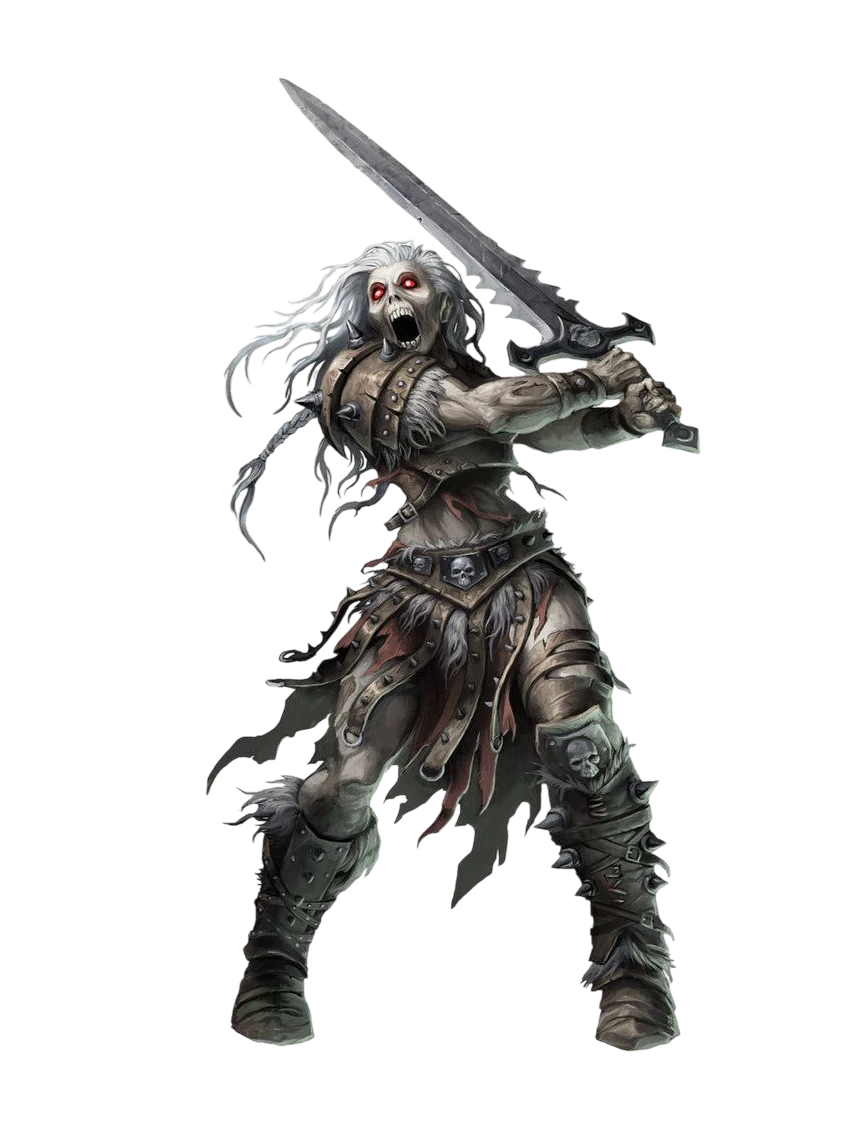
A wight was an Undead creature sustained by violence, hatred, and a stolen semblance of life. They appeared as warped reflections of their former selves, their flesh dried and mummified over twisted bone. Their hands ended in taloned claws, their teeth were jagged and needle-sharp, and their voices emerged only as wheezes and low moans. Though their eyes were calcified and blind to ordinary sight, they perceived the presence of life energy, which caused their gaze to flare like embers when they hunted.
Wights were created from Mortalborn steeped in cruelty, vanity, or profound evil, whose spirits reached toward dark powers at the moment of death. They retained their memories and much of their former personality, along with free will, but were bound by the will of the forces that raised them. Above all else, they loathed the living. Their hunger for life energy drove them with an intensity likened to addiction, and draining the living was both compulsion and fixation. Wights were territorial and most often laired near their burial places or sites tied to their mortal identity, which scholars believed they regarded with pride rather than regret. They learned these lairs in precise detail and favored catacombs and tombs for their shadows and confined approaches.
In combat, wights relied on stealth and sudden violence. With a touch, they drained life energy through flesh, clothing, and armor, weakening or killing victims outright. Those slain by this draining were often reanimated as Zombies or enslaved wights under the killer’s control, though such thralls regained independence if their master was destroyed. Wights resisted Necromancy and mundane weapons, were immune to poison and many enchantments, but were vulnerable to Holy Water and certain restorative magic that could annihilate them outright.
Wights were nocturnal, retreating from sunlight into crypts and tombs where they could remain motionless for centuries until disturbed. Their presence was often marked by unnatural silence, dead vegetation, and the unease of animals that sensed them before they were seen. Though they did not require sustenance, sages debated the purpose of their life draining, some claiming it sustained their animation, others that it granted a fleeting rush of mortality that drove their excesses. Those that consumed enough life energy could grow in strength and authority, becoming great wights capable of commanding others.