1. Events

The War of Dragons

1486 - 1491

Also known as: The Tyranny of Dragons, The Cult War, The Rise and Fall of the Crimson Hand
Dates: 1486 DR – 1491 DR
Filed by: The Librarian, Eternal Witness of Velkarn

“The War of Dragons was not merely a war of conquest, but of memory, of myth, and of meaning. In it, mortals wore the masks of gods, and dragons flew not for glory, but for ideology. It was the crucible of the Contemporary Era—the roaring furnace from which emerged both a quieter peace... and the promise that it shall never last.”
The Librarian

The War of Dragons was the greatest upheaval in Velkarn’s recorded history since the Rebirth. What began as a splinter movement within the Cult of the Dragon swiftly escalated into a continent-wide conflagration of faith, fire, and fate.

Led by the enigmatic Severin Silrajin, the reborn Cult of the Dragon aimed not for lichdom and resurrection as they once had—but for dominion, guided by a corrected interpretation of prophecy that promised a future ruled by living dragons.

Facing them were a disparate collection of adventurers, scholars, zealots, and gods. At the center of it all, five unlikely heroes rose to legend: the Five Guys—chosen of Bahamut, and bearers of the Metallic Wyrmspeaker masks.

This was no longer merely the Sword Coast’s struggle. It was Velkarn’s soul at war.

Kanka is built by just the two of us. Support our quest and enjoy an ad-free experience for less than the cost of a fancy coffee. Become a member.

Origins of the Cult Reformation

“I will raise her voice on every wind, and it will scream until the Realms kneel.”
Severin Silrajin, Red Wyrmspeaker, the Crimson Hand

In 1478 DR, a man named Severin Silrajin received a vision from the goddess Tiamat. He claimed it foretold the world’s annihilation unless dragons took their rightful place as its rulers. Scholars believe this vision was either a divine truth or a carefully orchestrated lie—but it mattered not. It changed the world.

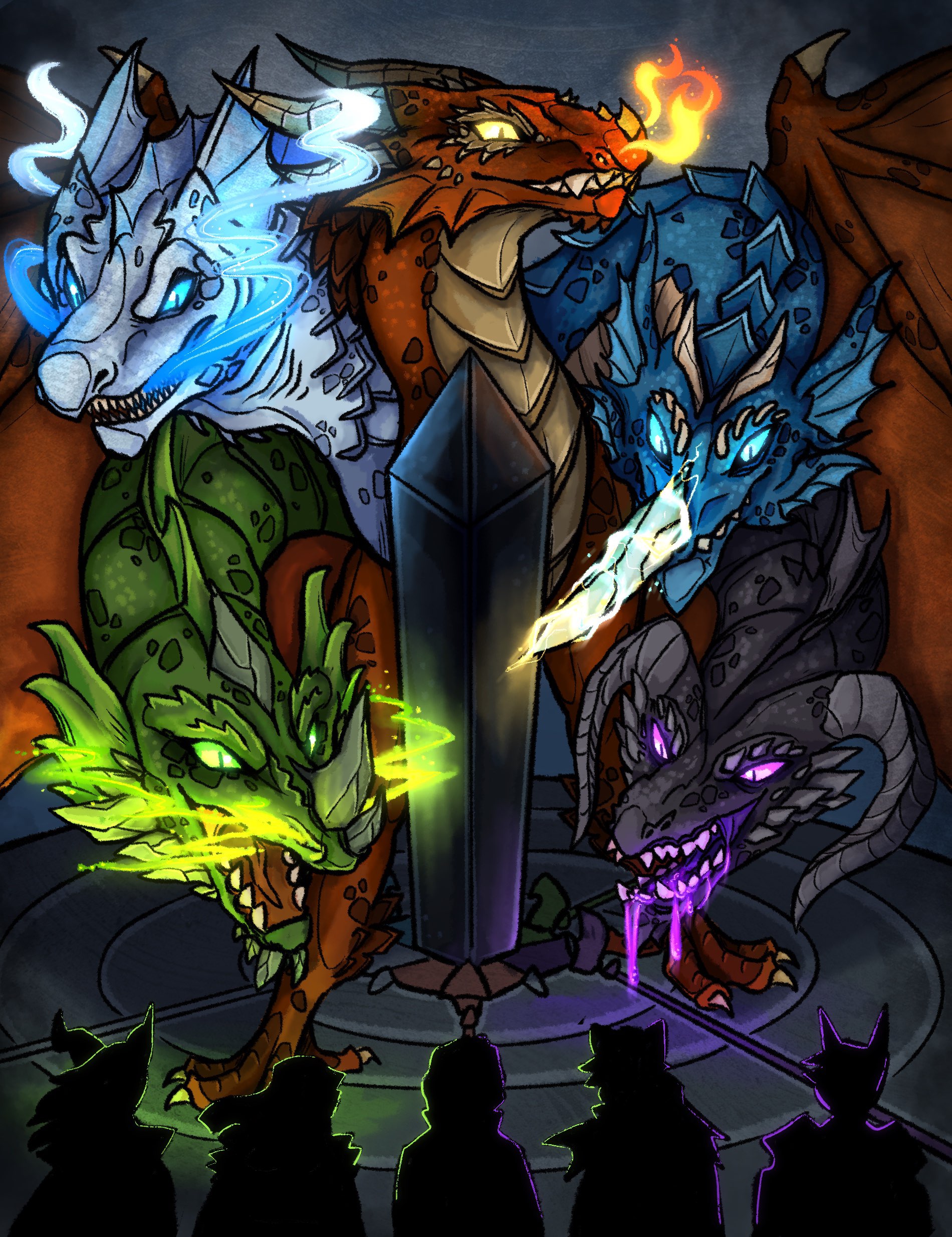
Charismatic and newly empowered by draconic sorcery, Severin overtook the faltering leadership of the Cult and divided it into five chromatic sects, each devoted to a different dragon color, each governed by a Wyrmspeaker chosen through ruthless trials. Their names would soon be feared:

Each was granted a Dragon Mask—divine relics of Tiamat herself. The Cult’s old purpose of raising dracoliches was abandoned. In its place: resurrecting the goddess into the Realms.

Rise of the Five Guys

“The sword is not drawn for hate. It is drawn for peace—sharpened by justice.”
Malia, Brass Wyrmspeaker

In 1484, in the humble town of Greenest, five adventurers met over a simple task. By week’s end, they would be defending the town from a Cult raid featuring a full-grown blue dragon. Their names:

  • Fenrir Duloc, a human chronologist wizard
  • Smoke in the Wind, a tabaxi arcane trickster
  • Valloth Dinvar, a tiefling blood hunter
  • Malia, a human paladin of the people
  • Aknire, a tiefling spearfighter (joining after Sareli’s death)

They would become known—both in legend and jest—as the Five Guys.

Through missions across Greenest, Elturel, Baldur’s Gate, and eventually Waterdeep, the Five Guys uncovered the true scale of the Cult’s ambitions. Along the way, they forged tenuous alliances with:

They also became dragon parents, hatching wyrmlings of good-aligned dragons and earning the wary respect of the Metallic dragons themselves.

Wyrmspeakers and Masks

“Let them summon Tiamat. We have seen worse. We’ve been worse.”
Valloth Dinvar, Bronze Wyrmspeaker

The turning point of the war was the manifestation of the metallic dragon masks, divine relics granted by Bahamut to counterbalance Tiamat’s chosen.

Each mask aligned to an ideology and power:

  • Gold: Wisdom (Fenrir)
  • Silver: Loyalty (Smoke)
  • Bronze: War (Valloth)
  • Copper: Trickery (Aknir)
  • Brass: Creativity (Malia)

With the Chromatic, Metallic, and eventually Gem wyrmspeakers awakening, these beings became as powerful as demigods—if not more.
Their battles reshaped cities. Their rivalries turned into theologies.

The Council of Waterdeep and the Declaration of War

“Power unopposed is a sin. We oppose. Loudly.”
Smoke in the Wind, Silver Wyrmspeaker

By 1489 DR, it became impossible to deny the scope of the threat. The Council of Waterdeep, formed of faction leaders and city representatives, officially declared war on the Cult of the Dragon in 1490 DR.

Waterdeep—long a jewel of civilization—became a war room, a spy den, a forge of strategy. The Five Guys were appointed as elite agents of the Council, given full authority to act where armies could not.

In parallel, the Five Guys completed missions to:

  • Subvert Wyrmspeaker alliances (e.g., Topaz Wyrmspeaker Randolph)
  • Liberate towns infiltrated by Cult illusions (e.g., the Crystal Wyrmspeaker Espa)
  • Defeat assassins and infiltrators (e.g., Rezmir, the Sibilant Skull)
  • Forge unlikely alliances (e.g., the Red Wizards of Thay and the Metallic Dragons)

Key Members of the Council of Waterdeep

Name Faction Role

Laeral Silverhand

Open Lord of Waterdeep Principal convener of the Council; oversaw all political alliances.

Dagult Neverember

Lord Protector of NeverwinterFormer principal convener and Open Lord of Waterdeep; provided the backbone of the Lords' Alliance's mercenaries
King Melandrach Elves of the High Forest Hesitant ally; father of Neronvain, blinded by shame and loyalty.
Connerad Brawnanvil Dwarves of Mithral Hall Staunch militarist, initially mistrustful of the Five Guys.
Taern Hornblade Silverymoon Cautious supporter; offered spellcasters and scouts.
Remalia Haventree Harpers Field liaison to the Five Guys, especially close to Valloth.

Onthar Frume

Order of the Gauntlet Crusader; led divine forces in battle.

Enna Baenre

Zhentarim Reluctant conspirator; eventually forces Zhentarim to ally with the Council.
Rian Nightshade Zhentarim (Manshoon-aligned) Opposed Enna’s involvement; attempted to fracture Zhentarim loyalty.

Leosin Erlanthar

Harpers/Spirit Wyrmspeaker Agent and tactician; died in Waterdeep, resurrected as Spirit Wyrmspeaker.
Protanther King of Gold Dragons Lead voice among Metallic dragons; brokered the uneasy draconic pact.

The Major Factions

The Harpers

Agenda: Stop the Cult, preserve freedom and knowledge.

Champion: Leosin Erlanthar

Role: Intelligence, diplomacy, infiltration.

Notables: Brokered alliances with Enna Baenre and Jarlaxle; led several covert operations.

The Zhentarim

Agenda: Profit and influence in the new world order.

Champion: Enna Baenre

Role: Mercenary support, criminal logistics.

Politics: Initially divided, forced into alignment under Enna’s control after a coup.

The Order of the Gauntlet

Agenda: Holy war, justice, eradication of the Cult.

Champion: Onthar Frume

Role: Led field crusades and city defense.

Politics: Reluctant to align with Zhentarim; tensions eased due to Frume's respect for Leosin and Enna.

The Lords' Alliance

Agenda: Stability and territorial defense.

Leader: Laeral Silverhand

Role: Provided political legitimacy and resources.

Politics: Struggled to maintain neutrality between factions.

The Emerald Enclave

Agenda: Maintain natural balance.

Role: Scouts, wilderness logistics, dragon diplomacy.

Politics: Frequently at odds with both the Order and Zhentarim due to their extremes.

The Metallic Dragons

Agenda: Prevent the return of Tiamat and protect their kind.

Voice: Protanther, King of Gold Dragons

Politics: Required formal apology and reparations from mortal kingdoms; nearly refused alliance.

The Red Wizards of Thay

Agenda: Secretive—likely redemption or revenge.

Representative: Nyh Ilmichh

Politics: Highly controversial; tolerated only due to their power and Galvan’s defection.


Key Political Conflicts

  • Zhentarim-Harper Tension: Overcome by personal bonds (Leosin and Enna).
  • Gauntlet-Zhentarim Feud: Mitigated by Frume and Council mandates.
  • Metallic Dragon Ultimatums: Nearly derailed negotiations; settled via the Five Guys' diplomatic efforts.
  • Thayan Involvement: Threatened legitimacy of the Council; kept secret from the public.
  • Neronvain’s Parentage: King Melandrach’s refusal to admit his son’s betrayal caused paralysis in early meetings.
  • Open Lord Succession: Open Lord Dagult Neverember spread himself too thin between Waterdeep and Neverwinter, allowing Lareal Silverhand to lead a group of Waterdhavian nobles to oust him under charges of not being Waterdeep focused in a time of great strife. This drove a wedge between the two most powerful members of the Lords' Alliance that still influences the organization's present-day activities.
Major Battles of the War of Dragons

Battle Date (DR) Summary
Raid on Greenest 1486 The Cult of the Dragon’s opening salvo; the Five Guys first unite under fire and lightning.
Siege of Castle Naerytar 1487 The Five Guys storm the Cult’s fortress in the Mere of Dead Men, uncovering the mask plot.
Skyreach Castle Conflict 1488 Floating fortress controlled by the Cult is destroyed mid-air by sabotage and wyrmling aid.
Council of Waterdeep Convenes 1489 First official multi-faction meeting to declare formal hostilities against the Cult.
Battle of Waterdeep 1491 (early) Surprise attack by Severin; Leosin slain, Fenrir ascends; turning point for the war.
Battle of the Well of Dragons 1491 (late) Final battle of the war. All Wyrmspeakers clash. Tiamat is summoned—and defeated.

The Battle of Waterdeep

In 1491 DR, disaster struck.

The Cult launched a surprise raid on Waterdeep, led by Severin himself.
Tiamat’s voice filled the sky. Dragons rained death upon the city.
Council members were slain. Leosin fell in the rubble.
And at the climax, Bahamut himself intervened—plucking Fenrir into a private demiplane to test his soul.

Fenrir chose his party over power. And returned—bearing the Gold Mask of Wisdom.

In that moment, all five metallic masks awakened fully, dragons aged instantly, and the Cult was routed. The tide turned.

Battle of the Well of Dragons

“You misunderstand. I don’t fear death. I fear losing the secret I was born to keep.”
Galvan Alizeh, Blue Wyrmspeaker

The final battle came days later.
The armies of Velkarn converged on the Cult’s citadel: the Well of Dragons.

Each Wyrmspeaker fought their counterpart atop the Well’s citadel:

  • Malia vs. Varram
  • Aknir vs. Rezmir
  • Valloth vs. Neronvain
  • Smoke vs. Galvan
  • Fenrir vs. Severin

They won. But in doing so, completed the ritual to summon Tiamat.

She rose.

But so too did the full force of the Metallic Wyrmspeakers, who battled her across the skies. In the end, it was Smoke’s final mockery that knocked her from the tower—giving the others a fleeting chance to destroy the Queen of Evil Dragons.

And they did.

Aftermath

“The time for trickery is over. The world needs wisdom, and we will give it—dragons or no.”
Fenrir Duloc, Gold Wyrmspeaker of Bahamut

Velkarn bled. Cities burned. Dragons vanished. Magic faltered.

But evil was repelled.

  • Leosin Erlanthar was restored to life as the Spirit Wyrmspeaker
  • Onthar Frume became the Righteous Hand of the Gauntlet
  • Enna Baenre became Dread Lord of Waterdeep
  • Smoke built orphanages
  • Malia rebuilt the Gauntlet’s ranks
  • Valloth retired to peace with Remalia Haventree
  • Aknir disappeared into the wilds
  • Fenrir retreated into seclusion, studying the masks, waiting for what may come next

And so ended the War of Dragons, leaving behind a scarred—but awakened—Velkarn.

Closing Remarks

I have read the flames of Waterdeep. I have seen masks crafted by divinities and broken by mortals. The Tyranny of Dragons was never about dragons. It was about the right to choose. To wear the mask… or to shatter it. The Five Guys chose. May their masks never fall into the wrong hands again. And may they remember that peace, like prophecy, is always temporary.