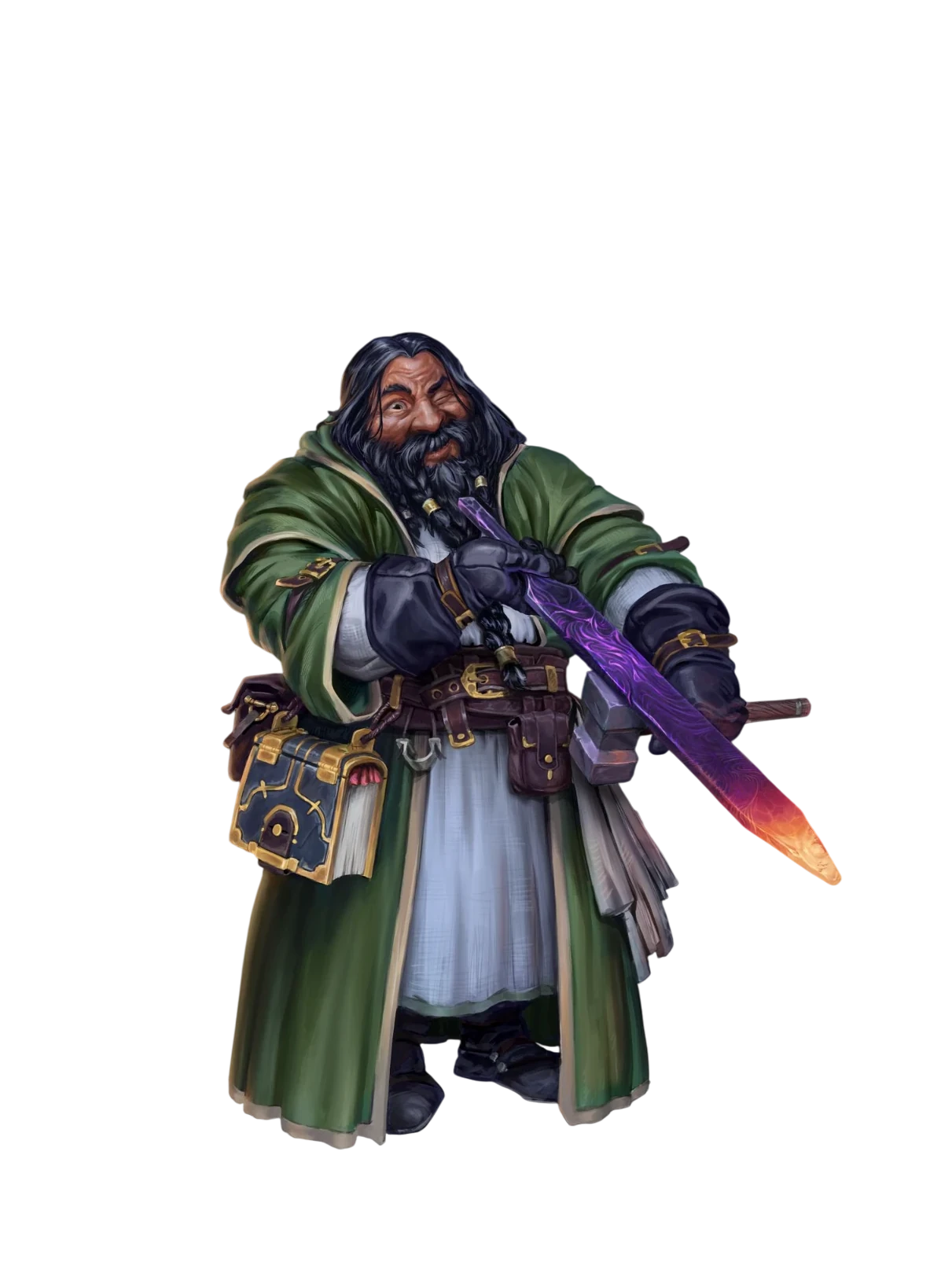
Dwarves, sometimes called stoutfolk or deepfolk, were a prevalent lineage of Mortalborn in Somnum. They were short but powerfully built, standing between four and five feet tall and weighing around 150 pounds. They reached adulthood around the age of fifty and commonly lived over three centuries. Their skin tones ranged from paler shades of white to dark brown, often with ruddy or gray undertones. Their hair, which they took great pride in, came in shades of black, brown, gray, or red, and they often wore it long and elaborately styled. Their eyes tended toward dark hues such as brown, gray, or hazel. Beards were a notable and cherished feature among both males and females, seen as a mark of maturity and dignity, though female dwarves occasionally trimmed their beards in the fashion of other smallfolk.
Dwarves were born to a male and female parent, and their family structures were close-knit, often extending across multiple generations under one roof. Their societies held both men and women in equal regard, with no clear division in roles between the sexes, though males were a bit taller and heavier than their counterparts. Dwarven communities were made up of clans, who established settlements in mountainous regions or beneath the earth, where they built expansive halls and fortresses carved from stone. Some clans lived aboveground in rugged hills, but even these settlements showed the same stonework skill that marked their underground kin.
Dwarves were often slow to trust outsiders, but once earned, a dwarf’s friendship was enduring; they claimed to be forged from stone, and shared many qualities of the rock they lived in. They were known to be highly stubborn with long memories, and dwarven culture placed high value on tradition, loyalty, and endurance. They were a serious and deliberate people, and oaths and promises carried heavy weight in their society. Despite this grievousness, dwarves loved the beauty and artistry of precious metals, and in many, that loved festered into avarice. They were proud of craftsmanship, especially in stonework and metalwork, and their creations were prized across Somnum.
Family honor and clan heritage were treated with deep reverence; a wrong done to one dwarf was a wrong done their entire clan, so matters that began as personal squabbles could end up as full-blown clan feuds. Most dwarves could recite long lineages of their ancestors, and to be clanless was considered the worst fate that could befall a dwarf. Many of a clan's traditions revolved around the forge, the hearth, and the honoring of ancestors, with clanhalls resounding in songs of battle, labor, and kinship. Though they sometimes held grudges and were cautious of other peoples, dwarves were respected across Somnum as steadfast allies and formidable craftsmen, even if some found their hard-headed natures frustrating.
Dwarves were naturally hardy and adapted well to life underground; they were resistant to poisons, keen-eyed in the dark, and naturally quite strong. From a young age, dwarves were well-trained in the handling of armor and weapons, and taught to become masters of stonework and artisan's tools. Their sturdiness allowed them to endure hardships that might overcome other Smallfolk, which, along with their discipline, made them reliable soldiers and workers. However, dwarves were flat-footed, and lacked the speed and stealth that many creatures of similar height possessed.
They spoke the tongues of their homelands but also shared a distinct language among themselves, known as Dwarven. It was a language of hard consonants and clipped tones, suited to runic inscription as much as to speech. Dwarves wrote in their own script, which was also used by other languages tied to stone and craft.
Dwarf names reflected their strong ties to clan and heritage. Each dwarf bore a personal name that was given to them by an elder, as well as their clan's name that carried great weight. Examples of dwarf names included male names such as Delg, Baern, and Rurik; female names such as Artin, Sannl, and Gurdis; and clan names such as Balderk, Battlehammer, and Dankil. Their names often carried meanings rooted in their history, reflecting qualities such as strength, endurance, or a famed ancestor. Dwarves who brought shame to their clans were stripped of the name, and forbidden by law to use any dwarven name in its place.
Dwarves made up some of Somnum's most prevalent adventurers, though such a choice was not common in their tradition-bound culture. Those who left their halls often did so for the pursuit of honor, a desire for wealth, or due to exile. Dwarves gravitated to Adventuring Classes that could make use of their strength, wisdom, and resilience, such as Clerics, Warriors, or Brutes, though those skilled in magic matters made great Artificers and Druids. Due to their hardiness and discipline, however, dwarves could embrace nearly every adventuring class and succeed in the role.