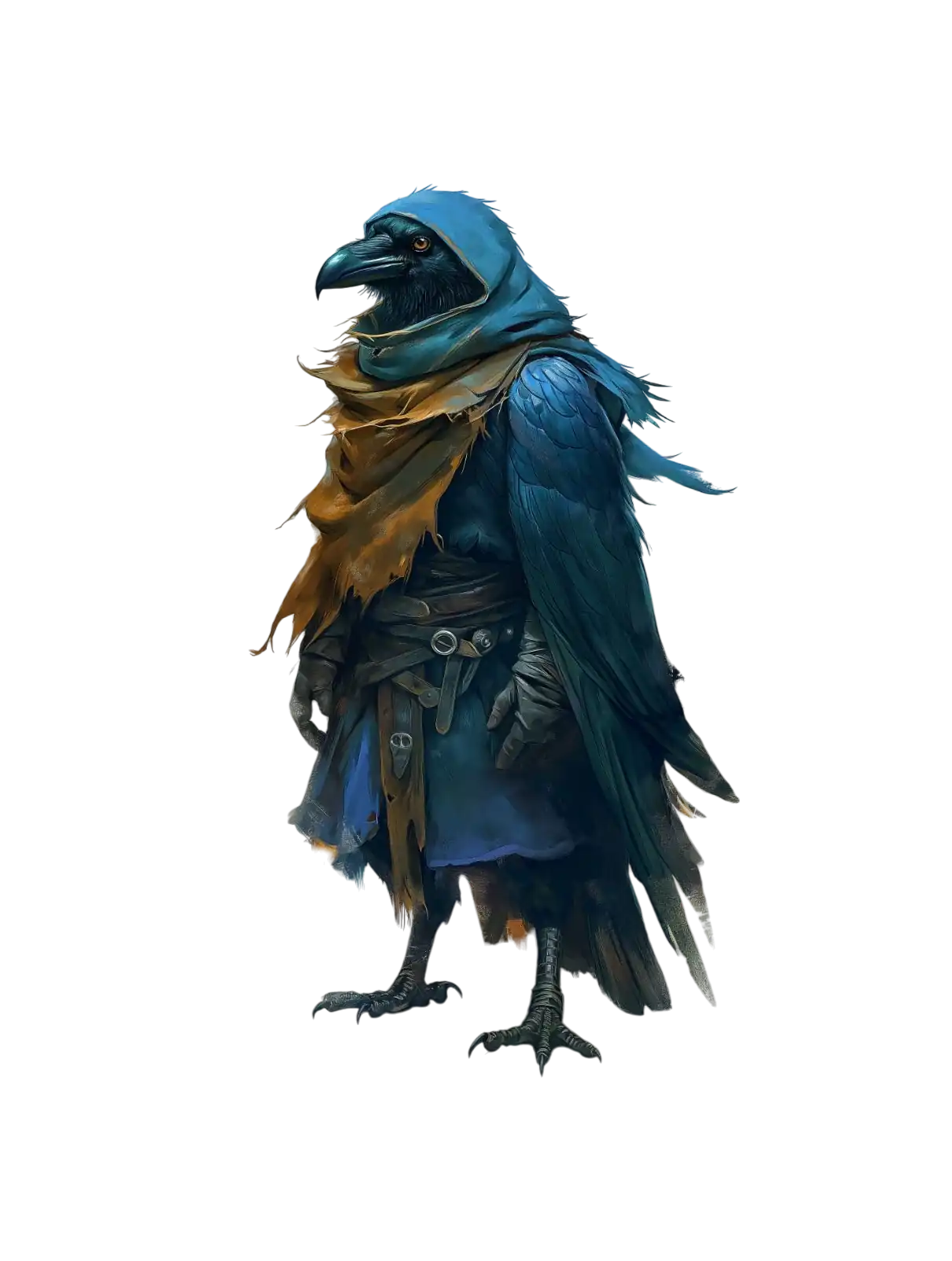
Crowfolk, sometimes called kenku, were a rare lineage of avian Mortalkind in Somnum. They were slender and short, typically standing between four and five feet tall and weighing between 90 and 120 pounds. Crowfolk matured quickly compared to humans, reaching adulthood from around nine to twelve years of age, and their typical lifespan extended to roughly sixty years. Their feathers and skin ranged from glossy black to dusky gray, while their round, bird-like eyes varied from jet black to pale silver. Their beak-like faces and clawed hands marked a distinctive silhouette, setting them apart from other, more humanoid Smallfolk.
Crowfolk were born from incubated eggs in dense forests, marshlands, or remote urban districts, where their parents raised them alongside other families in their "flock". They would take two to three months to hatch from their egg. Gender roles were largely communal and practical rather than rigid, with both males and females sharing labor equally. Once they reached adulthood, crowfolk would leave their flock together including their parents. However, they did not wish to travel alone, so soon banded together with other kenku of similar ages. Untrusting of other creatures, crowfolk favored locations that offered ample cover and the opportunity to remain inconspicuous while foraging or trading.
Though considered to have once been related to Birdfolk, crowfolk were incapable of flight and lacked the variety of plumage the birdfolk had. Their starkest difference, however, was that crowfolk lacked innate creativity, to the point where they could not truly "speak" at all; instead, they had a perfect mimicry for sound. Unable to speak in their own voices, they communicated by mimicking languages they heard, able to use a combination of overheard phrases and sound effects to convey meaning. Many crowfolk believed they once had wings and voices of their own, but that this and their internal spark of creativity were stolen by a Curse from an ancient divinity. Details on the origin of this curse varied by flock, but most believed it to be true, as crowfolk universally had dreams of flying.
Crowfolk lived by following orders from a leader, and many looked to dwell in high places such as towers or rickety bridges, collecting shiny and expensive objects. They often formed gangs in larger towns and cities, where their talents for stealth and mimicry gave them an advantage in theft, spying, and smuggling. These groups valued loyalty to the flock above all else, and were lead by a wise "Master" who came up with all plans for the group. In broader Somnum society, kenku were often viewed with suspicion; outsiders recognized their cleverness but frequently misjudged their intentions, unable to read expressions from their beaks and round eyes. In particular, the relationship between birdfolk and crowfolk was a fraught one; birdfolk considered them inferior and to be paying for crimes against their kind, and crowfolk hated them for it.
Crowfolk could remember and mimic any sound they heard, making them trusted messengers of ideas and information. This superior mimicry led many to become proficient in stealth and deception, and as most crowfolk joined gangs upon reaching adulthood, they were skilled at avoiding danger. In addition to this, they had an innate talent for forging handwriting and craftwork, and could become experts in virtually any craft. However, they lacked the creativity to truly create new things of their own, and struggled to improvise in situations that their Master had not planned for.
Through mimicry, most Crowfolk spoke the tongue of their region as well as Auran, consisting of clicks, caws, and the mimicked speech of other creatures. Their mimicry allowed them to convey complex messages, but they relied heavily on learned sounds rather than original speech patterns, so most communication with crowfolk consisted of patchworks of overheard spoken sentences from other creatures.
As crowfolk could duplicate any sound, their names were drawing from a large variety of noises and phrases. No naming convention was established, but they typically broken down into three categories that made no distinction between male or female names. Thugs and warriors adopted noises made by weapons, such as Hammer Smash, Clang, or Break; thieves and con artists often called to each other using animal sounds, so could be called Whistle, Mouser, or Cat Scratch; and those who turned their back on crime adopted noises from their new craft, such as Crinkle, Sail Snap, or Brew.
Crowfolk adventurers were usually survivors of a broken flock or the rare individual who grew weary of a life of crime. Having been raised in a culture that emphasized subtlety and survival skills, they were natural fits for the Rogue, Ranger, and Bard Adventuring Classes. The exceptional few who devoted themselves to work in temples could also find they were well-positioned to become a Cleric or Monk. Circumstances such as necessity, vengeance, or exposure to powerful magical forces might lead an individual to pursue a different class, though such choices were often seen as unusual among their kin.