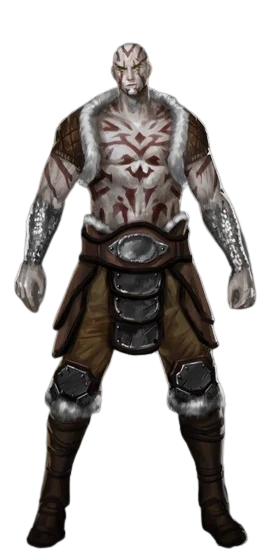
Giantborn, sometimes called goliaths or half-Giants, were a lineage of Ancientkin Mortalborn in Somnum. They were among the tallest and most imposing of the smallfolk, standing between seven and eight feet tall and weighing between 280 and 340 pounds. They had lifespanes similar to Humans, typically living seventy to eighty years, and were considered adults in their late teens.Many scholars speculated that these folk were descended from the true giants who occupied Somnum in the Age of Giants, though no connection was ever directly proven. Their skin tones ranged from pale gray to ivory, with natural mottling that resembled stone. They were naturally hairless, and their eyes varied from blue to green.
Babies were born to male and female giantborn parents, and their families were generally structured around extended kinship groups that emphasized survival and mutual support. Individuals were expected to earn respect through personal skill and contributions to the group, and elders guided the young in both practical and cultural knowledge. Giantborn communities were most often found in high-altitude environments, including rugged mountains and rocky foothills, where the harsh conditions demanded both resilience and careful cooperation.
Storytelling, oral history, and ritualized competitions were central to giantborn culture, and they bore tattoos that recorded trials, feats of endurance, and notable deeds. Elders recounted ancestral feats to instruct and motivate younger generations, and public contests of strength, endurance, and skill were used to settle disputes or prove rank. These contests were tempered by an unshakable sense of fair play, ensuring that contests were honorable and conflicts resolved without deception. Cheating or taking advantage of others was considered dishonorable, and public scrutiny enforced this standard.
All giantborn communities placed extreme value on strength, perseverance, and honor. Physical prowess and personal achievement determined social standing, but accomplishments were always weighed against the needs of the group. Giantborn followed a philosophy of survival of the fittest, often pushing one another to the limits of physical endurance to test ability. This emphasis on personal strength was stark, and old or infirm community members preferred to die in battle or leave the tribe than slow it down. In the broader societies of Somnum, giantborn were rare and often regarded with respect or cautious curiosity; their size and rumored ties to ancient giants added to their mystique.
Giantborn possessed natural abilities that reflected their superior strength and resilience compared to other smallfolk. They were extremely hardy and could endure both long treks over harsh terrain and extreme cold, which allowed them to survive in their high mountains and exposed plateaus. Their powerful builds made them formidable in combat and survival situations, as they could carry heavy loads and perform improbable athletic feats, though they tended to lack nous in matters requiring dexterity or arcane knowledge.
In language, giantborn spoke the tongue of their home region to communicate with neighbors and other smallfolk. Many also learned the ancient language of Giant, which was used in ritual, instruction, and communication with distant kin, and served as a marker of cultural identity within their communities.
Giantborn naming conventions included a personal name, a descriptive nickname, and a clan name. Birth names were given by parents and used within the family, examples include Gae-Al, Aukan, or Manneo. Nicknames reflected accomplishments, traits, or memorable feats, such as Stormwatcher, Twice-Orphaned, or Fearless. Clan names, like Ogolakanu, Katho-Olavi, or Gathakanathi, identified broader lineage and ancestry. Together, these names conveyed personal identity, social status, and connection to the wider giantborn community.
Adventurers among the giantborn were relatively common, as their competitive nature drew them into lives of challenge. Their choice of Adventuring Classes was mostly shaped by their size, with many becoming Brutes or Warriors, thriving in roles that tested their endurance and raw might. Smaller and more crafty giantborn developed skills as Rangers, while select few became Druids or Clerics devoted to the worship of the land, drawing on the reverence their people held for the high peaks and the spirits of the mountains. Giantborn could also be found in other classes, though this typically only occurred when unique individuals encountered other cultures that changed their worldview.